Cardiovascular Disease Risks in Young Adults and Patients with Comorbidities
Introduction
Cardiovascular diseases (CVDs) also called Heart diseases are a group of disorders of the heart and blood
vessels. The numerous problems causing most of the CVD is atherosclerosis (blockages in coronary arteries), a
process mainly governed by lifestyle factors. As per World Health Organization, It is estimated that 17.7 million
people died from CVDs in 2015, representing 31% of all deaths taking place worldwide; more people die every
year from CVDs than from any other cause. Cardiovascular diseases are showing an increase among the Indian
population. The country-wise statistics of the WHO on non-communicable diseases estimates that NCDs account
for 53% of all deaths in India, out of which CVDs have a major share of 24%.
Young adults are at high risk of Heart disease
In older men, nearly all heart attacks are caused by atherosclerotic blockages in coronary arteries. Conventional
coronary artery disease also predominates in young adults, accounting for about 80% of heart attacks. About 60%
of these young patients have disease of just one coronary artery, while older patients are more likely to have
disease in two or three arteries. The rate of coronary heart disease in young Indian men is almost twice as high as
that in their western counterparts and there is evidence that CVD begins to affect Indians at least a decade earlier
than it affects Europeans. While 23% of deaths before the age of 70 occur due to heart disease and stroke in
Western populations, in India this proportion is a staggering 52%.
Women and CVD
When it comes to women, Cardiovascular disease remains the number-one threat to women’s health. There is a
pronounced gender difference in cardiovascular mortality, more women than men die each year. A woman’s
lifetime risk of dying from heart disease is eight times greater than that of breast cancer! The report on
causes of death by the Registrar General of India also reported cardiovascular diseases (CVD) as the most
important cause of death in women. The main reason for Heart Disease not getting easily detected in women
compared to men is because symptoms are by nature much milder than menS. The symptoms include:
1. Uncomfortable pressure, squeezing, fullness or pain in the center of your chest. It lasts more than a few
minutes, or goes away and comes back.
2. Pain or discomfort in one or both arms, the back, neck, jaw or stomach.
3. Shortness of breath with or without chest discomfort.
4. Other signs such as breaking out in a cold sweat, nausea or lightheadedness.
5. As with men, women’s most common heart attack symptom is chest pain or discomfort. But women are
somewhat more likely than men to experience some of the other common symptoms, particularly shortness of
breath, nausea/vomiting and back or jaw pain.
The symptoms in women aren't typical, and most of the time it gets ignored.
Diabetes is a prime risk factor for cardiovascular disease (CVD)
People with diabetes, particularly type 2 diabetes, may have the following conditions that contribute to their risk for
developing cardiovascular disease.
Individuals with insulin resistance or diabetes in combination with one or more of the risk factors (High blood
pressure (hypertension), Abnormal cholesterol and high triglycerides, Obesity, lack of physical activity, Poor blood
sugar levels) are at even greater risk of heart disease or stroke. However, by managing their risk factors, patients with diabetes may avoid or delay the development of heart and blood vessel disease. Especially in this pandemic
era where patients suffering from cardiovascular diseases (CVD) are vulnerable to respiratory tract infections,
including COVID 19 and also these patients are at an elevated risk of ill health and even death from COVID 19.
Hence keeping an eye on any symptoms of CVD will help you get a right treatment at a right time.
Angioplasty-Treatment for Coronary Artery Disease
The mere thought of getting a cardiac arrest can make your heart beat faster for a moment. But today, even if a
heart attack is a perilous event, there are many ways to circumvent the same. Minimally invasive interventions are
an important mantra to keep in mind when treating cardiac disease.
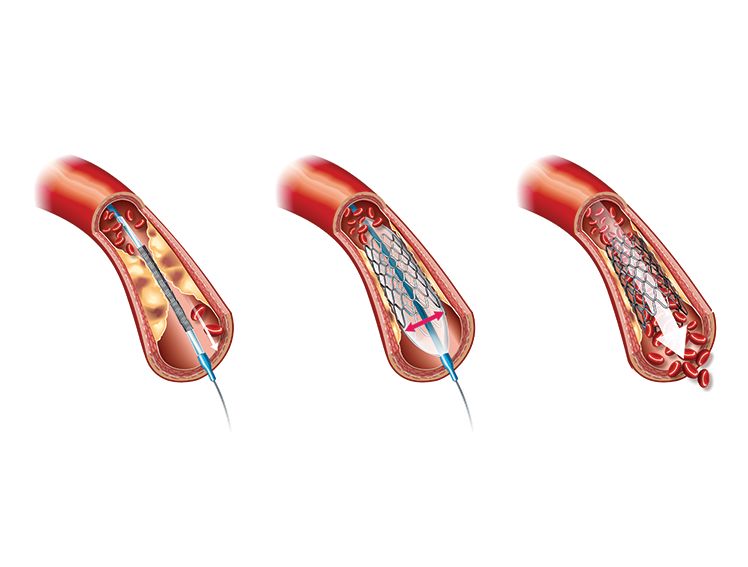
Angioplasty is one such lifesaver option for acute Heart attack. Putting in a stent helps prevent the narrowing of
arteries and substantially improve your blood flow and prevent further damage to your heart. Many patients
undergo Angioplasty once they are diagnosed with coronary artery disease. Mainly, because of two reasons: a
doctor suggesting it because of its high success rate and less invasive technique and secondly it improves the
lifestyle significantly by reducing the risk of getting another heart attack.
What are Stents and how it works?
Stents are tiny mesh tubes inserted to keep coronary blood vessels (arteries) open post angioplasty. The
coronary arteries are responsible for carrying blood and oxygen to heart muscle cells. A heart attack often occurs
when plaque breaks open and causes the formation of a blood clot in a partially clogged artery eventually blocking
the blood flow. This is when stenting comes into the picture and can be a lifesaver option. Stents come in various forms like Bare Metal Stent (BMS), DES (Drug Eluting Stent) and absorbable stent (dissolves after 3 years), but DES is the most commonly used one during Angioplasty worldwide.
After implantation, DES releases a drug gradually from its outer coating to aid in preventing blockage at the
particular site. Hence, DES is preferred over BMS (Bare Metal Stent) for the majority of the patients as they
prevent recurring blockages in the arteries. In the case of BMS, post-implantation as the vessel heals, tissue
begins to grow around the stent but in some cases, such scar tissue overgrowth can lead to re-blockage of the
vessel. However, a DES implantation can avoid this phenomenon as it prevents scar tissue formation thus
maintaining proper blood flow. But, you will require to regularly take blood-thinning medicines to avoid blood clot
formation in the stent and prevent the blood vessel from getting blocked again. There are various DES & BMS
brands available and they come with their own set of benefits and a cardiologist may suggest one to you based on
the requirement.
In simple words, a Drug-Eluting Stent is effective and can reduce the chances of future heart attacks to some
extent. But, remember that Angioplasty can be a life-saver option only if you continue with the suggested medication and lifestyle modification like eating healthy food, regular exercise, etc. that your doctor has advised you to follow post the angioplasty.