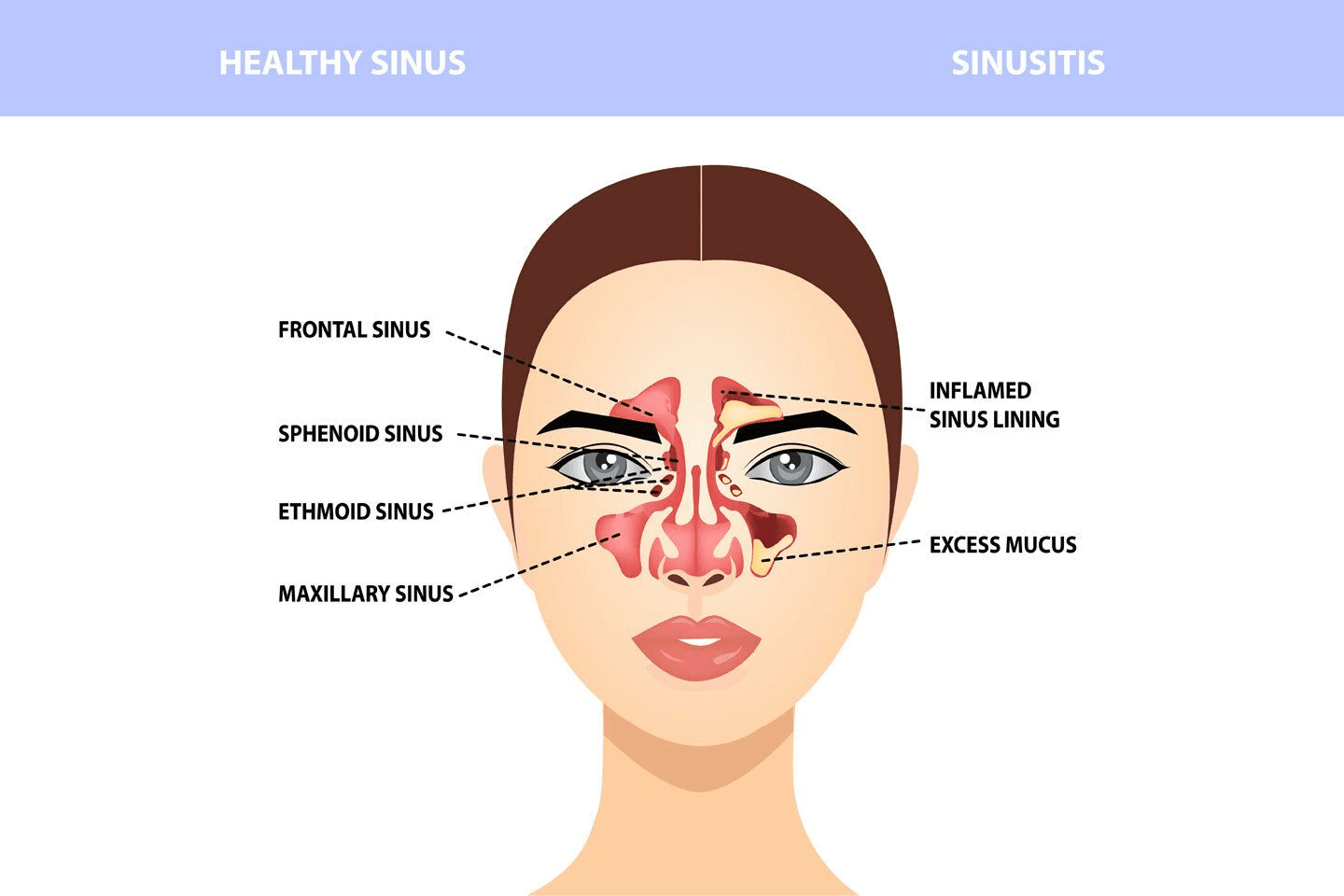
Is it just a Cold or is it a Sinusitis? How to tell the Difference?
Introduction
When you wake up feeling lousy, with a nasal drip, a sore throat, and maybe some fever, you might wonder: Is it just a common cold, or sinusitis? Knowing cold vs. sinusitis helps you understand what your body is doing, what symptoms to watch for, and when to see a professional. This guide examines the difference between cold and sinusitis, how long sinusitis lasts, and when chronic sinusitis becomes a concern.
What’s the Difference between Cold and Sinusitis?
Feature | Common Cold | Sinusitis |
| Onset | Gradual, over 1-3 days | Can follow a cold or allergies; sometimes sudden |
| Duration | Usually 7-10 days | Acute: up to 4 weeks; Sub acute: 4-12 weeks; Chronic: more than 12 weeks |
| Nasal discharge | Clear or watery, then thick; usually light in color | Thick, yellow or green; can be persistent |
| Facial pain / pressure | Mild or none | Often strong pain around cheeks, nose, eyes, forehead |
| Fever | Possible, usually low grade | More common, sometimes higher fever |
| Other signs | Sneezing, sore throat, mild cough | Reduced sense of smell, bad breath, dental pain, heavier cough |
This table offers a clear side-by-side comparison of a common cold and sinusitis. This blog will further break down key symptoms to help you understand the difference, what ongoing sinus issues may look like, and when it’s time to take a closer look.
How to Tell if It’s Sinus or Cold: Symptoms Comparison
Sinus Infection Symptoms vs Cold
Here are clear signs to identify whether you’re dealing with sinusitis instead of a cold:
Facial pain or pressure, especially when bending forward
Nasal blockage that doesn’t improve after several days
Thick yellow or green nasal discharge
Loss of smell or a reduced sense of smell
Colds usually come with familiar symptoms like sneezing, a runny nose, watery eyes, and a scratchy throat. These discomforts often clear up gradually over a few days. Sinusitis, however, tends to feel heavier quite literally. You may notice pressure in your forehead, around your eyes, or in your cheeks. Breathing through your nose can become more difficult, and in some cases, you might even feel a dull ache in your upper teeth. Fatigue and a mild fever are also more likely with sinus infections compared to a typical cold.
How Long Does sinusitis Last?
Understanding timelines helps distinguish between colds and sinusitis.
Acute sinusitis: lasts up to about 4 weeks
Subacute: stays on for 4–12 weeks
A common cold typically peaks around day 3-5, gradually improves, and is usually gone by the end of the second week. Sinusitis, however, may linger. If symptoms persist without improvement after ten days, or worsen after initial improvement, that suggests sinus involvement rather than just a cold.
Chronic sinusitis vs Common Cold
Chronic sinusitis brings complications that a cold typically does not.
Signs of Chronic sinusitis
Symptoms lasting longer than 12 weeks
Recurrent sinus flare-ups
Ongoing nasal obstruction or congestion
Ongoing post-nasal drip and cough
A cold rarely lasts that long. If you feel congested, have thick discharge, or get headaches or facial pressure month after month, this tends toward chronic sinusitis. Chronic cases may cause the nose and sinus linings to swell continually, sometimes leading to sleep, smell, or general wellness complications.
How to Tell: What Tests or Clues Help
Sometimes you’ll need more than observation. Clues include:
Duration of symptoms (how long)
Quality of mucus (colour, thickness)
Location of pain (forehead, cheeks, around eyes)
Response to home care (do things improve or stay the same?)
Smell capacity or whether breathing is deeply blocked
If symptoms clear up with rest, fluids, and gentle nasal care, that leans toward a cold. If not, or if symptoms worsen after a week, or there’s strong facial pain, thick, colored discharge, then sinusitis is more likely. Still, only a qualified medical professional can give a definitive diagnosis.
Why It’s Easy to Confuse Cold and Sinusitis
It’s no surprise that many people confuse a cold with sinusitis — they often start the same way. Both can cause nasal congestion, a sore throat, and general fatigue. In fact, early sinusitis can develop from a lingering cold, making it difficult to distinguish them at first.
But there’s a key difference in how these conditions behave over time.
A cold is a viral infection that tends to run its course fairly quickly. Most people feel better within a week or so without the need for anything beyond rest and hydration.
Sinusitis, especially the bacterial or chronic forms, often develops after a cold and persists for much longer. The discomfort shifts from being about the throat or nose to a deeper, more persistent pressure in the face.
In many cases, what starts as a stuffy nose begins to feel more like steady pressure around the face, especially near the cheeks or forehead. If these symptoms last longer than expected and don’t show signs of easing, it could point to something more than just a common cold.
Difference between Cold vs. sinusitis: Key Takeaways
Duration matters: colds resolve quicker, sinusitis lasts longer
Mucus quality: thick and colored, suggesting sinusitis
Pain or pressure centered around the face/nose hints at sinus
Loss of smell and dental pain are more common with sinus issues
Chronic sinusitis means symptoms return or stay beyond 12 weeks
When to Seek Professional Help
If you notice:
High fever
Swelling around the eyes or severe head pain
Symptoms lasting over 10‑14 days without improvement
Symptoms return often
These signs suggest a deeper issue than a cold alone. A health professional can evaluate nasal passages, perhaps imaging, and suggest appropriate management.
Final Thoughts
Understanding cold vs. sinusitis can help you feel more in control of your symptoms. Cold symptoms tend to be lighter and shorter in duration and improve with rest, fluids, and simple remedies. Sinusitis adds colored discharge, facial pressure, blockage, and smell loss and lasts longer, especially if it becomes chronic.
Consult a doctor if you’re unsure or if your symptoms worsen or stretch. Meanwhile, relaxation, hydration, and good nasal care can help, no matter what’s behind the symptoms.
FAQs
1. How do I know if I have a sinus infection or a cold?
Cold symptoms improve within 7–10 days
Sinus infection symptoms last longer or get worse.
Facial pain, thick yellow/green mucus, and smell loss point to sinusitis.
2. Can a cold turn into sinusitis?
Yes, if nasal blockage lasts too long
Mucus buildup can cause sinus pressure and infection
Symptoms worsen or return after a few days of a Cold
3. How long does sinusitis last compared to a cold?
Cold usually lasts 7–10 days
Acute sinusitis lasts up to 4 weeks.
Chronic sinusitis lasts more than 12 weeks