























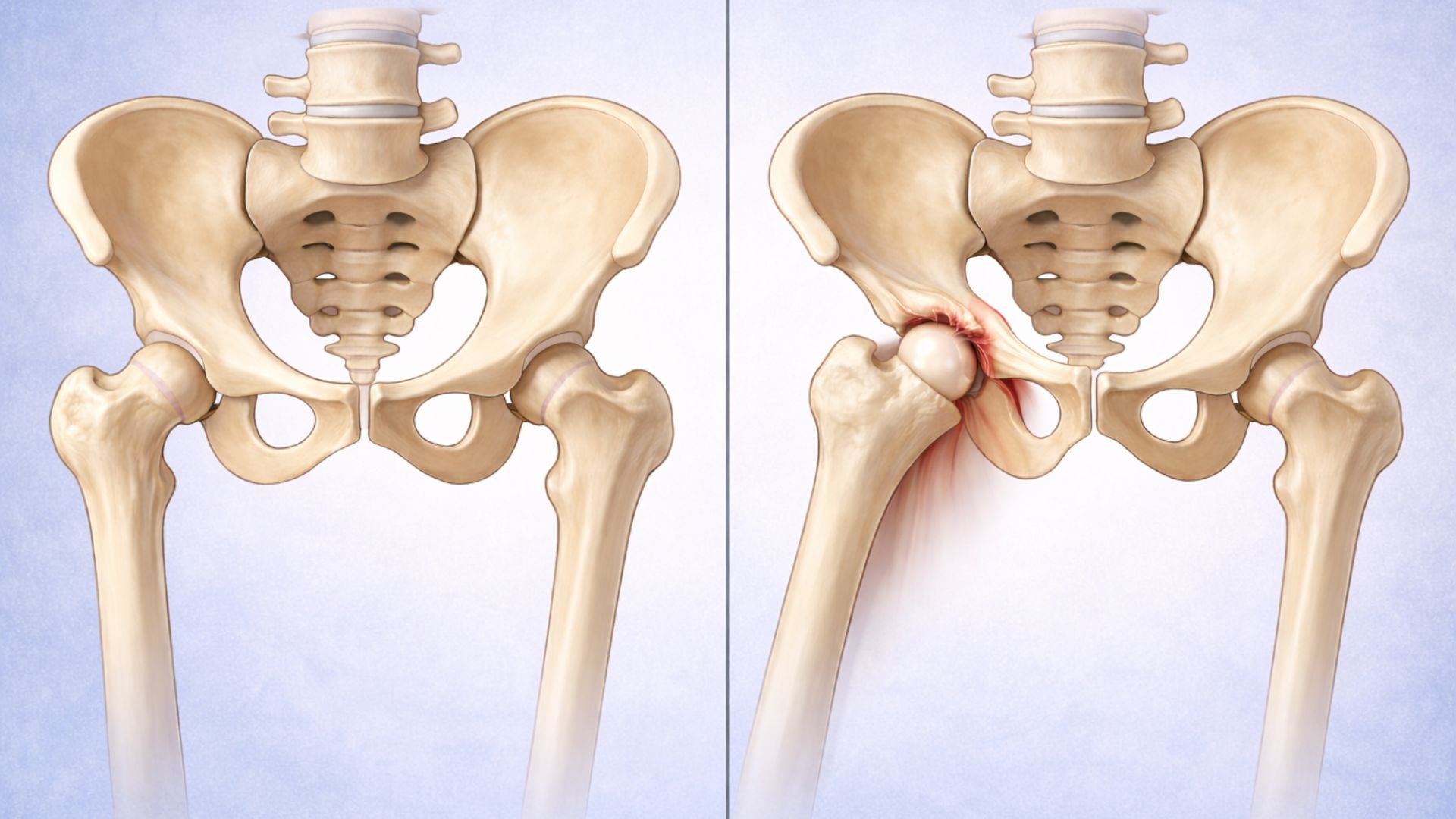
Hip Dislocation: Why It Happens and How to Prevent It?
Introduction
The hip joint is one of the strongest and most stable joints in the human body. It supports body weight, allows movement, and is involved in everyday activities such as walking, sitting, and climbing stairs. Despite its strength, the hip can sometimes become dislocated.
A hip dislocation can be painful, frightening, and disruptive to daily life. Understanding why it happens, how it is recognised, and what steps may help reduce the risk can make a real difference. This blog explains hip dislocation in clear, simple terms, without medical jargon.
How does the Hip Joint Works?
The hip joint is designed to provide internal and external rotation, which helps your body with stability and flexibility. Its structure allows it to remain firmly in place during most movements.
What are the features of a hip joint?
A ball-shaped bone head at the top of the thigh bone, called the femur.
A cup-shaped socket in the pelvis is the acetabulum, which is also known as the socket.
There are strong ligaments between the ball and socket that hold the joint together
Your muscles and tendons support movement and balance.
Because of this design, the hip usually needs a strong force to become dislocated.
What Is a Hip Dislocation?
A hip dislocation may occur when the ball of the femur is forced out of its socket.[1] It can happen suddenly, causing excruciating pain and requiring urgent medical care.
Hip dislocations are generally classified as:
Posterior dislocation: The ball moves backwards (most common)[2]
Anterior dislocation: The ball moves forward (less common)
In both cases, normal joint alignment is lost, affecting movement and causing pain.
Common Causes of Hip Dislocation
Hip dislocation rarely happens without a reason. It is often linked to significant trauma or stress on the joint.
Common causes include:
Road traffic accidents, especially high-speed collisions
Falls from a height or severe slips
Sports injuries involving sudden twists or impact
Industrial or workplace accidents
Direct force to the hip during physical trauma
In some situations, the hip may dislocate with less force, particularly if other risk factors are present.
Factors That May Increase the Risk of Hip Dislocation
Certain conditions or situations can make your hip more prone to dislocation.
Risk factors may include:
Weak hip muscles or reduced joint stability
Previous hip injuries or surgeries
Congenital hip conditions present from birth
Neurological conditions affecting muscle control
Age-related muscle weakness or balance issues
For people with hip replacements, specific movements or positions may also raise the risk.
Signs That a Hip Might Be Dislocated
A hip dislocation usually causes noticeable and immediate symptoms. These should never be ignored.
Common signs include:
Severe pain in the hip or groin
Inability to move or bear weight on the leg
A visibly shortened or rotated leg
Your legs may get numb, and/or you may feel some tingling in the leg or foot
Swelling or bruising around the hip
These symptoms often require urgent medical assessment.
How Hip Dislocation Is Usually Identified
Healthcare professionals use a combination of examination and imaging to confirm a hip dislocation.
Typical steps include:
Physical examination of leg position and movement
Review of injury history or recent trauma
X-rays to confirm joint alignment
CT scans if more detail is needed[2]
Early diagnosis helps guide timely treatment and reduces the risk of complications.
Possible Short-Term Challenges after a Dislocation
Even after the hip is put back into place, recovery can take time. Some short-term challenges may occur.
These can include:
Pain and stiffness during movement
Temporary use of walking aids
Reduced mobility for daily tasks
Muscle weakness around the hip
Fear of re-injury
Physiotherapy and guided rehabilitation often play an important role during recovery.
How to Help Prevent Hip Dislocation
While not all hip dislocations can be prevented, certain steps may help reduce risk.
Helpful prevention measures include:
Maintaining strong hip and leg muscles
Practising balance and flexibility exercises
Using proper safety equipment during sports
Reducing fall risks at home
Following safe movement advice after hip surgery
Staying active while being mindful of joint health can support long-term hip stability.
Considerations for Those with Hip Implants
People who have undergone hip replacement surgery may need to take extra care of their hip joint, especially when in the early recovery phase.
Important considerations include:
Avoiding extreme bending or twisting movements
Following post-surgical movement guidelines
Attending follow-up appointments regularly
Engaging in prescribed physiotherapy
Modern implant designs aim to improve joint stability. The Latitud Hip Replacement System is developed with a focus on restoring natural movement and supporting joint alignment, which may help surgeons address stability-related concerns during hip replacement procedures.
When to Seek Medical Help
Prompt medical attention is essential if a hip dislocation is suspected. Seek immediate help if:
There is sudden, severe hip pain after an injury
The leg appears out of position
Walking becomes impossible
Numbness or loss of sensation occurs
Delaying care may increase the risk of nerve, blood vessel, or joint damage.
Hip Dislocation Causes and Typical Scenarios
Cause Type | Common Scenario | Risk Level |
Road accidents | Car or motorcycle collisions | High |
Falls | Slipping on stairs or wet floors | Moderate |
Sports injuries | Contact sports or sudden twisting | Moderate |
Post-surgical | Certain movements after hip surgery | Variable |
Conclusion
Hip dislocation is a serious condition that can affect mobility and quality of life. Although the hip joint is naturally strong, accidents, injuries, or underlying risk factors can lead to dislocation.
Understanding how your hip works, recognising the signs of a dislocation, and taking preventive steps may help reduce the risk. For those recovering from hip surgery or living with implants, following medical advice and movement guidelines is especially important. Early care and informed awareness remain key to protecting long-term hip health.