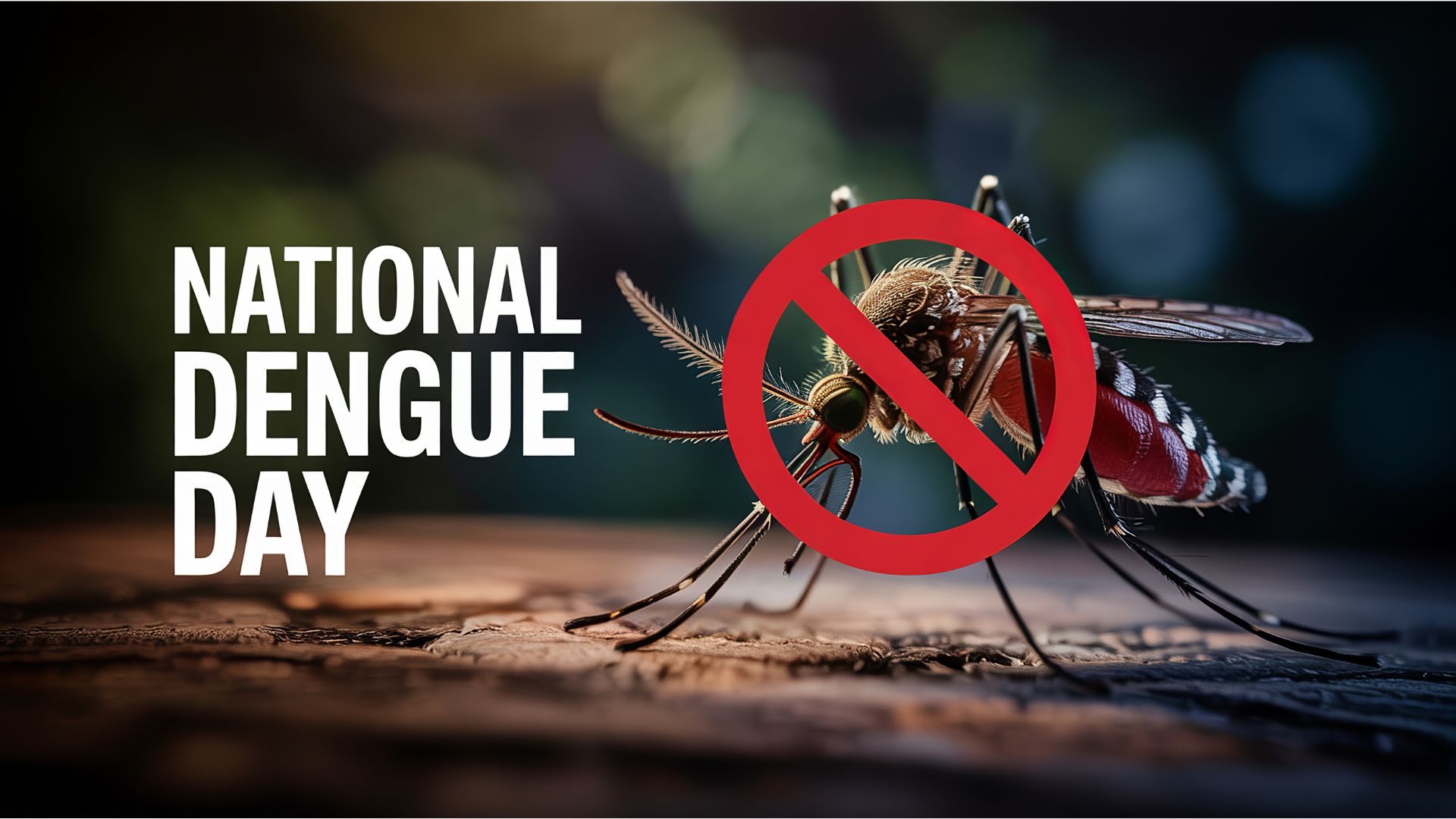
National Dengue Day: Simple Steps Communities Can Take to Prevent Dengue
Introduction
As the monsoon clouds gather, so does the threat of dengue. Mosquitoes breed in waterlogged streets and forgotten containers, and before we know it, cases start rising across neighbourhoods.
Here's the thing: dengue is almost entirely preventable. And a useful tool we have is community action. On National Dengue Day, observed every year on May 16, India comes together to do exactly that, and this blog shows you how.
The Importance of National Dengue Day
Launched in 2010, National Dengue Day on May 16 serves as a pre-monsoon alert, giving communities time to prepare before mosquito breeding peaks. According to the National Center for Vector Borne Diseases Control (NCVBDC), around 1,13,450 dengue cases were reported in India by December 2025[1], and research in the Journal of Family Medicine and Primary Care projects this could cross 3 lakh by 2026.[2] That's why this day matters.
National Dengue Day 2026 Theme: "Unite. Act. Eliminate."
The theme for National Dengue Day 2026 is "Unite. Act. Eliminate.” and it captures what's needed to fight dengue effectively.
Unite: Dengue cannot be beaten by one household, one colony, or one doctor alone. Everyone needs to come together.
Act: Awareness without action is not enough. Real change happens when people actually clean their surroundings, check their water containers, and seek timely care.
Eliminate: The goal isn't just to manage dengue; it's to eliminate the conditions that allow it to spread in the first place.
This theme is a call to every Indian citizen, community leader, and local authority to move beyond conversations and take visible, meaningful steps.
What Is Dengue and How Does It Spread
Dengue is an infection caused by the dengue virus. It is passed to humans through the bite of an infected Aedes aegypti mosquito, commonly known as the dengue mosquito.
Here's something important to know: this mosquito bites during the day, particularly in the early morning and late afternoon. So unlike malaria-carrying mosquitoes, which are active at night, dengue mosquitoes are active when we are, going about our daily routines.
Common symptoms of dengue include:
Symptom | Description |
High fever | Sudden onset, can go up to 104°F |
Severe headache | Often with pain behind the eyes |
Muscle and joint pain | Which is why dengue is called 'break-bone fever' |
Skin rash | Appears a few days after the fever begins |
Nausea and vomiting | Common alongside the fever |
Most dengue cases are mild and recover within a week or two with proper rest and hydration. However, some cases of severe dengue require immediate medical attention.
There is no specific antiviral treatment for this disease, so prevention is the most important step.
Why Community Participation Is Important in Preventing Dengue
Dengue is not a disease you can fight alone. The Aedes mosquito breeds in stagnant water, and that water is everywhere. A flower pot on your neighbour's terrace, an uncovered drum down the lane, a blocked drain across the street. Even if your home is spotless, one neglected container nearby is enough to keep mosquitoes breeding.
According to the WHO, dengue is transmitted in around 100 countries,[3] with dense urban areas most at risk. India's rapidly growing cities face this challenge head-on, and only collective effort can address it.
Common Mosquito Breeding Sites in Communities
Before we can eliminate breeding sites, we need to know where to look. The Aedes mosquito doesn't need much; even a small bottle cap with stagnant water can be enough.
Common breeding spots to watch out for:
Location | Potential Breeding Site |
Inside homes | Flower vases, coolers, buckets, water storage containers |
Terraces and balconies | Plant pot saucers, discarded tyres, broken pots |
Outdoors | Blocked drains, puddles in potholes, construction sites |
Common areas | Overhead tanks, neglected sumps, drainage channels |
Markets and shops | Discarded bottles, polythene bags with water, open drums |
Simple Steps Communities Can Take to Prevent Dengue
Here's how the community can start to prevent dengue:
1. Eliminating Standing Water in Public and Residential Areas
No stagnant water means no breeding ground; it's that simple. Communities should drain and dry coolers, buckets, and drums every week, keep overhead tanks tightly covered, dispose of old tyres and broken containers, and clear blocked drains before the monsoon.
2. Promoting Clean Surroundings and Waste Management
A polythene bag, a discarded cup, a pile of bottles, and all it takes is a little rainwater, and you have a mosquito nursery. Communities should organise monthly clean-up drives before and during the monsoon, ensure garbage is collected regularly, and ensure shops and vendors don't leave open containers in public spaces.
3. Encouraging Community Awareness and Health Education
Prevention only works when people know what they're preventing. Share dengue tips in online groups and apartment forums, put up reminders on notice boards and in lifts, and encourage schools to run awareness sessions, as children are excellent messengers at home.
The more informed a community is, the faster it acts.
The Role of Early Detection and Timely Medical Care
Prevention is the priority, but early detection is equally important. Many people dismiss early dengue symptoms as regular flu and wait too long before seeing a doctor.
Warning signs to watch for:
Sudden high fever lasting more than 2 days
Severe headache or pain behind the eyes
Muscle or joint pain
Skin rash appearing with or after the fever
Nausea and vomiting
If you or anyone in your community shows these symptoms, especially during or after the monsoon, visit a doctor promptly and get a dengue test done. Early diagnosis of dengue leads to better care and faster recovery.
How Is Dengue Diagnosed? Understanding the Tests
If dengue is suspected, your doctor will recommend a blood test. There are two types, and which one you need depends on how early you catch it.
NS1 antigen test: Best in the first few days of fever, when the virus is actively in the bloodstream
IgM Antibody Test: Useful a few days into the illness, detects antibodies your body is currently producing in response to an active dengue infection
IgG Antibody Test: Detects memory antibodies from a past infection, particularly important for identifying reinfection, which can carry a higher risk of complications
Conclusion
Dengue thrives on neglect: neglected containers, neglected drains, and neglected awareness. But it cannot survive in an alert, active, and engaged community.
This National Dengue Day, let's go beyond just reading about it. Let's check our water containers. Let's tell our neighbours. Let's organise a clean-up. Let's share this information with someone who needs it.
Together, we can make our homes, our neighbourhoods, and our country a place where dengue simply cannot survive.