























How Robotic Systems Are Advancing Minimally Invasive Surgery
Introduction
In today’s rapidly evolving healthcare landscape, technology plays a significant role in enhancing patient care. One notable advancement is the increasing use of robotic systems in surgery. These innovative tools are transforming how doctors approach procedures, particularly in minimally invasive surgery (MIS).
Imagine a machine helping surgeons with precision, flexibility, and control like never before! Let’s get into how these robotic systems are changing things in surgical care.
Minimally Invasive Surgery (MIS)
Minimally invasive surgery, often called MIS, is all about doing procedures through tiny incisions instead of large ones. The idea is simple: less damage to surrounding tissues means quicker recovery, less pain, and fewer complications for patients. Traditionally, surgeons used specialized tools and cameras to perform MIS procedures. But now, with robotic systems, things have reached a whole new level. These advanced systems give surgeons better precision and control, making procedures safer and more effective than ever before.[1]
What Are Surgical Robotic Systems?
A surgical robotic system is a super-advanced machine created to help surgeons perform complex surgeries with incredible precision. It’s made up of robotic arms, cameras, and specialized tools, all of which the surgeon controls. The robot isn’t making decisions on its own—it’s more like an extension of the surgeon’s hands, helping them move with more accuracy and less physical effort. This means the surgeon can focus on the procedure without becoming tired, while still providing the patient with better outcomes.[2]
Components of Robotic Systems
A surgical robotic system is made up of several key parts that work together to help surgeons perform precise procedures:[3]
Robotic Arms: These arms hold and move surgical tools with amazing precision, allowing for finer movements than a human hand could achieve.
Surgeon Console: This is where the surgeon controls the robotic arms. They use hand controllers and foot pedals to guide the system while watching a 3D view of the surgical site on a screen.
Vision System: High-definition cameras provide a magnified, 3D view of the operative area, giving the surgeon a much clearer picture of tiny, intricate structures.
Software: Smart algorithms control the system, ensuring robotic arms move smoothly and accurately and helping the surgeon stay on track.
These components work in harmony to enhance the surgeon’s ability to perform complex procedures safely and effectively.
Types of Robotic Systems
Surgical robotic systems come in different types, each designed for a specific purpose:
Telesurgical Systems: These enable surgeons to perform surgeries remotely. They can control the robotic arms remotely, enabling them to operate on patients in different locations.
Assistive Robotic Systems: These systems help surgeons by enhancing their movements. For example, they can filter out hand tremors, making the surgeon’s motions more precise, and they offer greater flexibility in their movements.
Automated Robotic Systems: Still under research, these systems aim to handle certain tasks on their own, though a human surgeon is still in charge, overseeing the process.
Each system type is designed to address specific challenges, making surgeries safer, faster, and more efficient.
How Robotic Systems Are Enhancing Minimally Invasive Surgery
Robotic systems offer significant benefits, especially in minimally invasive surgery. Here’s how they help:
Better Access: Robotic arms can reach tricky areas of the body that are hard to access with traditional tools, making complex surgeries more feasible.
Improved Dexterity: The robots replicate wrist movements but with even more flexibility, allowing surgeons to perform intricate tasks in tight spaces that would be difficult otherwise.
Enhanced Visualization: With high-definition, 3D cameras, the system gives surgeons a clearer, more detailed view of the surgical area, helping them make better decisions during the procedure.
Reduced Fatigue: Because the robotic system takes on much of the physical strain, surgeons can focus on the task at hand without fatigue, especially during long operations.
These advantages make robotic systems a game-changer in modern surgery, improving outcomes and streamlining procedures.
Robotic Surgery Applications in Different Specialties
Robotic systems are making a big impact in many areas of medicine, including:
Cardiac Surgery: Helping surgeons perform delicate procedures like valve repair with more precision, reducing the risks involved.
Gynaecology: Making complex surgeries, such as hysterectomies, more precise and less invasive, enabling quicker patient recovery.
Urology: Offering high accuracy in prostate surgeries, minimizing the damage to surrounding tissues and improving recovery times.
Orthopedics: Assisting in joint replacement surgeries by ensuring that implants are placed with incredible precision, which can lead to better long-term outcomes.
Oncology: Helping remove tumours with greater accuracy, targeting specific areas while minimising damage to healthy tissue.
These advancements are transforming surgery across specialities, improving both the safety and effectiveness of procedures.
Benefits of Robotic Surgery for Surgeons and Patients
Robotic surgery brings a lot of benefits for both patients and surgeons:[4]
For Patients:
Smaller Incisions and Less Scarring: The tiny incisions made during robotic surgery lead to minimal scarring, which improves recovery times.
Reduced Risk of Infection and Complications: With more precise procedures and smaller cuts, the chances of infection and other complications are lower.
Faster Recovery and Shorter Hospital Stays: Since the surgery is less invasive, patients tend to heal faster and can leave the hospital sooner.
For Surgeons:
Enhanced Precision and Control: The robotic system delivers incredible accuracy, enabling surgeons to perform highly precise movements during surgery.
Improved Ergonomics: The system reduces physical strain on surgeons, especially during long, complex procedures, by providing a more comfortable setup.
Ability to Perform Complex Surgeries with Greater Confidence: Surgeons can take on more challenging cases with confidence, knowing that the robotic system will help them perform the surgery as accurately as possible.
By combining human expertise with cutting-edge technology, the surgical robotic system has become an essential part of modern medicine, improving outcomes for both patients and healthcare providers.
Challenges and Limitations
While robotic surgery has many advantages, there are some challenges to consider:
Learning Curve: Surgeons need specialized training to effectively operate these advanced systems, which takes time and effort to master.
Technical Issues: Unlike other technologies, robotic systems may occasionally malfunction, so surgeons must always have backup plans in place to handle any issues that may arise during a procedure.
Limited Availability: Due to the high cost and infrastructure needs, access to robotic surgery is still limited in certain regions, especially in areas with fewer resources.
Despite these challenges, the benefits of robotic surgery are pushing healthcare systems to find ways to overcome these hurdles and make the technology more widely available.
Future of Robotic Systems in Minimally Invasive Surgery
The future of robotic systems in surgery is exciting, with significant growth potential. Advances in artificial intelligence (AI) and machine learning (ML) are expected to make these systems smarter, enabling them to handle more tasks autonomously. This could lead to even more precise and efficient surgeries, reducing the need for human intervention in certain areas.
Innovators are also focusing on making robotic systems more accessible, so more hospitals and medical centers can adopt this technology, making it available to a wider range of patients.
On top of that, researchers are exploring ways to integrate augmented reality (AR) and haptic feedback into robotic systems. AR could give surgeons a more detailed, 3D view of the surgical site, while haptic feedback would allow them to "feel" what the robot is doing, making the whole experience more intuitive and precise.
With these advancements, the future of robotic surgery promises to be even more transformative, improving outcomes and expanding access to cutting-edge medical care.
Misso Robotic System by Meril
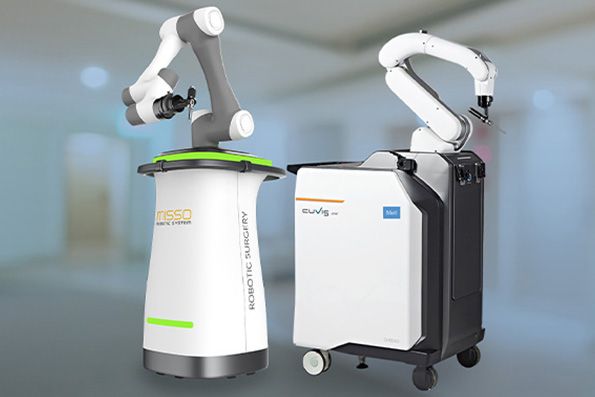
The Misso Robotic System helps surgeons perform knee replacement surgeries with great precision. It uses 3D scans to plan the surgery based on each patient's unique knee shape, ensuring the implant fits perfectly. During surgery, Misso cuts the bone with incredible accuracy, resulting in a faster recovery and better outcomes. The system also has safety features that stop the procedure if there’s any unexpected movement, protecting the surrounding tissues. Plus, its flexible design allows the surgeon to make adjustments during surgery to ensure the best outcome. This combination of accuracy, safety, and flexibility makes Misso an excellent tool for knee replacements.
Mizzo Flex SA by Meril
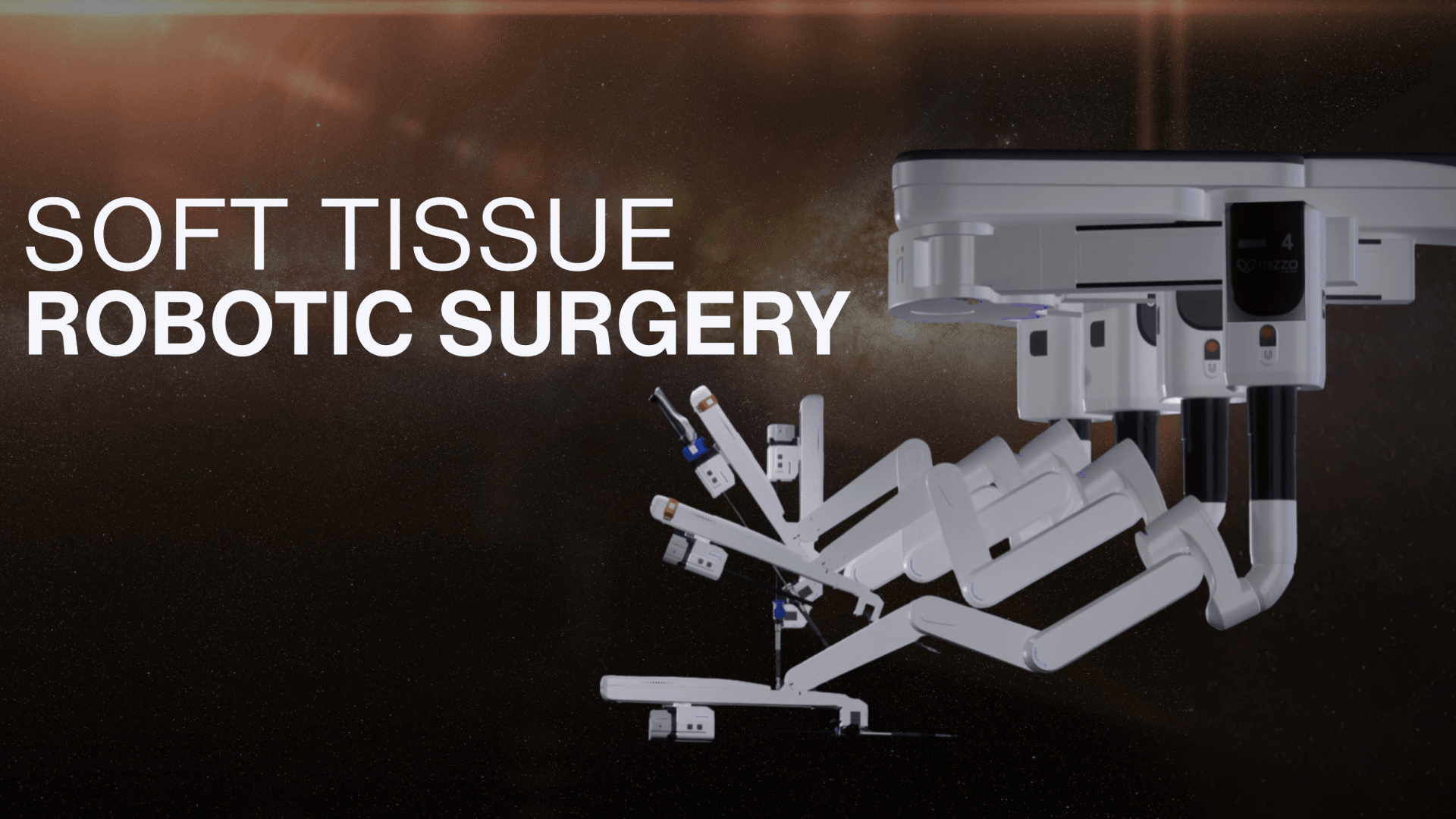
The Mizzo Flex SA is a revolutionary surgical robotic system designed to simplify and enhance surgical procedures. It allows doctors to perform minimally invasive procedures through a single access point, resulting in smaller incisions and quicker recovery times for patients. With its retroflexed arms, it helps surgeons work with greater precision and reach, making complex surgeries safer. This system is compatible with various operating rooms and versatile enough for a range of surgeries, including those for women’s health.
Mizzo Endo 4000 by Meril
Meril's MIZZO Endo 4000 is designed to assist surgeons during such procedures with enhanced vision, flexibility, and control. This innovative surgical system uses 3D imaging, AI-assisted mapping, and articulated robotic arms to perform delicate movements even in tight spaces.
Conclusion
Robotic systems have completely changed the way minimally invasive surgery is performed, bringing benefits that would have seemed impossible just a few decades ago. At the forefront of this transformation is the surgical robotic system, which blends human skill with cutting-edge technology.
As technology keeps advancing, these systems are set to make surgeries not only safer and more effective but also more accessible to people around the world.