

























Sinus: Causes & Symptoms
Introduction
Sinusitis is inflammation of the sinus lining caused by infection or allergy, leading to congestion, facial pressure, and headaches. Treatment ranges from medication to minimally invasive surgery like balloon sinus dilation.
What are sinuses?
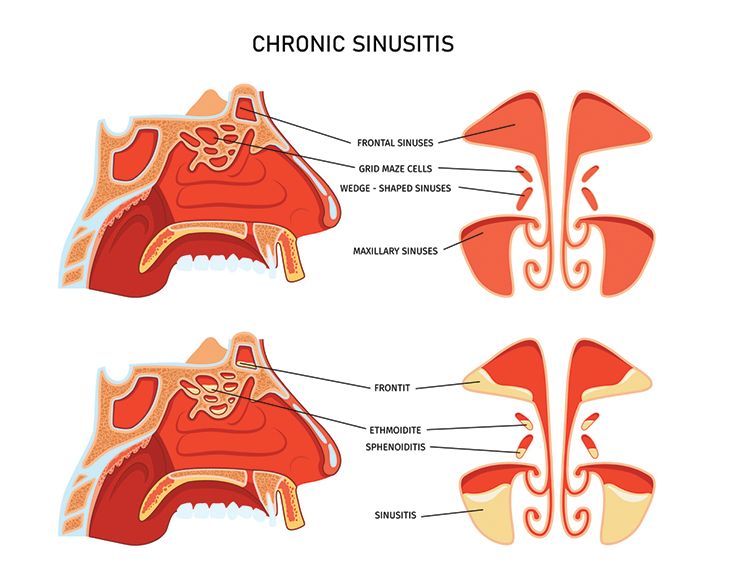
Sinuses are cavities in the nasal passage, situated behind the forehead, cheeks, eyes, and nasal bones. The word sinus is derived from Latin, meaning “hollow cavity.” Sinuses create a lining of mucus that keeps your nasal passages moist and lubricated. The mucus also helps protect against any dust, bacteria, and allergens. Think of them as an air-filtration system inside of your nasal passage.
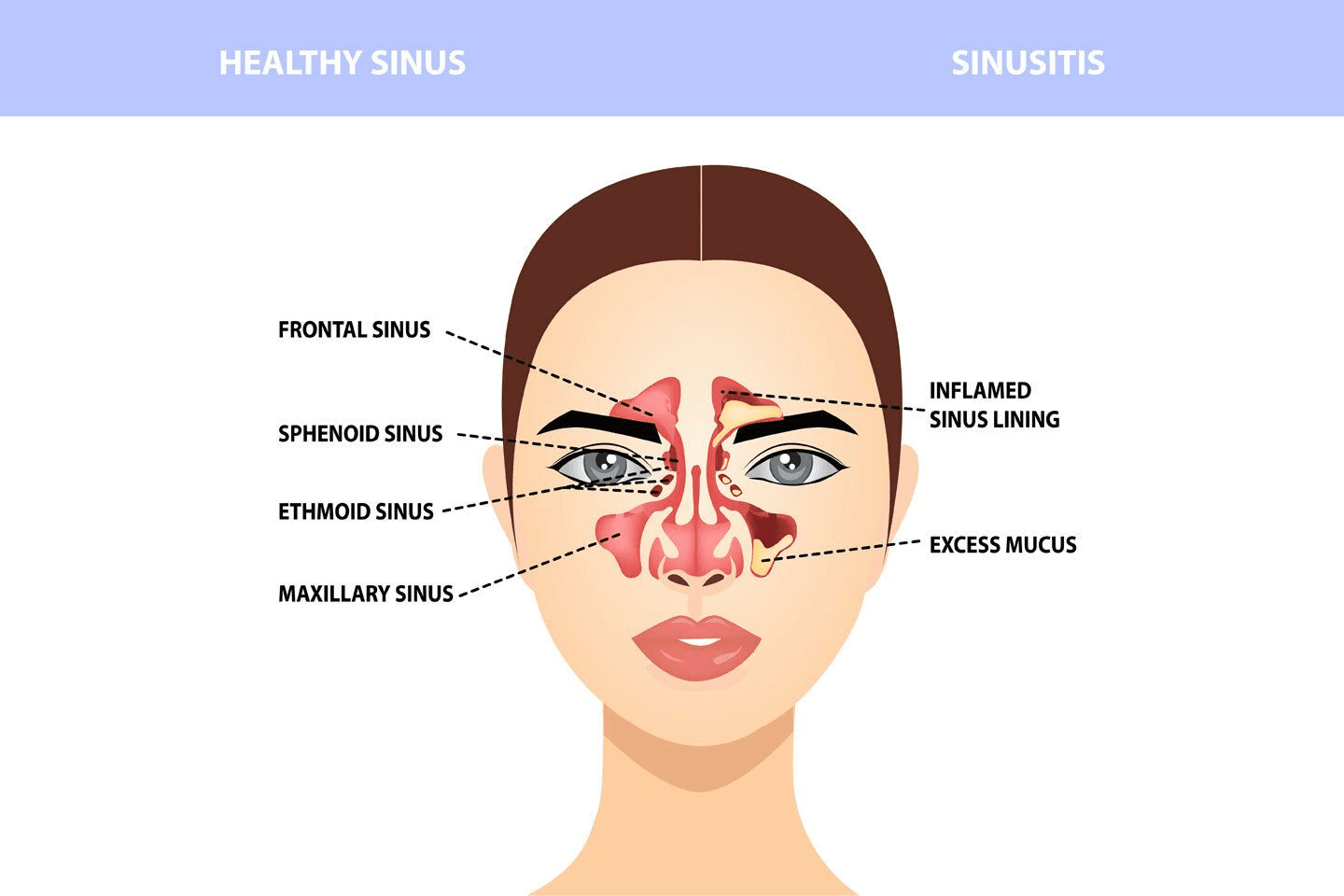
There are four types of sinuses, each named after the bone behind which they are located:
- Maxillary sinuses are found on either side of your nose, next to the cheekbones (the maxillae) and below the eyes
- Frontal sinuses are situated close to the forehead, above the eyes
Ethmoid sinuses are on either side of the nasal bridge, close to the eyes. They are a group of 6-12 air cells - Sphenoid sinuses are located deeper within your skull, behind the eyes
Besides acting as air filters, other functions of sinuses are:
- Heat and humidity inhaled air
- Help with the increasing resonance of the voice
- Reduce the weight of the head
- Encourage immune response in the nasal cavity
What is sinusitis?
Healthy sinuses are filled with air and devoid of bacteria and pathogens. Suppose there is an infection or an allergy. In that case, the sinuses get inflamed and blocked with fluid, causing the growth of germs and obstruction in breathing correctly. This condition is called “rhinosinusitis”. In medical terms, the prefix “rhino” stands for the nose.
This inflammation of the sinuses often becomes a nuisance because you may experience persistent facial pressure or pain. You may have a stuffy nose because of thick mucus, so you will end up breathing from your mouth.
Sinusitis causes
Sinus infections or sinusitis can happen to just about anyone. They can either be bacterial or viral infections. However, those who have respiratory conditions like bronchitis or asthma, nasal allergies (allergic rhinitis), nasal polyps, and deviated septum may experience sinusitis symptoms more often. Smokers or those exposed to second-hand smoke are also prone to experiencing sinusitis symptoms.
Suppose you have an immune deficiency or take medication that may suppress your immune system. In that case, you can be at risk of sinusitis. Sometimes sinus infections happen in tandem with common colds or allergies, so it is hard to tell these conditions apart. Usually, the common cold lasts a few days and then subsides, but this can also turn into sinusitis. Allergies can occur during pollen season or be a reaction to dust or mould.
You may experience a blocked nose, congestion, sneezing, itchy eyes and nose, headaches, and postnasal drip. Sinusitis is not communicable, but the germs and viruses that cause sinusitis can be transferred from one person to another. Maintaining good hygiene practices, like regular hand-washing after touching your nose and face, covering your mouth when you must sneeze, and avoiding contact with other people while you’re sick, is helpful.
You can keep your sinuses healthy by staying hydrated and avoiding irritants like smoking and exposure to second-hand smoke. Suppose you live in areas where there is heavy air pollution. In that case, investing in an air purifier for your home is advisable. Cleaning out your sinuses regularly using lukewarm salt water can reduce the chances of sinus infections. You can use saline nasal sprays or nasal irrigation tools available in pharmacies or a neti pot to rinse debris in your sinuses.
Investing in a humidifier is wise if you live in areas where the air is usually dry. A humidifier will keep your sinuses moist to function effectively and keep any irritants at bay from the air you inhale.
Sinusitis symptoms
There are different types of sinusitis depending on how long the symptoms remain. Common symptoms include:
- Runny and stuffy nose
- Facial pressure or pain
- Headache and toothache
- Postnasal drip (nasal mucus draining down your throat)
- Sore throat and hoarseness while speaking
- Fever
- Cough
- Fatigue
- Bad breath
- Swelling around the eyes, especially in the morning
- Fullness in ears
- Loss of smell and taste
Types of sinus infections
Four types of sinus infections are usually differentiated by how long the symptoms last during a flare-up and how often these symptoms recur in a month or a year.
- Acute sinus can last about four weeks or less and improves with restorative steps like inhaling steam and decongestants.
- Subacute sinus infection does not respond to treatment and can last from four to twelve weeks.
- Chronic sinus is a repeated sinus infection, which comes and goes with varying intensities over months, sometimes years. An episode can last about eight weeks.
- Recurrent happens when there are 3-4 episodes of acute sinusitis in a year.
Diagnosing a sinus infection
If you have any of the symptoms mentioned earlier and are experiencing discomfort, you should seek medical intervention. The sinusitis diagnosis can be made after a physical exam using an endoscope. The doctor may take a sample of nasal culture for investigation, blood tests, sinus x-rays, and a CT (computed tomography) scan. The doctor will also want your overall health and medical history, the symptoms, and how long you have been experiencing them.
Sinusitis treatment
The sinusitis treatment is straightforward but may vary depending on the severity and can include the following:
- Nasal decongestants
- Anti-allergy medication
- Nasal irrigation
- Inhaling steam, using a warm compress, drinking plenty of fluids
- Pain medication for headaches and to relieve facial pressure
- Antibiotics
- Surgery in severe cases
Sinus surgery
If there is a severe or recurring case of sinusitis, then sinus surgery is often the last resort. Usually, sinus surgeries are minimally invasive procedures that are quick, effective, and guarantee the patient’s long-term wellness. They are:
Functional Endoscopic Sinus Surgery (FESS): Here, the nasal passage is widened so the mucus blocking your sinuses can drain out effectively.
Balloon Dilation Sinus Surgery: The surgeon will guide a balloon into the nose using an endoscope and catheter. They will inflate the balloon so it can widen the size of your sinuses.
Meril Life's Mesire™ Balloon Sinus Dilation System
MESIRE, a Balloon Sinus Dilation System, is for patients who have chronic sinusitis and are not achieving relief even after using medication. This system guarantees a safe and effective procedure, less blood loss, and a fast postoperative recovery. This Balloon Sinus Dilation does not include the removal of any bone or tissue.
Key features include:
Minimally invasive: no tissue or bone removal, helping preserve natural sinus anatomy
Quick recovery: many patients can return to routine activities within 24–48 hours (based on clinical advice and individual recovery)
Clinically supported approach: helps improve sinus drainage and symptom control in selected cases
Advantages of Mesire™ over traditional sinus surgery
Traditional sinus surgery may involve removing tissue or bone to widen sinus openings. While effective, it can be more invasive and may involve a longer recovery. Balloon sinus dilation offers:
Reduced tissue trauma
Lower post-procedure discomfort in many cases
Faster return to day-to-day activities for suitable patients
What to expect post-procedure
Most patients experience mild discomfort, mild swelling or nasal irritation, and minimal downtime compared to traditional surgery. Follow-up care depends on the patient's recovery and doctor's recommendations.
Long-term relief and reduced recurrence
Clinical evidence shows balloon sinus dilation can provide lasting symptom improvement in selected patients and reduce recurrence of sinusitis episodes over time.
Final note
Sinus infections can disrupt daily life, especially if they tend to recur often. One of the best ways to manage sinus infections is to ensure sinus health by avoiding exposure to irritants, staying hydrated, and maintaining hygiene. You can go for decongestants and over-the-counter medication when there is a sinus flare-up. Still, sinus surgery is the final option if they do not alleviate the symptoms.