




















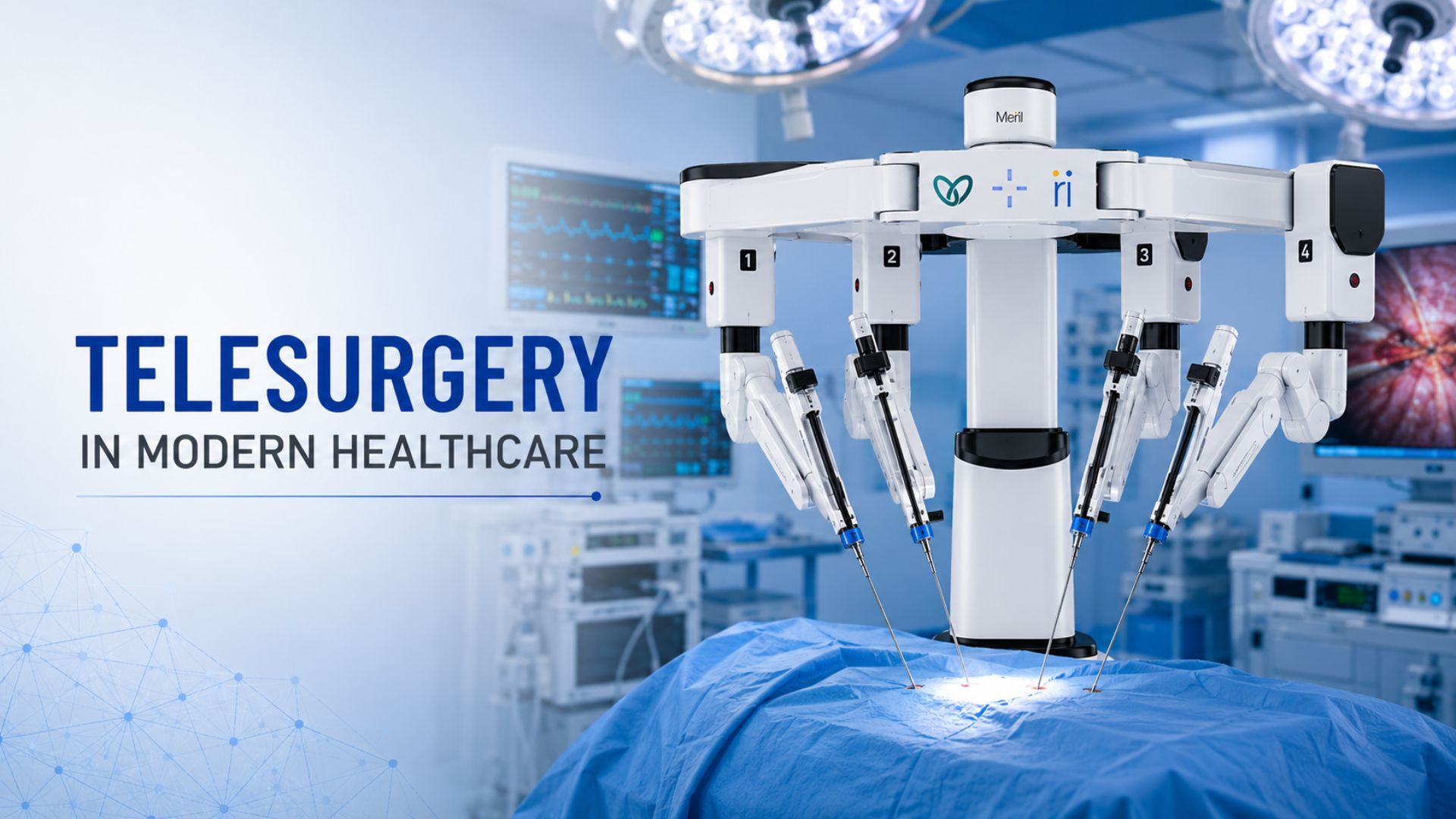
Telesurgery in Modern Healthcare: Enabling Precision Beyond Boundaries
Introduction
Imagine a world where a top surgeon sitting in Mumbai can perform an operation on a patient in a remote village in Rajasthan, without either of them moving an inch. Sounds like science fiction, doesn't it? Well, it's not. Welcome to the world of telesurgery. Telesurgery is redefining access, precision, and patient outcomes. For countries like India, where access to specialised care is uneven, this innovation is particularly significant.
What is Telesurgery?
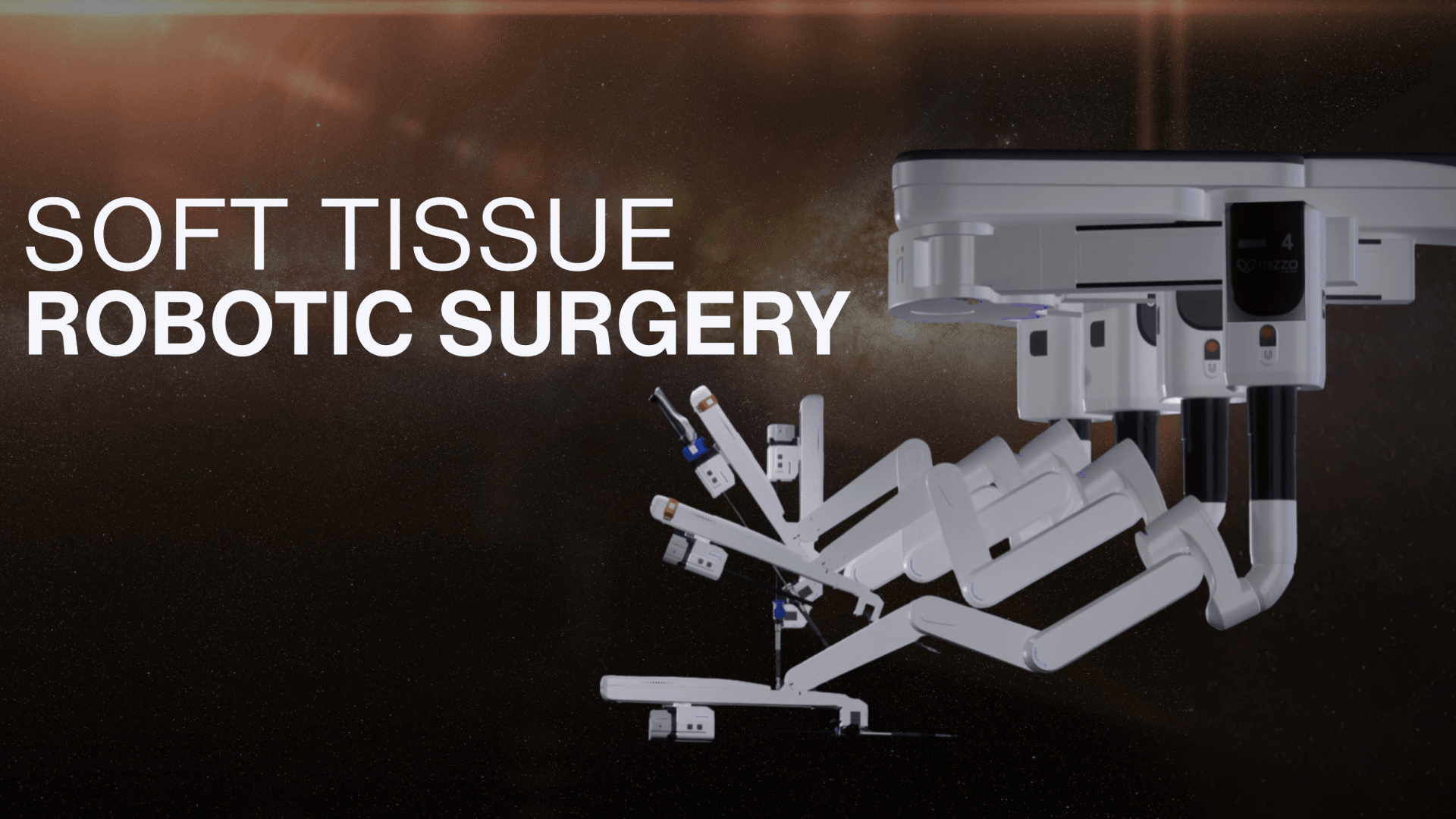
Telesurgery is another name for remote surgery. It is a surgical procedure performed by a surgeon at a location away from the patient. The operation is performed using a computer interface and robotic arms, which receive commands via a high-speed internet connection. Think of it like a video game controller, except instead of moving a game character, the surgeon is precisely controlling robotic arms that make actual incisions, sutures, and movements inside a patient's body.
Key components involved:
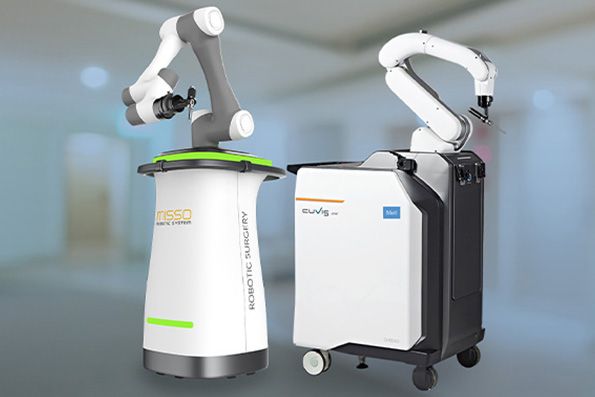
Robotic surgical systems
High-speed internet connectivity
Real-time imaging and feedback systems
This approach enables precision-based intervention without physical presence, expanding the reach of specialised care.
Evolution of Robotic Surgery to Telesurgery
Telesurgery did not emerge overnight. It is the result of continuous advancement in surgical technology.
Key stages in evolution:
Open Surgery
Large incisions
Longer recovery time
Laparoscopic Surgery
Minimally invasive
Use of cameras and small instruments
Robotic-Assisted Surgery
Enhanced precision and control
Reduced human tremor
Telesurgery
Remote operation capability
Integration of robotics and communication systems
According to a study published in the Journal of Minimal Access Surgery, robotic-assisted surgical systems significantly improve surgical precision and reduce variability in outcomes, laying the foundation for the adoption of telesurgery.[1]
How Telesurgery Works
Telesurgery integrates robotics, real-time communications, and surgical team collaboration in different locations. It goes beyond simple remote control, as it includes patients’ interaction, proper planning and briefing, among other factors.
Step-by-step working:
Pre-surgical planning and briefing
The remote surgeon and on-site surgical team review the patient's case
Imaging, risks, and procedural steps are discussed in detail
Roles and contingency plans are clearly defined
Dual-team setup (remote + on-site)
The lead surgeon operates from a remote console
A trained on-site surgeon and support team remain present with the patient
The on-site team can intervene if required
Real-time visualisation
High-definition 3D cameras provide a magnified surgical view
Both teams can monitor the procedure simultaneously
Robotic execution of movements
The remote surgeon's hand movements are translated into precise robotic actions
Robotic devices reproduce motions with great stability
Constant communication and monitoring
Audio-video communication is kept constant
The local surgeon helps with corrections, safety procedures, and emergencies
Post-operation and follow-up procedures
The local team handles postoperative care instantly after surgery.
The distant surgeon stays involved with evaluating results.
Key technical and clinical requirements:
Ultra-low latency (minimum time for transmission)
High-speed connection (preferably 5G or fiber optics)
Well-trained on-ground surgical support team
Key Benefits of Telesurgery
Why should you care about telesurgery? How is it better than the other? Here are the most important advantages:
For patients:
Access to expert surgeons regardless of location
- Reduced the need to travel to another city for surgery
- Ability to undergo the procedure and recover in their own home city
- Access to advanced surgical care without being separated from family or local support systems
For healthcare systems:
Better utilisation of specialised surgeons.
Tele-mentoring, where senior surgeons guide junior surgeons remotely during complex procedures, and tele-proctoring, where experienced specialists supervise and support surgeons in real time
Standardisation of surgical care
Improved training and collaboration
Clinical advantages:
High precision and stability
Reduced human error
Surgeries can be performed remotely in war zones or disaster areas.
Enhanced visualisation
The IJIRMS (2023) review also notes that telesurgery helps deal with the shortage of surgeons, eliminates geographical barriers, and improves timely access to high-quality surgical intervention.[2]
Applications of Telesurgery in Modern Healthcare
Telesurgery is being explored across various medical fields and specialisations. Here's where it's already making a difference:
Urology
Gynecology
General surgery
Bariatric Surgery
Thoracic Surgery
GI (Gastrointestinal) and HPB (Hepato-Pancreato-Biliary)
Cardiac surgery
Other surgeries
Emerging use cases:
Emergency trauma support
Remote battlefield or disaster care
Surgical mentoring and training
Telesurgery in India: Bridging the Urban-Rural Gap
India faces a disparity in healthcare access between urban and rural regions.
Existing challenges:
Lack of specialised surgeons in rural regions
Inadequate availability of modern surgery infrastructure
Increased travel requirement for patients
Benefits of telesurgery:
Facilitates long-distance intervention by experts
Overcomes geographical limitations
Enhances healthcare equality
How telesurgery helps:
Enables remote expert intervention
Reduces geographic barriers
Improves healthcare equity
Challenges and Limitations of Telesurgery
Even though telesurgery has some benefits, it also has drawbacks.
Technical challenges:
Relying on high-speed internet
Presence of latency
Operational challenges:
Expensive robotic technology
Training is required for professionals
Constraints on infrastructure in less-developed cities
Regulatory and ethical concerns:
Legal accountability in remote procedures
Data security and patient privacy
A PMC review (2025) highlights that latency remains one of the most critical barriers to widespread adoption of telesurgery.[1]
Role of Emerging Technologies in Telesurgery
Emerging technologies are helping implement telesurgery more effectively. Some of the technologies that help in implementing telesurgery:
5G technology
Low-latency technology
Responsiveness
Artificial Intelligence (AI)
Decision support system
Predictive analysis
Augmented Reality (AR)
Visualisation
Guidance overlay
Cloud computing
Storage and accessibility
Remote collaboration
And so forth.
These advancements are improving reliability, precision, and scalability in modern minimally invasive and robotic-assisted surgical procedures.
The Future of Telesurgery
The trajectory for telesurgery is promising. Here's what the coming years may look like:
Adoption of telesurgery in second and third-tier cities
Combination with AI decision support
More utilisation during emergencies
Globalisation of the surgical teamwork network
Potential impact:
Democratisation of specialised healthcare
Training ecosystems using simulation and VR warm-ups before live surgeries will become standard practice.
Improving the patient outcomes
Reduced healthcare disparities
In a country like India, where the doctor-to-patient ratio remains a concern, especially in rural areas, telesurgery isn't a technological curiosity. It is a potential pillar of future public health infrastructure.
Conclusion
Telesurgery is steadily transforming the way specialised surgical care can be delivered across distances. While challenges related to infrastructure, connectivity, cost, and training still remain, ongoing advancements in robotics, communication technologies, and remote surgical systems continue to expand their potential in modern healthcare.
In India, telesurgery can play an important role in improving access to specialised care and reducing healthcare disparities in the future.