World Population Day: Spreading Awareness about Global Health Challenges
Introduction
As the world's most populous nation, India faces evolving healthcare needs that highlight the importance of quality healthcare for everyone. With its diverse population and continued efforts to improve access to care, India continues to make meaningful progress in strengthening public health.
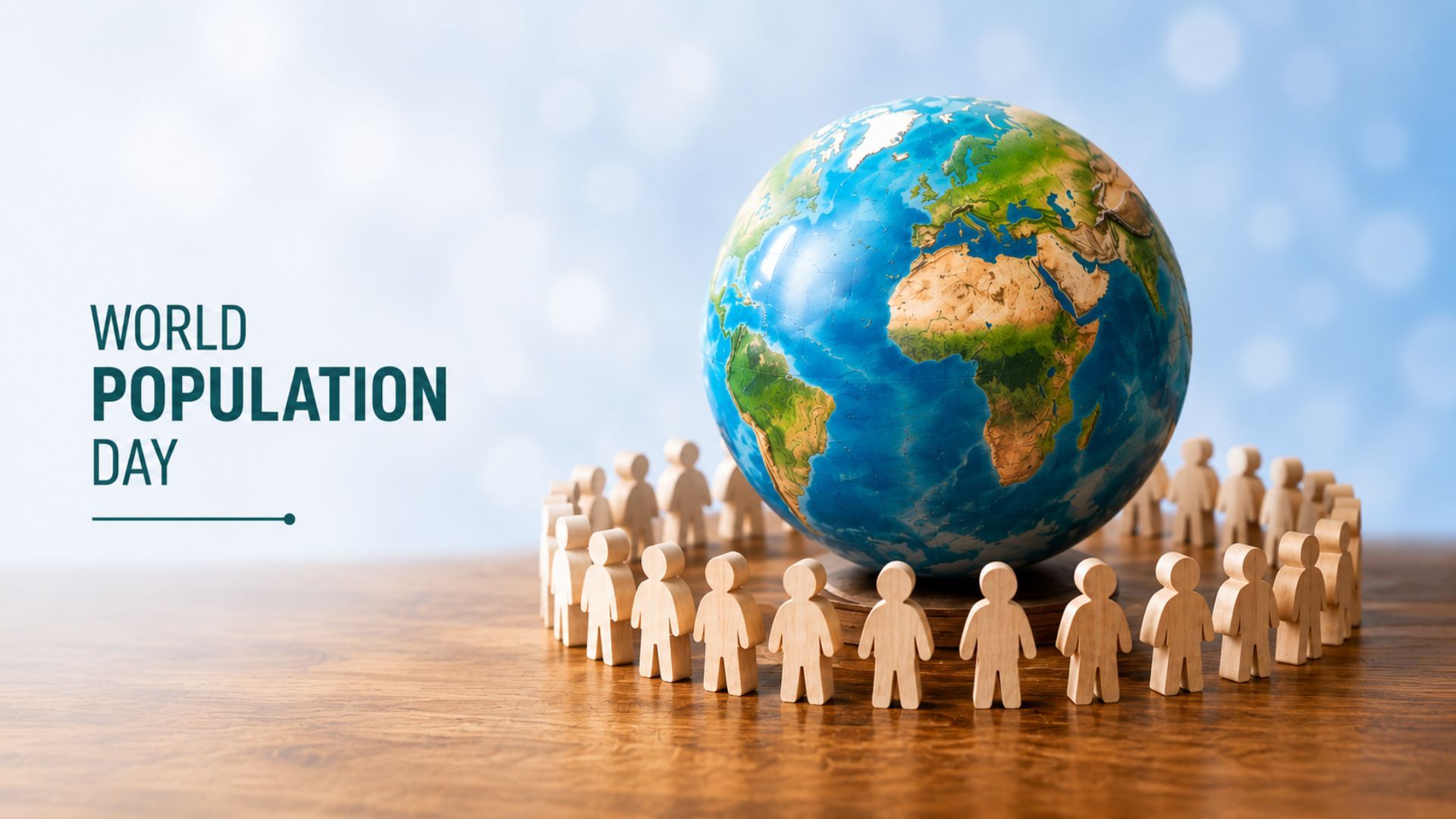
World Population Day, observed every July 11, offers an opportunity to reflect on how population trends influence healthcare needs and why strengthening health systems remains essential for the future.
What Is World Population Day?
World Population Day was established by the United Nations Development Programme (UNDP) in 1989 to focus global attention on population issues and their connections to health, the environment, and development. The date, July 11, marks when the world's population crossed 5 billion in 1987.
The theme varies each year according to the year's burning issue. The one thing that does not change is the underlying message: everyone should have access to healthcare and education, and be able to make decisions about their own health and family.
Global Health Challenges Linked to Population Growth
It took hundreds of thousands of years for the world to reach 1 billion people, then just 200 more years to grow sevenfold. The global population now stands close to 8 billion, expected to reach 9.7 billion by 2050 and 11.2 billion by 2100, according to the United Nations Population Division.[2]
As populations grow and demographic patterns evolve, healthcare systems worldwide must prepare to meet changing health needs by strengthening infrastructure, promoting preventive care, and ensuring equitable access to quality healthcare. Some of the key challenges include:
Strain on Healthcare Systems: Growing populations increase the demand for hospitals, healthcare professionals, medicines, and essential services. When demand outpaces available resources, particularly in low- and middle-income countries, access to timely, high-quality care becomes increasingly challenging.
Malnutrition: Ensuring adequate nutrition remains a global public health priority. Malnutrition, undernutrition, and rising obesity continue to affect millions, impacting immunity, child development, and long-term health outcomes.
Infectious Disease Spread: Dense urban populations create ideal conditions for the spread of infections. The COVID-19 pandemic showed how fast a virus can travel across a crowded, interconnected world.
Rising burden of Non-Communicable Diseases (NCDs): Urbanisation leads to changes in lifestyle. A sedentary lifestyle, along with junk food and increased stress, has contributed to an increase in conditions such as diabetes, cardiovascular disorders, and cancer. NCDs now account for over 65% of all deaths in India, according to the Burden of Disease Report, 2019. [1]
Health Challenge | Key Concern | Who Is Most Affected |
Strained healthcare systems | Growing demand for healthcare services and limited resources | Rural and low-income populations |
Malnutrition | Undernutrition, micronutrient deficiencies, and obesity | Children, women, and older adults |
Infectious disease spreads | Rapid transmission in densely populated areas | Urban slum dwellers |
Non-communicable diseases | Sedentary lifestyles, unhealthy diets, and ageing populations | Adults and older adults |
Maternal & infant mortality | Limited access to quality maternal and newborn care | Women in remote areas |
Emotional health | Economic uncertainty, social stress, and climate-related challenges | Youth and young adults |
Population and Health Challenges in India
India became the world's most populous country in 2023, surpassing China. Home to more than 1.45 billion people, [6] the country has made significant progress in improving public health while continuing to address challenges such as maternal and child health, malnutrition, and the growing burden of non-communicable diseases (NCDs).
Maternal and Child Health
India has made remarkable progress in improving maternal and child health outcomes. As per the Sample Registration System (SRS) Special Bulletin, India's Maternal Mortality Ratio (MMR) declined from 130 per lakh live births in 2014–16 to 93 in 2019–21.[4] The UN Inter-agency Group report (April 2025) confirmed India's MMR has reduced by 86% over 33 years, well ahead of the global average of 48%.[4]
The Infant Mortality Rate (IMR) fell from 39 per 1,000 live births in 2014 to 27 in 2021.[3] Despite this progress, regional disparities remain, highlighting the need for equitable access to quality maternal and newborn healthcare across the country.
The Growing Burden of Non-Communicable Diseases (NCDs)
The Madras Diabetes Research Foundation–ICMR study found India has 101 million individuals with diabetes and 136 million with prediabetes.[4]
The Journal of the American Heart Association study identified 315 million individuals living with hypertension in India.[5]
NCDs account for 65% of total deaths in India.
Rapid urbanisation, changing lifestyles, ageing populations, and dietary habits are contributing to the growing burden of NCDs.
Malnutrition: A Double Burden
India continues to face a double burden of malnutrition, where undernutrition persists in many communities while overweight and obesity are rising in others. Children remain among the most affected, with millions experiencing stunting, wasting, and anaemia.
Together, these challenges highlight the need for a comprehensive approach that combines preventive healthcare, timely diagnosis, improved access to quality care, and sustained public health initiatives to improve health outcomes across all sections of society.
The Role of Family Planning and Reproductive Health
Family planning is about enabling individuals and couples to make informed decisions about their reproductive health. It is a key component of public health, contributing to healthier pregnancies, improved maternal and child health outcomes, and stronger communities. India's unmet need for family planning declined from 20.6% in 1993 to 9.4% in 2021, per a study analysing five rounds of the National Family Health Survey (NFHS).[4] However, more than half of women with unmet needs were concentrated in Uttar Pradesh, Bihar, Maharashtra, and West Bengal, highlighting the need for continued efforts to improve access and awareness.
Why reproductive health matters:
Improved maternal health: Appropriate birth spacing helps reduce pregnancy-related complications and supports safer pregnancies.
Better child health: Planned pregnancies allow parents to prepare, leading to better nutrition and care for newborns.
Women's empowerment: Access to reproductive healthcare enables women to make informed choices about their education, careers, and overall well-being.
Reduced healthcare burden: Preventing unintended pregnancies helps optimise the use of maternal healthcare services and resources.
Adolescent health: Comprehensive reproductive health education supports informed decision-making and helps reduce early pregnancies and improve long-term health outcomes.
Conclusion
World Population Day is not simply about population numbers—it is an opportunity to reflect on how demographic trends shape healthcare needs, influence disease patterns, and impact access to quality care. While challenges such as non-communicable diseases, maternal and child health, and malnutrition continue to require attention, India's progress demonstrates that sustained public health efforts and informed policy can lead to meaningful improvements.
As populations continue to evolve, so must healthcare systems. Strengthening preventive care, expanding equitable access to quality healthcare, promoting health awareness, and embracing medical innovation will be essential to meeting the health needs of present and future generations.
A healthier future depends on informed communities, resilient healthcare systems, and collective action. World Population Day serves as a reminder that improving health outcomes is a shared responsibility—one that requires collaboration between governments, healthcare providers, industry, and individuals alike.
FAQs


References
[1] https://pmc.ncbi.nlm.nih.gov/articles/PMC11078398/
[2] https://www.un.org/en/desa/world-population-projected-reach-98-billion-2050-and-112-billion-2100
[3] https://www.pib.gov.in/PressReleasePage.aspx?PRID=2128024®=3&lang=2
[4] https://www.pib.gov.in/PressReleasePage.aspx?PRID=1955800®=3&lang=2
[5]https://www.ahajournals.org/doi/full/10.1161/JAHA.125.044340