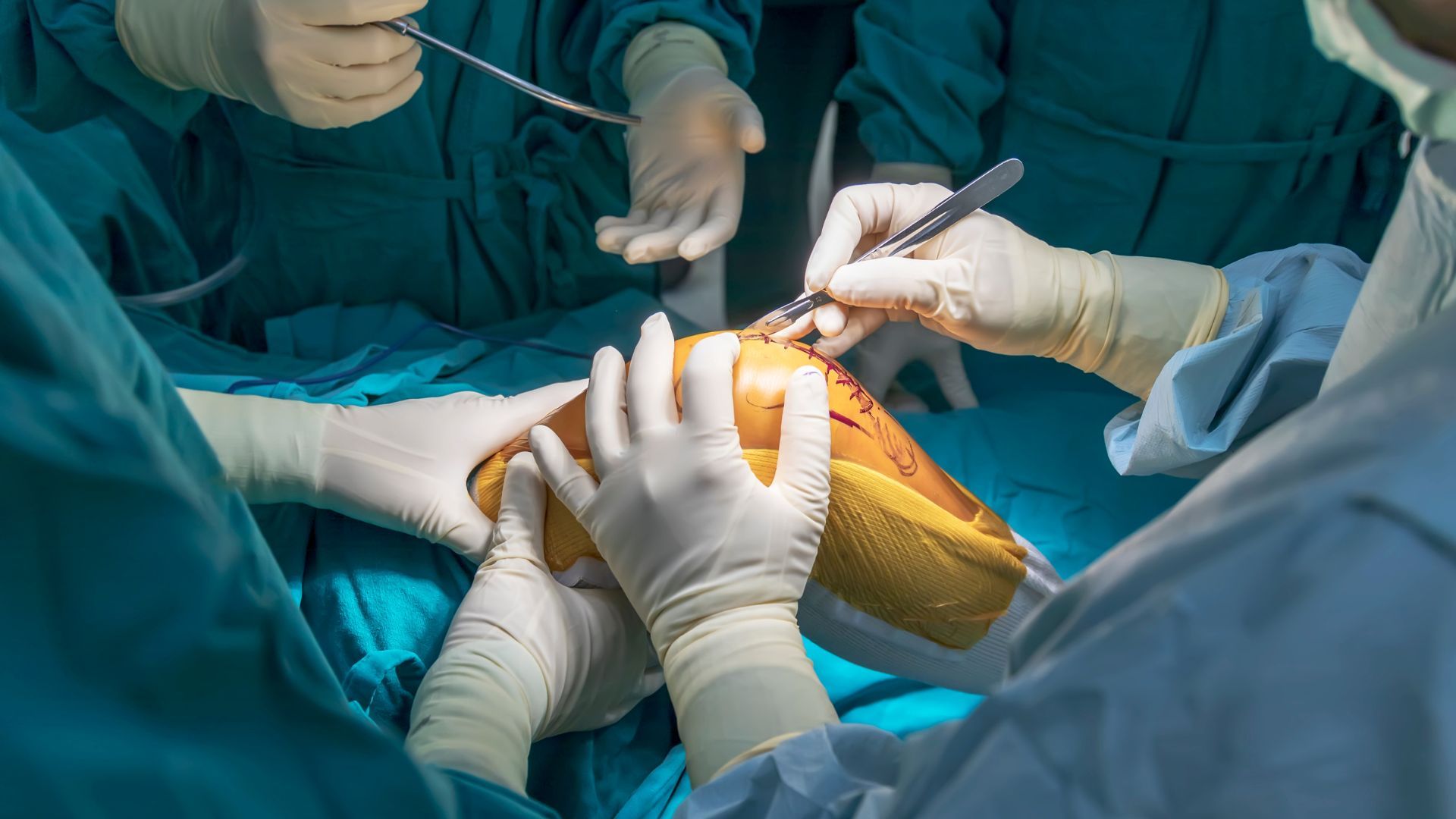
Knee Replacement Surgery: Types, Implants, Procedures, Recovery
Introduction
When your natural joint is damaged due to arthritis, injury, or long-term wear and tear, the affected parts of the knee are replaced with an artificial implant. Knee replacement surgery helps with relieve severe knee pain, restores movement, and provides comfort. This surgery is often considered when everyday activities like walking, climbing stairs, or even resting become difficult. It can restore independence and improve the quality of life for many people.
Knee Replacement Types: Total vs. Partial Knee Replacement
Depending on the damage to the joint, there are two main types of knee replacement surgery:
Total Knee Replacement (TKR):
The complete knee joint is replaced, and a new artificial implant is put in its place.
Best suited for people with widespread arthritis or damage in all compartments of the knee.
Partial Knee Replacement (PKR):
In this case, only the damaged compartment of the knee is replaced.
Useful when arthritis is limited to just one area of the knee.
Preserves more of the natural bone and tissues, which may lead to quicker recovery.[1]
Total vs. Partial Knee Replacement
| Feature | Total Knee Replacement (TKR) | Partial Knee Replacement (PKR) |
Area replaced | Entire joint | Only one compartment |
Recovery time | Slightly longer | Usually quicker |
Durability | Often long-lasting | May need revision sooner |
Best suited for | Severe, widespread arthritis | Localised knee damage |
Types of Knee Replacement Implants and How Surgeons choose the right one
The success of surgery also depends on the implant used. These are artificial parts made from safe metals, ceramics, or medical-grade plastics. There are different types of knee implants available, each designed to suit specific patient needs:
Fixed bearing implants: Standard option where the plastic insert is fixed to the metal base.
Mobile bearing implants: Allow greater rotational movement, often preferred for more active patients.
Gender-specific implants: Designed to match anatomical differences in men and women.
How surgeons choose implants
Patient's age and activity level.
Bone quality, strength and overall health.
Degree of joint damage.
Lifestyle goals (e.g. light sports, walking, or daily activities).
How are the Partial Knee and Total Knee Replacement Procedures Done?
In total knee replacement, the whole joint is replaced, while in partial knee replacement, the affected compartment is addressed. The knee replacement procedure is planned carefully for each patient.
Preparation:
Health assessments, scans, and discussions with the surgical team.
Anaesthesia is given to ensure the patient does not feel pain during surgery.
During the surgery:
Damaged bone and cartilage are removed.
Artificial implants are positioned to recreate smooth joint surfaces.
Duration:
The operation usually lasts one to two hours.
Hospital stays:
Most patients remain in the hospital for a few days before beginning physiotherapy.
Risks, Complications, and Recovery after Knee Replacement
Like any operation, knee replacement has some possible risks, such as[2]:
Infection
Blood clots
Implant wear over time
Stiffness or reduced mobility
The good news is that modern technology and advanced techniques have significantly lowered these risks.
Rehabilitation and Physiotherapy for Better Knee Replacement Recovery
Recovery begins as soon as the surgery ends, if you want to regain strength and mobility in your knee. With proper guidance and physiotherapy, you can effectively manage your knee during recovery.
First few weeks: Begin with gentle exercises to restore movement.
Walking aids: You may have to use crutches or walkers. Using them as directed by your doctor will ensure better rehabilitation.
Exercises: You can slowly introduce strength training, and stretching will improve flexibility.
Long-term: You will have to be consistent with exercises, which will help speed up recovery and reduce stiffness.
With proper rehabilitation and physiotherapy, most people return to daily activities within three to six months.
Lifestyle Adjustments and Long-Term Outcomes
After surgery, some lifestyle changes help in maintaining results:
- Maintain a healthy weight to reduce pressure on the knee.
You can engage in low-impact exercises like swimming, walking, or cycling.
Avoid high-impact sports that may place excessive stress on your knee.
Follow medical advice on posture and movement.
It is seen that most implants last around 15–20 years, meaning a single surgery can provide comfort and improved mobility for decades.[3]
Latest Innovations in Knee Replacement Surgery
Advances in technology and techniques now make knee replacement procedures more precise, less invasive, and quicker to recover. They are designed to mimic natural knee movement, last longer, and help people return to their daily activities more quickly and with more confidence.
Minimally invasive techniques: Smaller incisions, reduced pain, and faster healing.
Robotic-assisted surgery: Improves accuracy in implant positioning.
Next-generation implants: Designed to last longer and mimic natural movement more closely.
Advanced solutions from Meril, like Freedom, Opulent and Destiknee, have helped make knee replacement procedures safer, and more patient-focused. These implants provide smoother joint surfaces, reducing pain and improving mobility.
Conclusion
Knee replacement surgery can transform lives by reducing pain and restoring mobility. Whether it's a total knee replacement or a partial knee replacement, modern procedures and implants make it a safe and effective choice. With proper recovery, physiotherapy, and lifestyle adjustments, people can look forward to enjoying everyday activities once again.
FAQs
Q1. How long will it take to recover from a knee replacement?
Recovery varies from person to person, but most people can resume normal activities in three to six months.
Q2. Are all patients suitable for partial knee replacement?
No. Partial knee replacement is suitable only when damage is limited to one specific compartment of the knee.
Q3. How long do knee replacement implants last?
Implants can last 15–20 years, though they may vary. This can vary depending on lifestyle, weight, and activity level.
Q4. Can I return to sports after a knee replacement?
Low-impact sports like swimming and cycling are usually allowed. High-impact activities should be avoided.
Q5. What is the rate of success from knee replacement surgery?
With modern implants and advanced surgical techniques, success rates are high, giving patients long-term pain relief and improved mobility.