























How to Get Tested for HIV: Options, Accuracy, and What to Expect
Introduction
Getting tested for HIV is important for your health. Many people avoid it because they are scared or lack sufficient knowledge about it. But knowing your status helps you stay healthy and protect others. HIV tests are now quick, simple, and accurate. One of the easiest ways to check is by using an HIV rapid test kit, which gives results in minutes. In this article, we'll discuss various testing options, their accuracy, and what to expect during the test.
Why HIV Testing Is Important
The only way to know if you have HIV is through testing. Many people don't show symptoms for years, so early testing is very important. If found early, HIV can be managed well with proper medical care. Testing also helps stop the spread of the virus because people who know their status are more likely to take precautions. [1]
Different Types of HIV Tests
There are several types of HIV tests available:
Antibody Tests: These check for HIV antibodies in your blood or saliva. Most rapid tests fall into this category.
Antigen/Antibody Tests: These look for both HIV antigens and antibodies. They are typically performed in laboratories and yield highly accurate results.
Nucleic Acid Tests (NATs): These detect the actual virus in the blood. They are mostly used for early detection or in specific medical cases.
Among these, the HIV rapid test kit is the most convenient option for quick results.
Rapid HIV Tests: How They Work and Their Accuracy
An HIV rapid test kit checks for HIV antibodies using a small blood sample or oral fluid. It is simple to use, and you get results in about 20 minutes. These kits are very accurate, especially if taken at the right time. However, if the result is positive, you should confirm it with a lab test.
Understanding HIV Test Results
HIV test results can be:
Negative: This means no HIV was detected. If you tested too soon after exposure, a repeat test may be needed later.
Positive: A positive rapid test result indicates that further testing is necessary to confirm the diagnosis.
Indeterminate: Rarely, a test may not give a clear result. In such cases, a follow-up test is necessary.
What to Expect During and After an HIV Test
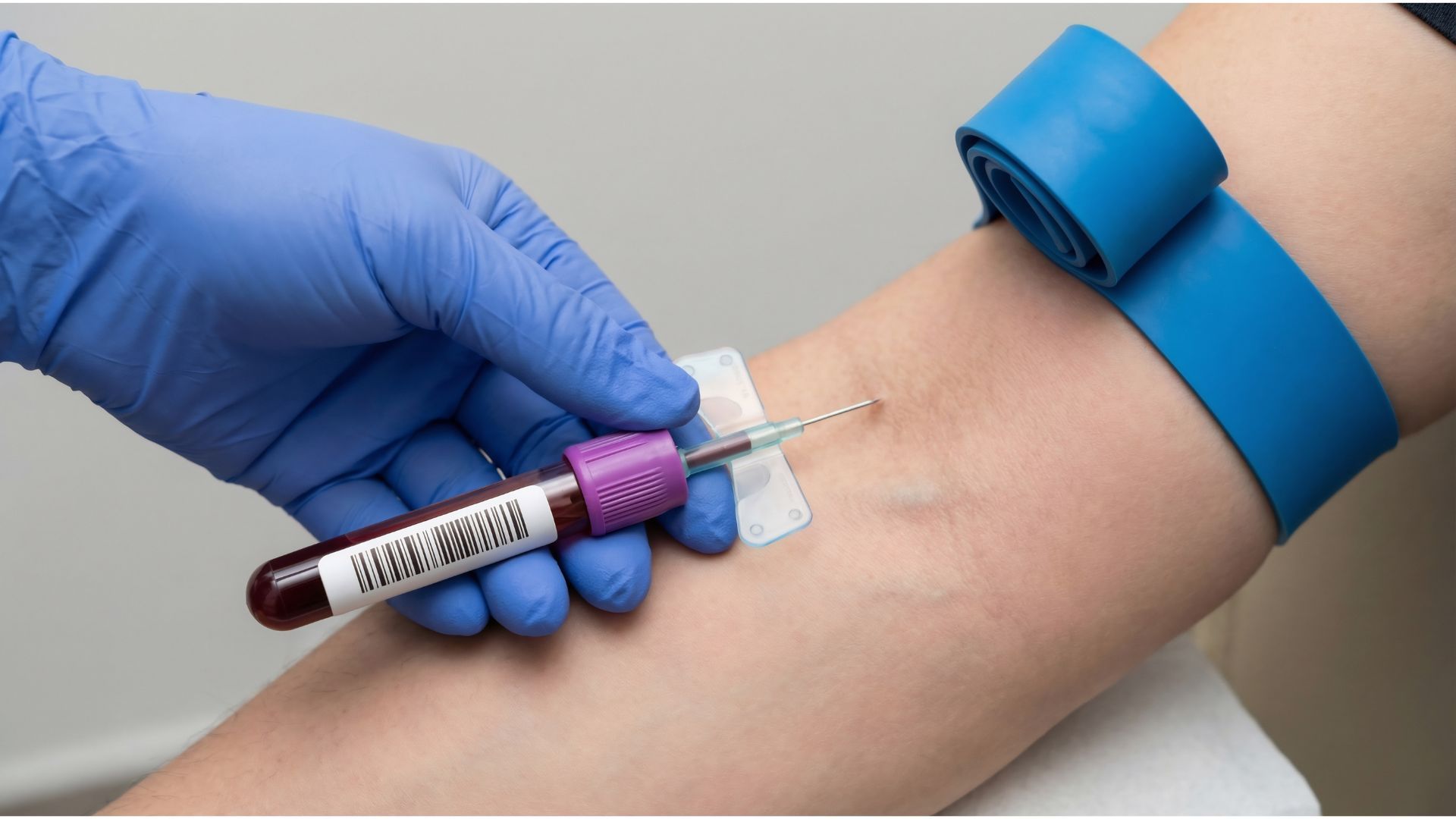
HIV testing is quick and painless. A lab test requires a small blood sample, while a rapid test uses a finger prick or oral swab. With an HIV rapid test kit, you get results in minutes.[2]
If your result is negative but you had recent exposure, you may need to test again after a few weeks. If the result is positive, a confirmatory test will be performed. You'll also get guidance on the next steps and available support.
Where to Get Tested for HIV
You can get tested at:
Government and private health centres
Community health clinics
Special HIV testing centres
Testing is confidential, and many centres offer free or low-cost services.
Understanding the HIV Testing Window Period
The accuracy of an HIV test depends on how much time has passed since exposure, as the virus or antibodies may take time to become detectable. Because of this, it can vary from person to person. Here are some test and their time window.
- Within a few weeks (10–33 days):
Nucleic acid tests (NATs) can detect HIV early by identifying the virus itself. These tests are laboratory-based and are not routinely used for screening. Any positive result requires follow-up testing. - After a few weeks (18–45 days; up to 90 days for finger-prick tests):
Antigen/antibody tests can detect both HIV p24 antigen and antibodies. Laboratory-based tests detect infection sooner than finger-prick versions. - After about 4 weeks to 3 months (23–90 days):
Antibody tests, including most HIV rapid tests, become increasingly reliable over this period. Testing closer to the 3-month mark provides the highest confidence.
If you are sexually active or share needles, regular testing is recommended.
Next Steps after an HIV Test
If negative: Continue practising safe habits and test regularly if at risk.
If positive: a confirmatory test will be performed. If confirmed, medical support and treatment options will be discussed.
With the proper care, people living with HIV can lead long and healthy lives.
Addressing Common Myths about HIV Testing
There are many myths around HIV and HIV testing that often create unnecessary fear or hesitation. Understanding the facts can help people make informed decisions about when and how to get tested, and why regular testing is important for everyone.
Myth: HIV tests are painful. Most tests involve a simple finger prick or oral swab.
Myth: Only certain people need testing. Anyone can get HIV, and testing is important for everyone.
Myth: A positive test means immediate illness. With treatment, people with HIV can live normal lives.
Myth: You must visit a clinic for testing. You can use an HIV rapid test kit in the privacy of your home.
How Rapid HIV Tests and ELISA Work Together
MeriScreen HIV Rapid Tests are commonly used as the first step in HIV testing because they give quick results and are easy to use. However, a positive rapid test does not confirm HIV on its own. This is where ELISA testing becomes essential. MERILISA HIV 4TH Gen is a laboratory-based ELISA test that detects both HIV antibodies and the p24 antigen, allowing for earlier and more accurate detection. Because ELISA tests are more sensitive and specific, they are always used to confirm a positive HIV rapid test result.
Conclusion
Getting tested for HIV is important for your health and helps prevent the virus from spreading. With options like the HIV rapid test kit, testing is now quick and easy. Regular testing, safe practices, and early treatment can make a big difference. Don't wait, take charge of your health today!