



























Hip or groin pain may sometimes begin as a mild discomfort during activities such as walking, exercising, or climbing stairs, and can easily be mistaken for a strain, overuse, or an everyday joint ache. If the pain keeps returning, gradually worsens, or begins to occur even at rest, it may point to a problem within the bone or joint. One such condition is avascular necrosis (AVN), also known as osteonecrosis.
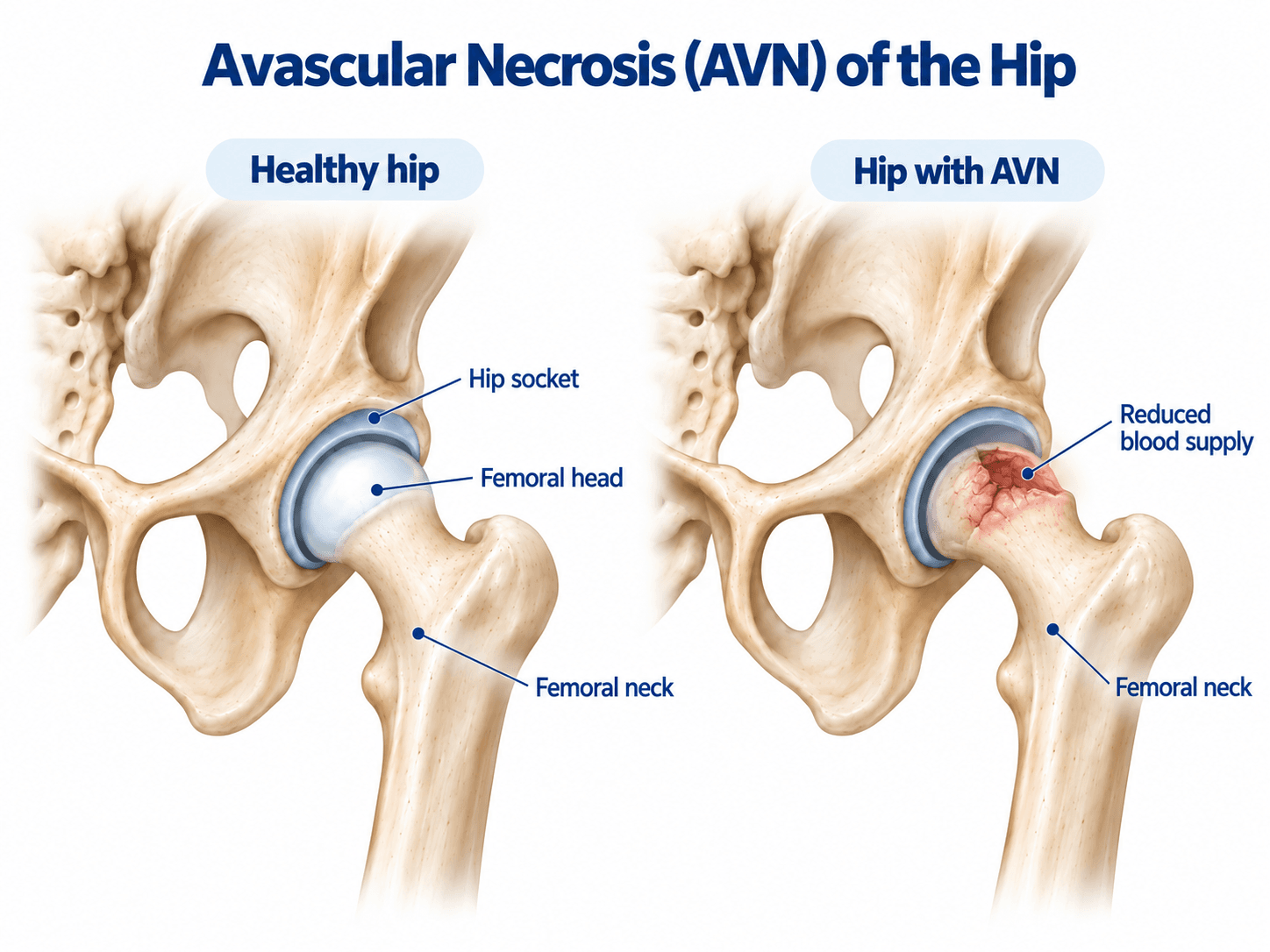
Avascular necrosis (AVN) occurs when the blood supply to a part of the bone is reduced or interrupted. Without adequate blood flow, the affected bone tissue gradually begins to die.
AVN can affect different bones and joints, but it most commonly affects the hip, particularly the femoral head—the rounded upper part of the thigh bone that forms the ball of the hip joint.
AVN is also seen in younger, active adults, particularly between 20 and 40 years of age. In its early stages, there may be no noticeable symptoms. As the condition progresses, weakened bone may develop small fractures and eventually collapse, leading to pain and loss of joint function.
At a Glance
| Also known as | Osteonecrosis |
| Most commonly affected joint | Hip |
| Other joints affected | Knee, shoulder, wrist, ankle and jaw |
| What causes the damage? | Reduced or interrupted blood flow to the bone |
| Why does early diagnosis matter? | Treatment options may become more limited after the bone or joint surface collapses |
What Happens in Avascular Necrosis?
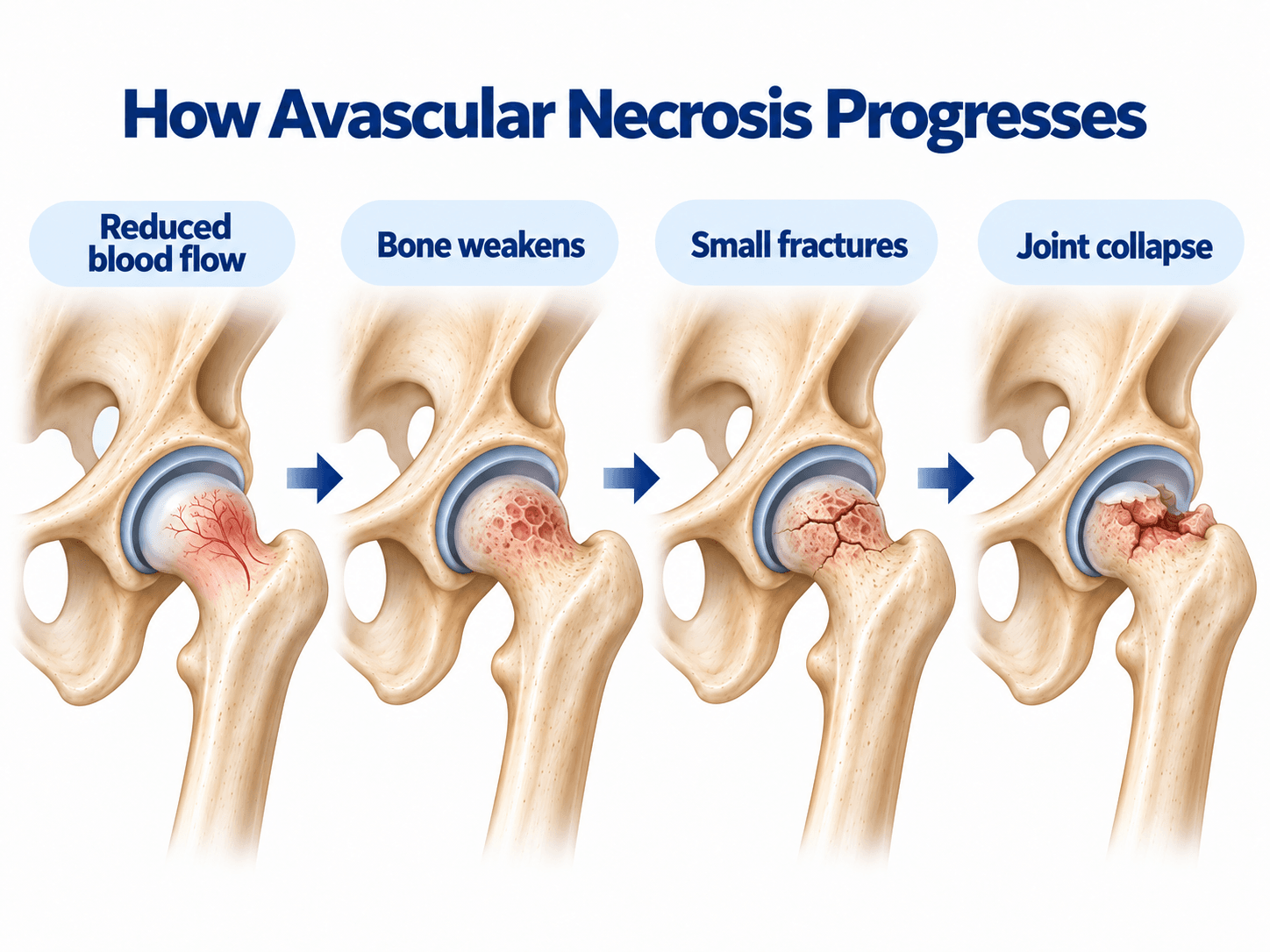
AVN usually progresses gradually. As the affected bone becomes weaker, a series of changes may occur:
- The affected area of bone weakens as bone cells are damaged.
- Small fractures may develop because the weakened bone is less able to bear normal loads.
- The shape of the bone may begin to change, particularly around a joint.
- The joint surface may eventually collapse, leading to increasing pain, stiffness and arthritis.
Early damage can develop before noticeable symptoms appear.
What Causes Avascular Necrosis?
Avascular necrosis develops when blood flow to the bone becomes impaired. Common causes and risk factors include:
Joint or bone injury: A fracture or dislocation may damage nearby blood vessels.
Long-term or high-dose corticosteroid use: Corticosteroids are a recognised risk factor for AVN.
Fatty deposits: Lipids may obstruct small blood vessels supplying the bone.
Certain medical conditions: Sickle cell disease, lupus and Gaucher disease may affect blood circulation to bone.
Radiation therapy: Radiation used during cancer treatment may weaken bone and affect nearby blood vessels.
What if there is no identifiable cause?
In some people, doctors cannot identify a specific reason for the reduced blood supply. This is known as idiopathic AVN.
Avascular Necrosis Symptoms
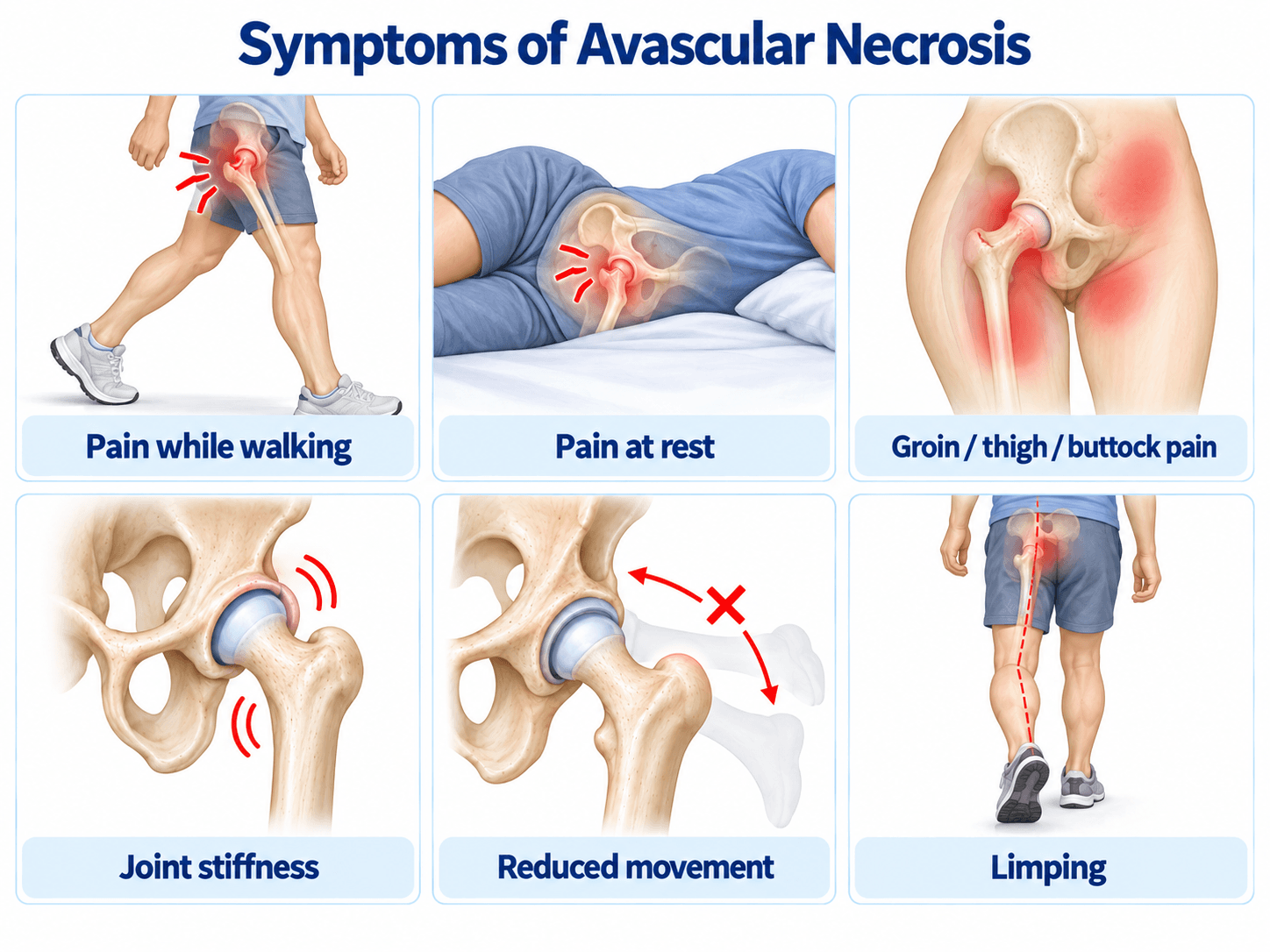
Avascular necrosis symptoms may be absent during the early stages of the condition. Symptoms generally become more noticeable as bone damage progresses.
Common symptoms include:
Pain while walking or putting weight on the affected joint
Pain that may eventually occur even while resting
Groin, thigh or buttock pain when the hip is affected
Joint stiffness
Reduced range of movement
Difficulty performing everyday activities
Limping in more advanced cases
Pain may range from mild to severe and often develops gradually. AVN can sometimes affect both sides of the body—for example, both hips.
Avascular Necrosis of Femoral Head
Avascular necrosis of femoral head is the most common form of AVN affecting the hip.
The femoral head is the rounded upper end of the thigh bone that fits into the hip socket. When its blood supply is reduced:
Bone tissue begins to weaken.
Small fractures may form inside the femoral head.
The normally rounded surface may begin to flatten or collapse.
Damage to the joint surface can cause increasing pain and stiffness.
Advanced disease may lead to secondary arthritis.
AVN most frequently affects the hip, followed by the knee and shoulder. Less commonly, it may occur in the wrist, ankle or jaw.
Avascular Necrosis Stages
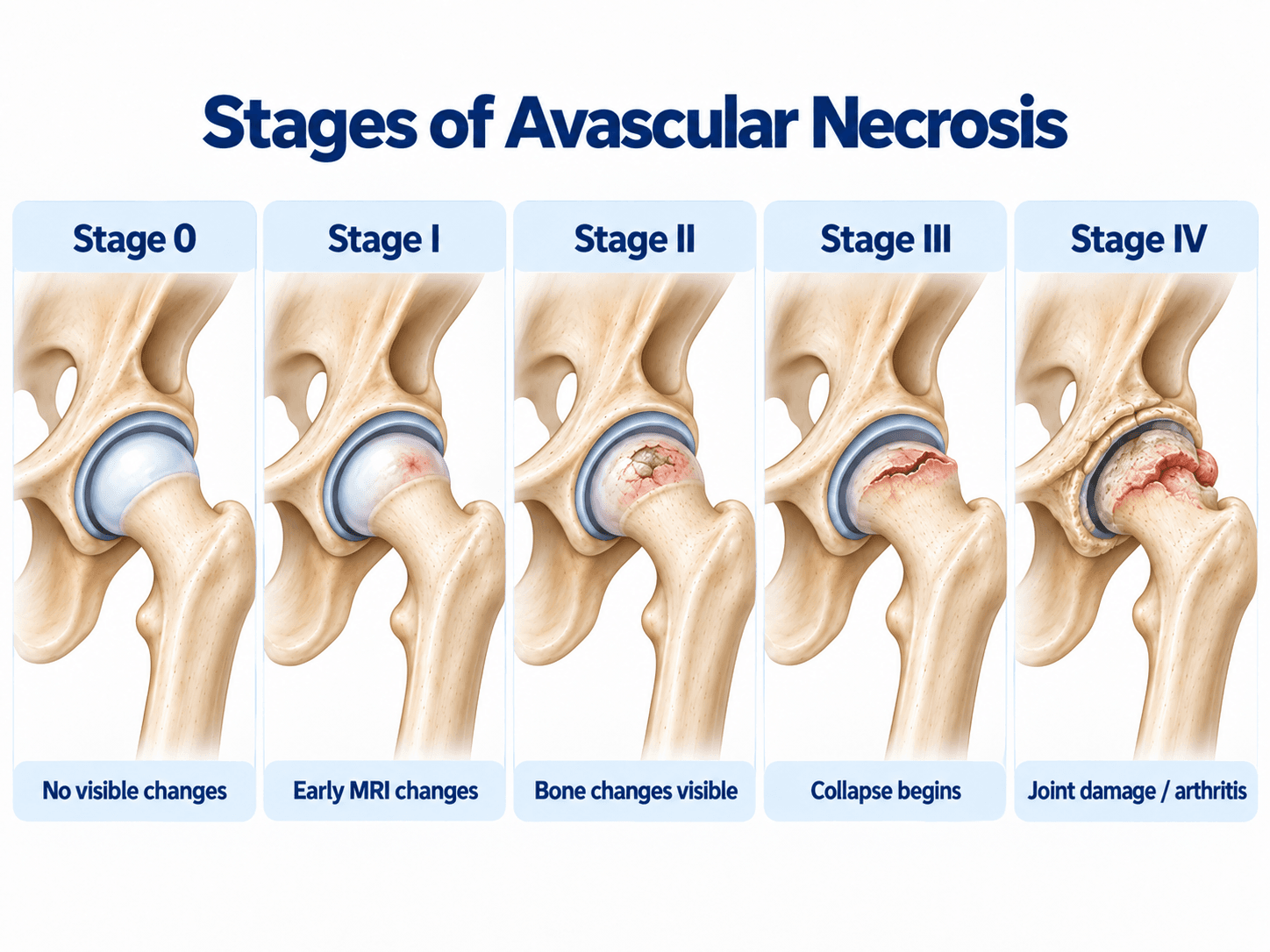
Doctors may assess avascular necrosis stages using symptoms and imaging findings. One commonly used system is the Ficat and Arlet classification.
AVN Stage | What May Be Seen | Possible Symptoms |
| Stage 0 | X-ray and MRI may appear normal | Usually no symptoms |
| Stage I | X-ray may remain normal while MRI shows early changes | Mild groin or joint pain |
| Stage II | Changes in bone density or cyst-like changes | Persistent pain with activity |
| Stage III | Bone beneath the joint surface begins to collapse or flatten | Increasing pain and stiffness |
| Stage IV | Joint-space narrowing and arthritic changes | Chronic pain and restricted movement |
Once significant collapse occurs, particularly during later stages, the range of joint-preserving treatment options may become more limited.
How Is Avascular Necrosis Diagnosed?
Because joint pain can have many causes, diagnosis usually combines medical history, examination and imaging.
Diagnostic Method | What It Helps Assess |
| Medical history and clinical examination | Symptoms, previous injuries, corticosteroid use and underlying medical conditions |
| X-ray | Bone and joint changes, particularly during later stages |
| MRI scan | Early AVN changes that may not yet be visible on X-ray |
| Bone scan | Areas of injured or healing bone |
| CT scan | Structural bone damage in greater detail |
MRI is particularly useful for identifying early AVN before abnormalities become visible on conventional X-rays.
Speak with your doctor if:
Joint pain persists without a clear reason
Hip or groin pain continues or worsens
You have known risk factors for AVN
Joint movement becomes increasingly restricted
Avascular Necrosis Treatment
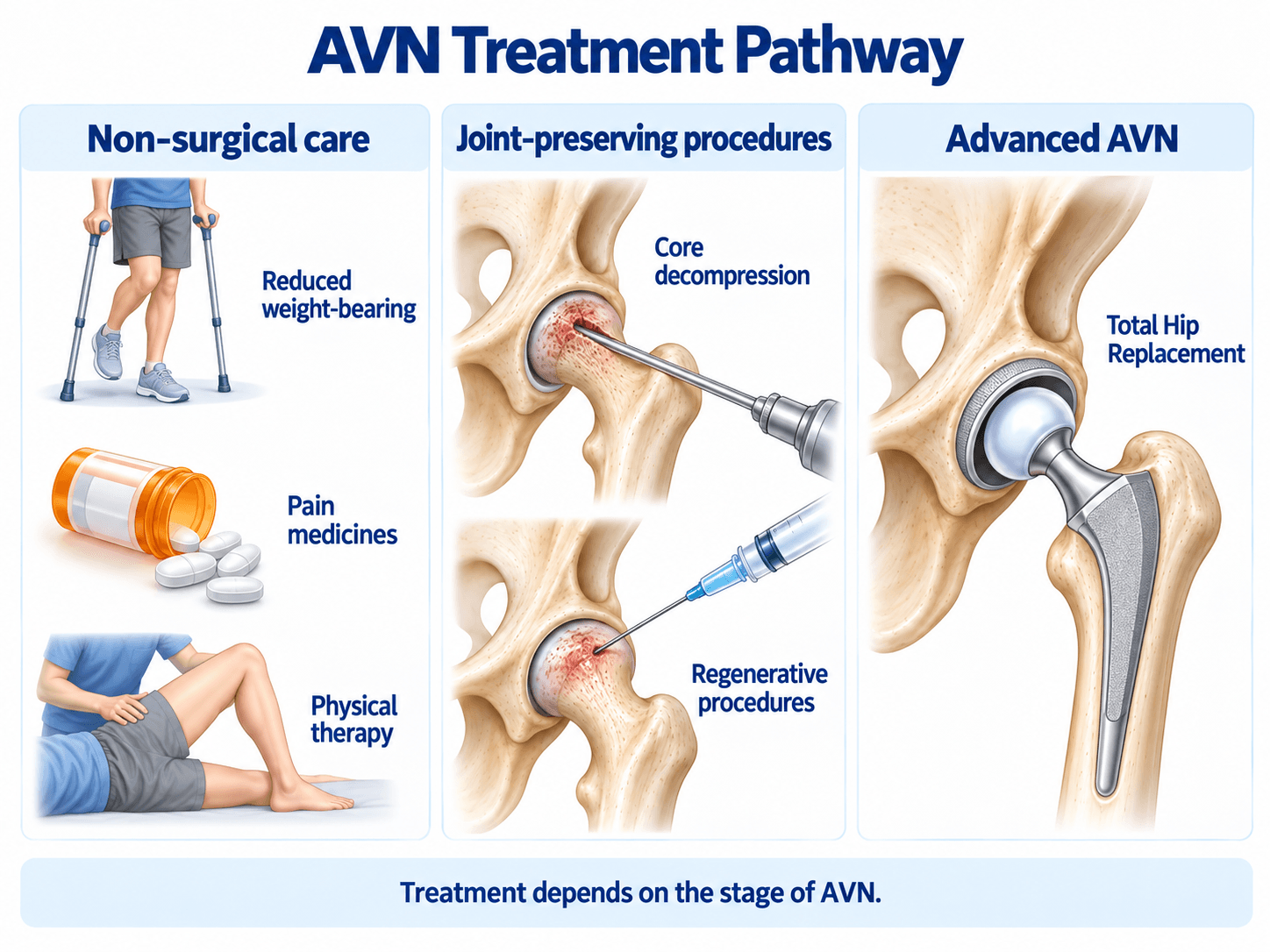
Avascular necrosis treatment depends on:
The stage of AVN
The joint affected
The size of the damaged area
Whether bone collapse has occurred
The patient's overall condition
Treatment aims to manage symptoms, preserve natural bone where possible and maintain joint function.
Non-Surgical and Surgical Treatment Options
Treatment Approach | Examples | When It May Be Considered |
| Non-surgical treatment | Reduced weight-bearing, rest, physical therapy, NSAIDs, electrical stimulation | Generally during earlier stages |
| Core decompression | Removal of a small amount of bone to reduce internal pressure | Selected patients before advanced joint collapse |
| Regenerative procedures | Bone-marrow-derived techniques | Selected cases based on disease stage and clinical assessment |
| Joint-preserving reconstructive surgery | Surgical procedures intended to preserve the natural joint | Depending on the extent and location of damage |
| Joint replacement | Replacement of the damaged joint surfaces | Generally considered when advanced AVN has caused significant collapse or joint damage |
Hip Replacement for Advanced Avascular Necrosis
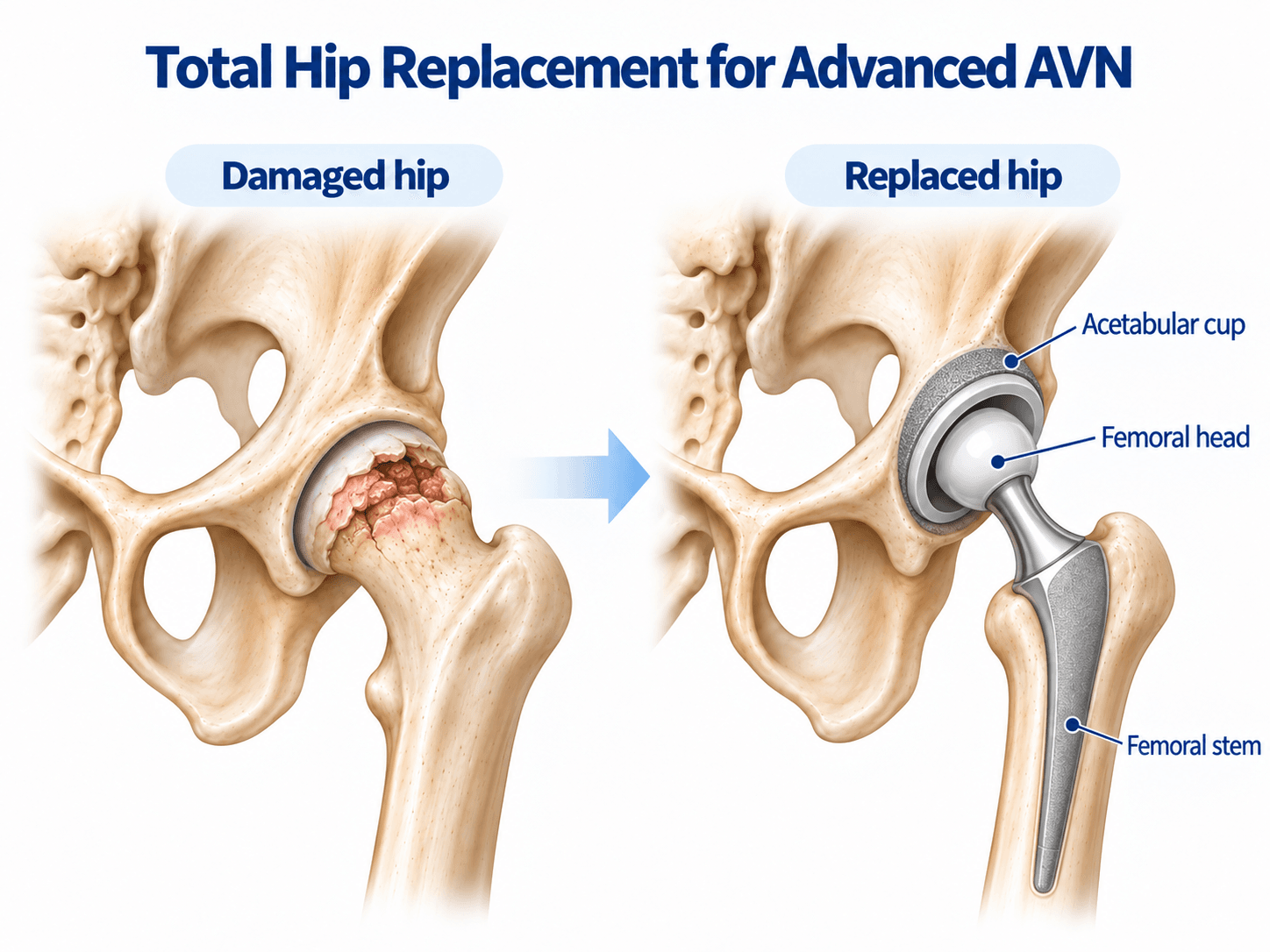
When avascular necrosis of femoral head progresses to significant collapse and joint damage, a doctor may recommend Total Hip Replacement.
During hip replacement, damaged portions of the hip joint are replaced with artificial components.
For patients with advanced AVN who require hip replacement, Meril's Latitude Hip System includes:
HA Stem
PC Stem
HALO Stem
The most appropriate implant depends on the patient's individual anatomy and condition, together with the treating surgeon's clinical assessment.
Concerned about joint replacement?
Read our article on Common Hip Replacement Myths.
Can Avascular Necrosis Be Prevented?
Not every case of AVN can be prevented, particularly when it results from an injury or underlying medical condition.
However, some measures may help reduce recognised risk factors and support bone health:
Use corticosteroids only as prescribed.
Discuss long-term corticosteroid treatment with your doctor.
Manage cholesterol and blood-fat levels as recommended.
Seek prompt medical care after significant joint injury or suspected fracture.
Attend regular medical check-ups if you have a condition that affects circulation.
Report persistent or unexplained joint pain rather than ignoring it.
When Should You Speak With a Doctor?
Consider consulting an orthopaedic specialist if you experience:
Persistent hip, knee or shoulder pain
Groin pain that becomes worse while walking
Pain that starts occurring even at rest
Increasing joint stiffness
Reduced range of movement
Difficulty walking or a developing limp
New joint pain together with known AVN risk factors
Joint pain does not necessarily mean avascular necrosis, but persistent or worsening symptoms should be medically evaluated.
Experiencing unexplained joint pain?
Speak with an orthopaedic specialist about your symptoms and whether further evaluation may be appropriate.
Frequently Asked Questions About Avascular Necrosis
Is avascular necrosis the same as osteoporosis or arthritis?
No.
Condition | What Happens |
| Avascular necrosis | Bone tissue dies because of reduced blood supply |
| Osteoporosis | Bone density decreases and bones become weaker |
| Arthritis | The joint is affected by inflammation, degeneration or wear |
Advanced AVN can eventually contribute to secondary arthritis.
Can avascular necrosis heal on its own?
Early bone changes may sometimes be managed with reduced weight-bearing and other treatments recommended by a doctor. Once significant bone death or collapse has occurred, however, the damaged tissue generally cannot regenerate on its own.
Which joint is most commonly affected?
The hip is most commonly affected, followed by the knee and shoulder. AVN can also occur in the wrist, ankle or jaw.
What are the common avascular necrosis symptoms?
Common symptoms include:
Pain during weight-bearing
Pain at rest as the disease progresses
Groin, thigh or buttock pain in hip AVN
Joint stiffness
Reduced movement
Limping in advanced stages
What are the different avascular necrosis stages?
AVN may progress from an early stage with little or no visible bone damage to structural changes, collapse of the joint surface and eventually arthritis. Imaging tests help doctors determine the stage and guide treatment decisions.
How is avascular necrosis of femoral head treated?
Treatment depends on the stage and extent of damage. Earlier stages may be managed using non-surgical or joint-preserving approaches. If significant femoral-head collapse and hip-joint damage occur, Total Hip Replacement may be considered.