






















Sleep Apnea: Causes, Symptoms, Risks, and Treatment Options
Introduction
You go to bed at a reasonable hour. You wake up eight hours later. And yet, something still feels off. That heavy, foggy feeling that follows you through the morning is not always about how long you slept. Sometimes, it is about what your body was doing while you slept. Sleep apnea is one of the most missed reasons for this kind of persistent tiredness, and it affects far more people than most realise.
This guide walks through what sleep apnea is, why it happens, what to watch for, and what can be done about it.
What Is Sleep Apnea?
Sleep apnea is a condition in which breathing repeatedly pauses and starts while asleep. These pauses are not something you notice while they are happening.[1] The body responds each time by jolting itself awake just enough to restart breathing, often without you ever becoming fully conscious.
The result is a night that looks complete on paper but leaves the body running on interrupted, shallow rest. Over time, this takes a real toll.
Types of Sleep Apnea
Not all sleep apnea is the same. There are three recognised forms, each with a different cause. They are:[1]
Obstructive Sleep Apnea (OSA)
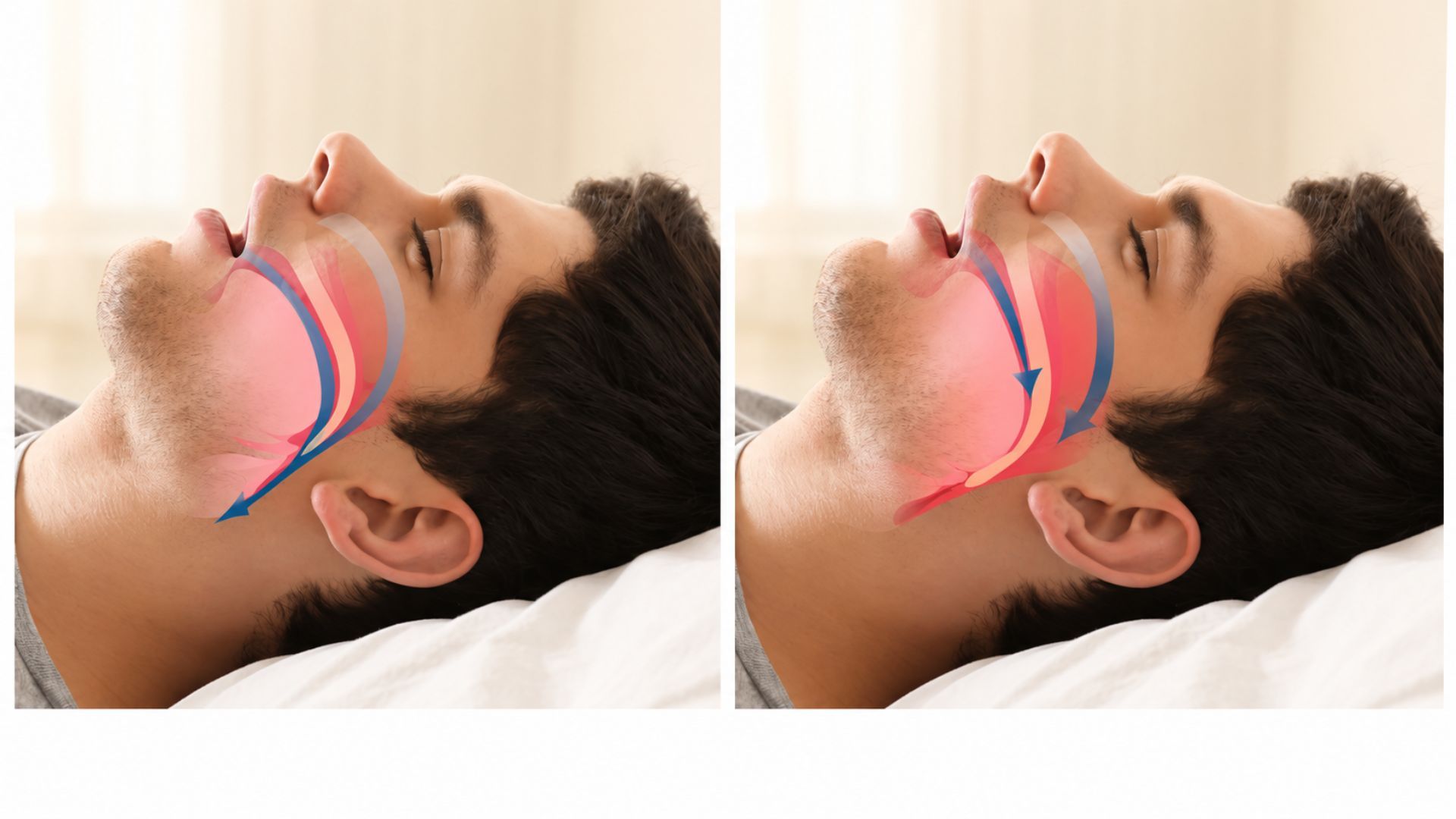
The muscles at the back of the throat relax while you fall asleep, causing the airway to narrow or close. Breathing effort continues, but air cannot get through easily. The obstruction is what causes loud snoring.
Central Sleep Apnea (CSA)
Here, the airway itself is not blocked. Instead, the brain fails to send signals to the muscles that control breathing. The body briefly stops breathing altogether.
Complex (Mixed) Sleep Apnea
A combination of the two. It may begin with one pattern and shift into the other, and is often identified only during treatment when both types of events are recorded.
Common Causes and Risk Factors of Sleep Apnea
Sleep apnea rarely has a single cause. It develops when several contributing factors come together.
Structural and physical factors
A naturally narrow airway
Enlarged tonsils or excess soft tissue
Low muscle tone in the throat during sleep
Higher body weight, especially around the neck[2]
Lifestyle habits
Drinking alcohol close to bedtime
Smoking, which causes airway inflammation[2]
Use of sedatives or sleeping aids
Health and demographic factors
Getting older
Men are at higher risk than women[2]
Having conditions like high blood pressure, diabetes, or Heart disease
These factors do not work in isolation. They often build on each other, which is part of why the condition is so easy to miss until symptoms become difficult to ignore.
Signs and Symptoms of Sleep Apnea
Because the events happen during sleep, most people have no idea they are occurring. The signs appear at night and throughout the day.
During the night
Loud, persistent snoring
Breathing pauses noticed by a partner or family member
Waking up with a gasp or choking sound
Restless, unsettled sleep
Dry mouth when you wake up
During the day
Feeling tired even after a full night in bed
Headaches in the morning that ease as the day goes on
Trouble concentrating or remembering things
Mood shifts, irritability, or low motivation
Dozing off during idle moments
Symptoms vary from person to person, and not everyone experiences all of them. Some people live with sleep apnea for years without connecting the dots.[3]
Health Risks Associated with Untreated Sleep Apnea
When sleep apnea goes unaddressed, it causes repeated drops in oxygen levels, and the disruption to deep sleep accumulates over time. The effects are not limited to feeling tired.
On the heart and circulation
Higher risk of developing high blood pressure.
The likelihood of irregular heart rhythms increases.
Increased connection to heart disease and stroke.
On metabolism
Reduced insulin sensitivity
Higher risk of developing type 2 diabetes[4]
On the mind
Weaker memory and less attention
Slower decision-making and cognitive function
In daily life
Ongoing fatigue that affects work and relationships
Reduced alertness, increasing the risk of accidents[4]
How Sleep Apnea Is Diagnosed
Diagnosis typically starts with a consultation with a professional about symptoms and history, followed by a sleep assessment to capture what happens overnight.
Polysomnography (lab-based sleep study)
It is conducted in a sleep clinic, which is the most detailed form of sleep assessment. They will keep a record of the brain activity, Heart rate, breathing patterns, blood oxygen levels, and body movement throughout the night. It remains the standard for confirming a diagnosis in complex cases.
Home sleep apnea testing
A simpler option done at home using a portable device. The machine will track the airflow, oxygen levels, and breathing effort. It is preferred, as it is suitable for many people and more accessible than a lab study.
Results are assessed using the apnea-hypopnea index (AHI), which counts the number of breathing disruptions per hour and helps determine the severity of the condition.
Treatment Options for Sleep Apnea
There is no single approach that works for everyone. Treatment is matched to the type, severity, and individual circumstances of the person.
CPAP therapy
The commonly used therapy for mild-to-severe obstructive sleep apnea. A machine delivers a gentle, steady stream of pressurised air through a mask, keeping the airway open throughout the night. When it is used consistently, it can reduce episodes and improve sleep quality.
Oral appliance therapy
A custom-fitted device worn during sleep that repositions the jaw and tongue to keep the airway open. It is recommended for mild-to-moderate cases and for those who find CPAP uncomfortable.
Surgical options
Surgery is considered when the other treatments are not effective or when there is a clear obstruction causing sleep apnea. Procedures may involve removing excess tissue or correcting airway obstructions.
Treating related conditions
Managing nasal obstruction, thyroid issues, or other contributing medical conditions can also reduce symptom severity in some people.
Lifestyle Changes That May Help Manage Sleep Apnea
Lifestyle adjustments are not a replacement for medical treatment in moderate-to-severe cases, but they make a real difference when used alongside it.
Managing weight, which reduces pressure on the airway
Avoiding alcohol and sedatives in the hours before sleep
Sleeping on your side rather than your back
Keeping a regular sleep schedule
Staying physically active
Small, consistent changes build up over time and can improve both the frequency and severity of apnea events.
Conclusion
Sleep apnea is one of those conditions that quietly shape how you feel every day, often without a clear explanation. The tiredness, the headaches, and the difficulty focusing are not random. They are signals.
Understanding what sleep apnea is, recognising the signs, and knowing when to seek help are all steps in the right direction. With the right diagnosis and support, most people see real improvement in their sleep and how they feel. Quality sleep is something your body needs.