World Sickle Cell Day: Why Awareness, Early Diagnosis, and Support Matter
Introduction
Sickle cell disease arrives as a pain crisis in the middle of the night, a child who cannot keep up with peers, or a young adult hospitalised for the third time in a year. The people who are living with it know one thing: you do not manage it occasionally; you manage it every single day.
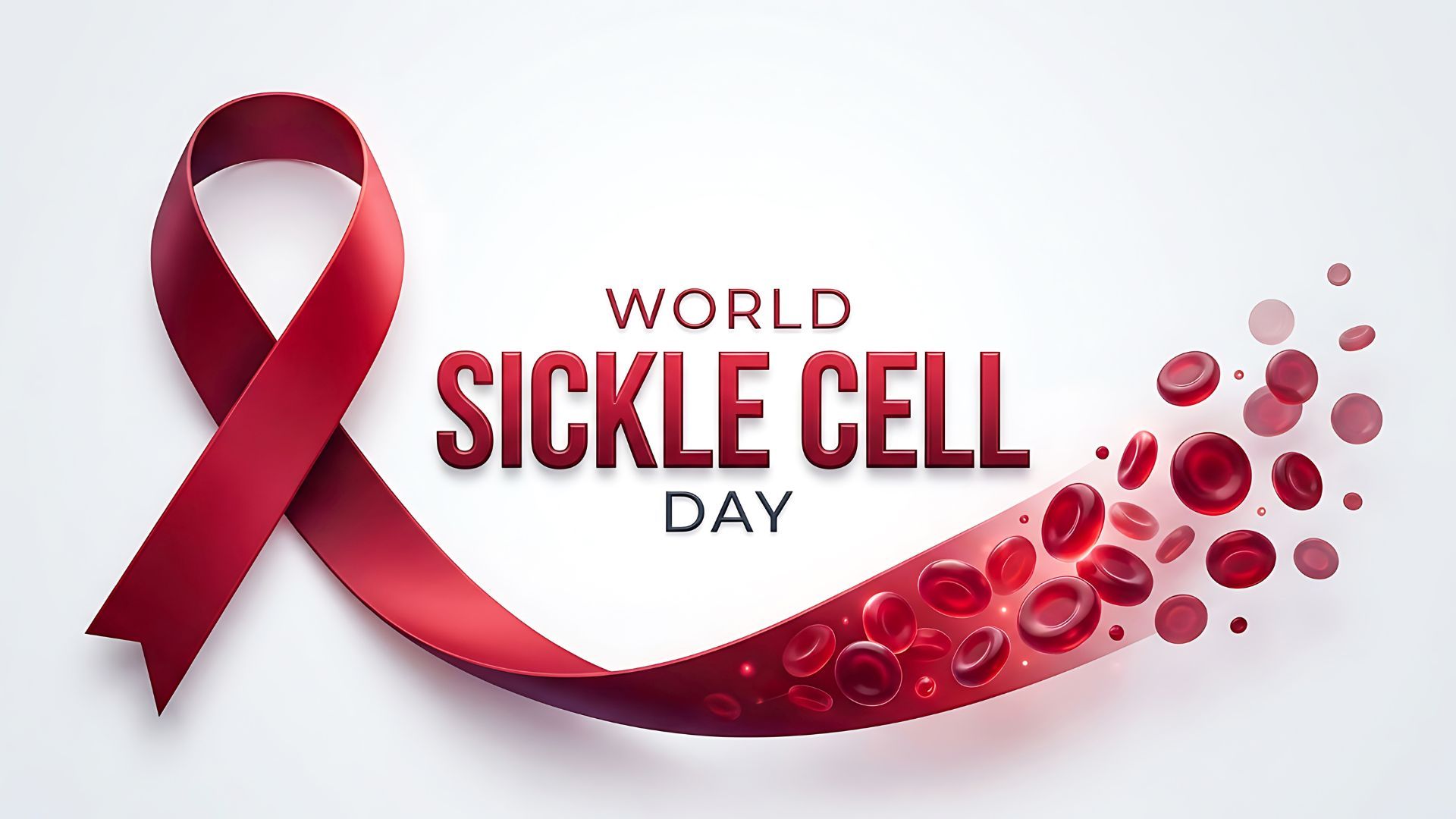
June 19 is World Sickle Cell Day. India carries the second-highest burden of sickle cell disease in the world. Over 42,000 newborns are affected every year, accounting for 14.5% of the global total.[1] Yet thousands go undiagnosed for years because awareness remains low.
What Is Sickle Cell Disease?
Sickle cell disease (SCD) is a genetic blood disorder passed from parents to children. A child inherits it only when both parents carry the faulty gene.
Normally, red blood cells are round and flexible, moving easily through vessels to carry oxygen. In SCD, mutations make them stiff, sticky, and crescent-shaped. These cells clump together, block blood vessels, and cut off oxygen to organs and tissues. That blockage drives every complication the disease causes.
Two terms to understand about sickle cell disease:
Sickle Cell Trait (Carrier): Has the gene from one parent. Generally healthy, but can pass it on.
Sickle Cell Disease: It occurs in people who inherit the gene from both parents; they experience active symptoms and complications.
What Is World Sickle Cell Day?
World Sickle Cell Day is on June 19 every year; this was established by the United Nations in 2008. In India, it triggers events for awareness campaigns, screening drives, and community events under the National Sickle Cell Anaemia Elimination Mission (NSCAEM). The day calls for wider public education, better access to testing, stronger patient support, and firmer government action on this under-addressed disease.
Common Symptoms of Sickle Cell Disease
Sickle cell disease looks different in every person. Some people have mild symptoms, while others face serious complications from a very young age. The most common symptoms include:
Pain: Sudden, severe pain in the chest, back, arms, and legs, caused by blocked blood flow. These can last for hours or days.
Anaemia: Because sickle cells die faster than normal red blood cells, the body is constantly low on healthy cells, leading to fatigue and weakness.
Frequent infections: The spleen, which fights infections, is often damaged by sickle cells, leaving people more vulnerable.
Delayed growth: Children with SCD may grow and develop more slowly.
Vision problems: Blocked vessels in the eyes can affect eyesight over time.
Swelling in hands and feet: This is often one of the first signs noticed in young children.
Organ damage: The heart, kidneys, lungs, liver, and brain can all be affected as the disease progresses.
Does Sickle Cell Disease Affect Daily Life?
Yes, and in ways that extend well beyond the physical. Living with sickle cell disease affects a person's day-to-day existence in ways that are not always visible to others. Pain crises arrive without warning, disrupting school, work, and plans. Children miss weeks of class. Adults cycle in and out of the hospital. The unpredictability creates constant anxiety.
Why Early Diagnosis of Sickle Cell Disease Is Important
When it is caught earlier, the more that can be done before lasting harm sets in. A newborn diagnosed can start daily antibiotics, get timely vaccinations, and begin hydroxyurea therapy early. Without early detection, the children can live with unmanaged SCD until organ damage is already irreversible.
India's NSCAEM, launched in July 2023, has screened over 5.74 crore people across 17 states, aiming to eliminate SCD as a public health problem by 2047.[2]
Who Should Consider Sickle Cell Screening?
Group | Reason for Higher Risk |
Tribal populations | Sickle cell disease is far more prevalent in tribal communities. |
Children of two carrier parents | There is a 25% chance of sickle cell disease with each pregnancy. |
Couples planning marriage or pregnancy | Pre-marital or pre-conception screening can help prevent passing sickle cell disease to children. |
Newborns in high-risk families | Early screening enables the earliest possible intervention and care. |
Siblings of an SCD patient | They may also carry the sickle cell trait or have the disease. |
Free screening is available at government health facilities under the National Health Mission. If you fall into any of these groups and have not been tested, speak to your doctor.
How Testing Helps Detect Sickle Cell Disease Early
Testing plays a major role in finding sickle cell disease before complications begin. A commonly used method is the solubility test, which checks whether sickle haemoglobin is present in the blood. It is simple and affordable, but it gives only limited information.
Rapid tests make screening easier, especially in community camps, rural areas, and high-risk regions. They are quick, easy to use, and can help separate people who are unaffected, carriers, or likely to have sickle cell disease more clearly than solubility testing alone.
For a complete and accurate diagnosis, HPLC is considered the gold-standard test. It gives a detailed picture of the different haemoglobin types in the blood, helping doctors guide the next steps in care.
What is the Treatment and Care for Sickle Cell Disease?
There’s no permanent treatment yet, but with consistent care, people with SCD live longer and better. Some care includes:
Hydroxyurea
Blood transfusions
Folic acid
Penicillin prophylaxis
Regular organ monitoring
Maharashtra provides Rs. 1,000/month under the Sanjay Gandhi Niradhar Yojna, and SCD is covered under PMJAY.[3] CSIR's CRISPR gene editing research offers real hope for a future cure.
How Families Can Support People with Sickle Cell Disease
You do not need a medical degree to help a patient with SCD. Here is what you can do:
Learn the disease well: Knowing triggers, symptoms, and medications builds better instincts during a crisis.
Keep a pain diary: Tracking episode patterns helps doctors adjust treatment. Check in on the patient and don't be afraid to discuss symptoms.
Build an emergency plan: Find out about the nearest NSCAEM-linked hospital, current prescriptions, and emergency contacts.
Manage triggers at home: Regular hydration and appropriate warmth are simple and effective ways.
Offer emotional presence: Acknowledge the pain. Do not push someone to push through it. Go with them for a doctor's visit.
Preventing Complications through Regular Care
Many of the worst outcomes of SCD can be delayed or avoided:
Vaccinations: Standard vaccines, plus coverage for pneumococcal disease and meningitis.
Annual eye exams: Retinal damage develops silently before it affects vision.
Kidney and liver tests: These are essential for anyone on hydroxyurea.
Stroke screening: Transcranial Doppler ultrasound helps to identify elevated stroke risk in children.
Trigger avoidance: Dehydration, temperature changes, and overexertion are the most common crisis triggers.
Do not stop medications without informing the doctor because the symptoms are stable. That stability is the result of consistent care, not because of healing.
When to Seek Medical Help
Some SCD situations cannot wait. Go immediately if:
Pain is severe and does not ease within one to two hours of home treatment
Fever rises above 38.5°C
There is chest pain or difficulty breathing
Sudden weakness, numbness, or vision changes occur
Skin or eyes turn yellow (jaundice)
A child becomes pale, limp, or unusually unresponsive
NSCAEM-linked hospitals provide emergency care and free treatment for SCD patients across high-prevalence states.
Conclusion: Awareness, Diagnosis, and Support for Sickle Cell
Sickle cell disease shapes the daily reality of millions of Indians. The stakes are high, the pain is real, and the need for awareness is urgent. But this is also a condition in which knowing more and acting earlier genuinely change outcomes.
India is making progress through NSCAEM, CSIR's diagnostics innovation, and expanding state programmes. What policy alone cannot build is community understanding. If you or someone you know is at risk, get screened. Awareness is where better care begins.