























Understanding Barbed Sutures in Modern Gynecological Surgery
Introduction
Advances in gynecological surgery have significantly improved the way many conditions are diagnosed and treated. Minimally invasive techniques such as laparoscopy are now widely used for procedures involving uterine fibroids, ovarian cysts, endometriosis, adenomyosis, and other gynecological conditions.¹,² Compared with traditional open procedures, minimally invasive approaches generally involve smaller incisions and the use of specialized instruments and cameras.²
While the surgical procedure itself is an important part of treatment, effective tissue closure is equally important in gynecological procedures. After tissue has been cut or repaired, the surgeon needs to bring the tissue edges together and maintain appropriate approximation during the healing process.⁵ Innovations in suture technology have provided surgeons with additional options for achieving this, including the use of barbed sutures.⁷,⁸
What Are Barbed Sutures?
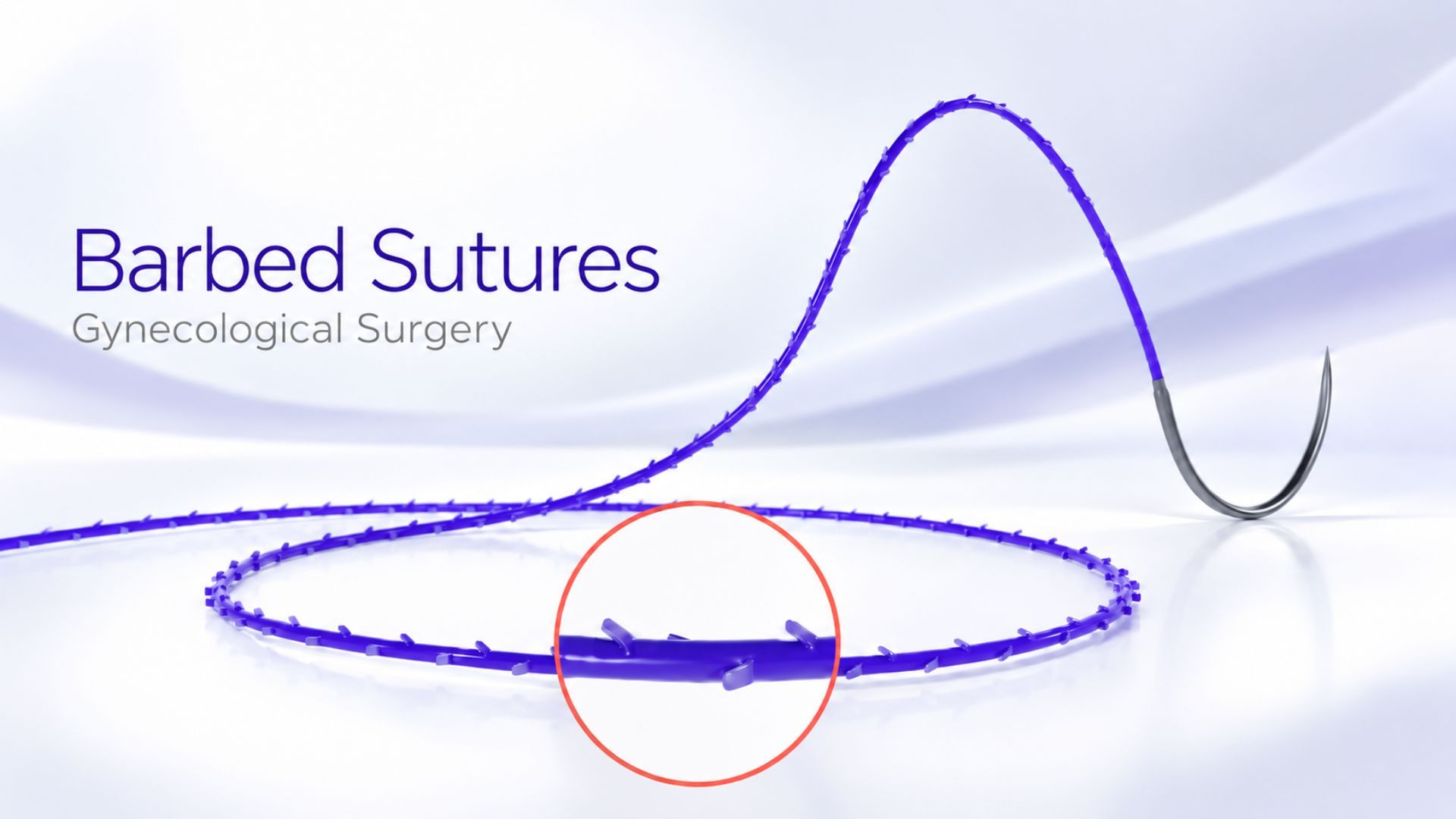
Barbed sutures are specialized surgical sutures that have small projections, or barbs, along their surface. Unlike conventional smooth sutures, these barbs are designed to engage with the surrounding tissue and help maintain the position of the suture during closure.¹,⁷
One of the distinguishing features of barbed sutures is their knotless design. Depending on the specific suture configuration and surgical technique, the barbs can help maintain tissue approximation without relying on conventional knot tying at every stage of closure.⁷,⁸
This characteristic can be particularly relevant in minimally invasive gynecological procedures, where working through small access points can make conventional knot tying technically demanding.⁷,⁸
How Are Barbed Sutures Used?
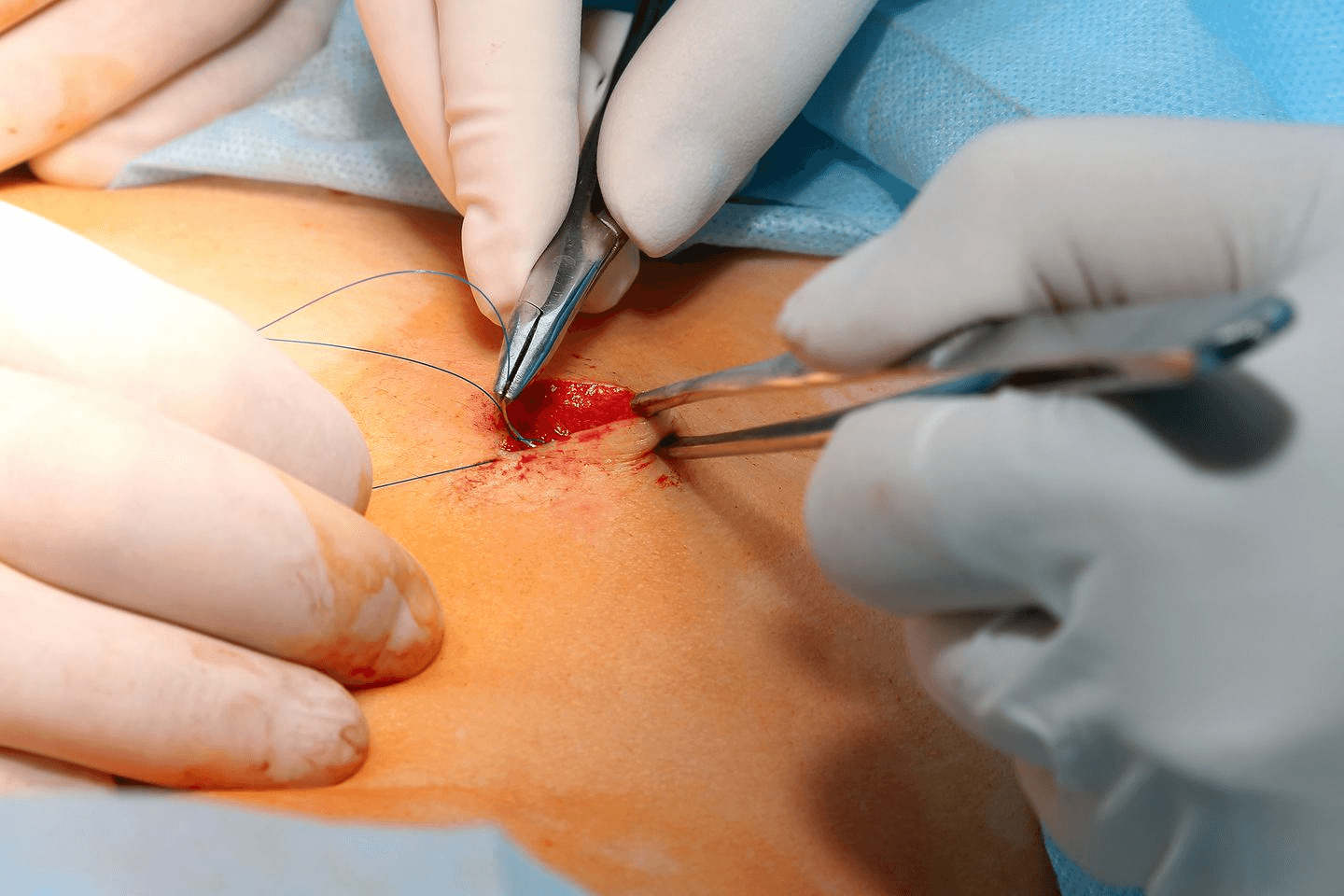
Barbed sutures are used by surgeons to approximate and secure tissues following selected gynecological surgical procedures. The suture is placed through the tissue using a surgical needle, while the barbs help provide resistance against backward movement.⁷,⁸
The design can allow the surgeon to distribute tension along the closure line and maintain tissue approximation during suturing. This may be useful in gynecological tissue closure, where secure and consistent approximation is required.⁷,⁸
Different barbed suture designs and materials are available, and their selection depends on factors such as the tissue being repaired, required duration of support, surgical technique, and surgeon preference.⁵,⁷
Importantly, barbed sutures are not a universal replacement for conventional sutures. The choice of closure material remains a clinical decision based on the individual patient and the specific gynecological surgical requirement.⁷,⁸
Applications in Gynecological Surgery
Barbed sutures have been used across several gynecological procedures, particularly in minimally invasive surgery.⁷,⁸
Myomectomy:
Myomectomy involves the removal of uterine fibroids while preserving the uterus.³ Following removal of a fibroid, appropriate closure of the uterine incision is an important part of the procedure. Barbed sutures may be used to facilitate tissue approximation during laparoscopic or robotic myomectomy.⁴,¹⁰
Total Laparoscopic Hysterectomy (TLH):
TLH is a minimally invasive procedure for the removal of the uterus. Barbed sutures may be used for vaginal cuff closure, where secure and consistent tissue approximation is required.⁷,⁸
Adenomyomectomy:
In selected cases of adenomyosis, adenomyomectomy involves the removal of affected uterine tissue followed by the reconstruction of the uterus. Barbed sutures can be considered as one of the available options for tissue repair and closure.¹¹
Pelvic Floor and Other Procedures:
Barbed sutures have also been described in procedures such as sacrocolpopexy and selected pelvic floor repairs. Their use may be considered when knotless tissue approximation offers technical advantages.¹²
Potential Advantages in Minimally Invasive Gynecological Surgery
One of the key reasons barbed sutures have gained attention in gynecological surgery is their potential to simplify certain aspects of minimally invasive suturing. Conventional suturing often requires knot tying to secure the suture. In laparoscopic gynecological procedures, knot tying can require additional instrument manipulation and technical skill.⁷,⁸
The knotless configuration of barbed sutures may help reduce the need for repeated knot tying and can support continuous tissue closure. This may potentially contribute to procedural efficiency and consistent approximation, although the benefits depend on the procedure, surgeon experience, suture design, and individual clinical circumstances.⁷,⁸
Research has evaluated the use of barbed versus conventional sutures in procedures such as laparoscopic myomectomy, with studies and reviews reporting potential advantages in operative efficiency and suturing-related parameters.⁴,¹⁰
Supporting Modern Surgical Practice
Surgical technology continues to evolve alongside minimally invasive gynecological techniques. Barbed sutures are one example of how relatively small changes in suture design can influence how surgeons approach tissue closure.⁷,⁸
However, successful tissue closure involves much more than the choice of suture. Tissue handling, blood supply, tension, surgical technique, infection prevention, and the patient's individual healing characteristics all contribute to the outcome.⁵,⁷
Therefore, the selection of a barbed or conventional suture should always be based on the clinical requirements of the gynecological procedure and the professional judgment of the operating surgeon.⁷,⁸
Looking Ahead
As gynecological surgery continues to advance, the focus remains on developing technologies that can support efficient, secure, and consistent tissue closure while complementing minimally invasive surgical techniques.⁷,⁸
Barbed sutures are one of several innovations contributing to this evolution. Their knotless design and tissue-engaging barbs provide surgeons with an additional option for tissue approximation in selected gynecological procedures.⁷,⁸
The future of surgical closure will likely continue to combine advances in suture materials, needle technology, surgical instruments, visualization, and minimally invasive techniques.⁵,⁷ Ultimately, the goal is to provide surgeons with appropriate tools that support safe and effective patient care.
Conclusion: The Future of Wound Closure
Knotless barbed suture technology represents an important development in modern surgical closure. By reducing the reliance on conventional knot tying and supporting continuous tissue approximation, barbed sutures can offer practical advantages in selected minimally invasive gynecological procedures.⁷,⁸
For surgeons, they provide an additional tool for managing tissue closure in procedures where secure approximation and surgical efficiency are important considerations.⁷ As evidence and technology continue to evolve, the role of barbed sutures in gynecological surgery is likely to remain an area of clinical interest.⁷,⁸
The blog has been authored by Dr Amol Rakhade (Obstetric Gynaecologist & Laparoscopic Surgeon). The content is for informational purposes only and should not be taken as professional medical advice.
Disclaimer - This blog represents the views and opinions of the doctor and does not necessarily represent the views or opinions of Meril. This blog is intended for educational and general awareness purposes only and should not be considered medical advice. Patients should consult a qualified healthcare professional for diagnosis, treatment options, and medical guidance related to their individual condition.
References
- Barbed Suture - Wikipedia. (2024).
- Barbed Sutures in Gynaecological Surgeries. FOGSI Conclave Practice Points. (2024/2025). [Source Images 1–17].
- How to Remove Uterine Fibroids with Laparoscopic Surgery - Liv Hospital. (2026).
- Zayed, M., et al. (2022). Laparoscopic myomectomy using barbed or conventional sutures: A randomized controlled study. International Journal of Health Sciences, 6(S8), 2208–2218.
- Rose J, Tuma F. Sutures And Needles. StatPearls [Internet]. (2024).
- Ferrer-Márquez M, Belda-Lozano R. Barbed sutures in general and digestive surgery. Cir Esp. 2016;94(2):65–69.
- Greenberg JA, Goldman RH. Barbed suture: A review of technology. Rev Obstet Gynecol. 2013;6(3–4):107–15.
- Greenberg JA. The use of barbed sutures in obstetrics and gynecology. Rev Obstet Gynecol. 2010;3(3):82–91.
- Data on file. [Source Image 8, 11].
- Gardella B, et al. What is the role of barbed suture in laparoscopic Myomectomy? A meta-analysis. Gynecol Obstet Invest. 2018;83(6):521–32.
- Kwack JY, et al. Advanced laparoscopic adenomyomectomy technique by a three-step approach. JSLS. 2022;26(4).00055.
- Kallidonis P, et al. Laparoscopic sacrocolpopexy using barbed sutures. Urol Ann. 2017;9(2):159–65.