























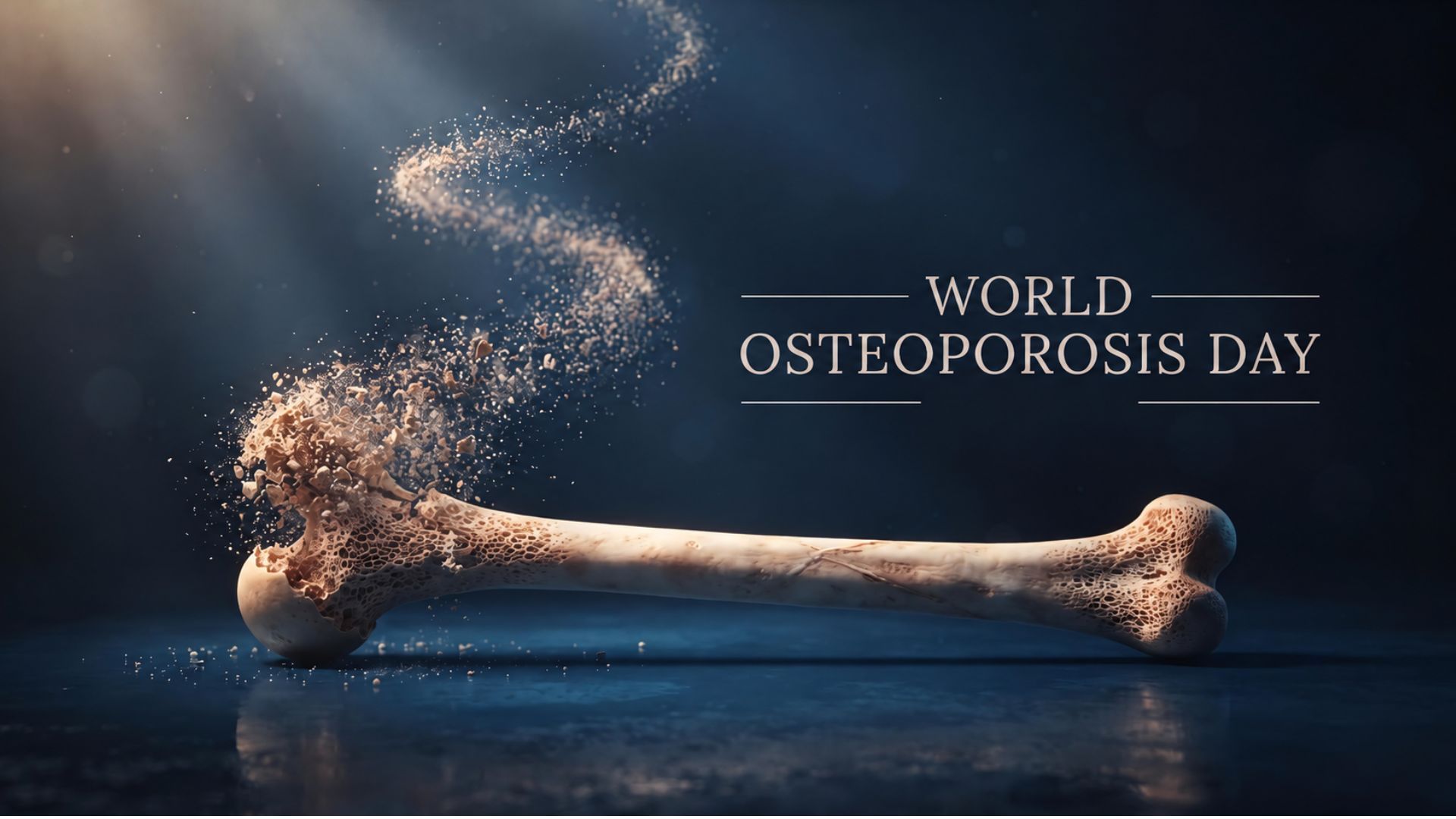
World Osteoporosis Day: What Really Keeps Your Bones Strong?
Introduction
World Osteoporosis Day, observed on October 20, is an opportunity to look at bone health as a lifelong concern rather than something that suddenly becomes important in old age. Strong bones are built gradually, maintained through adulthood, and increasingly protected as the body ages.
This matters because osteoporosis often develops quietly. A person may not know that bone strength has declined until a fracture occurs. Fragility fractures, particularly those affecting the hip and spine, can have a major impact on mobility, independence, and quality of life.[1]
The conversation, therefore, needs to begin earlier. Bone health is shaped by what happens during growth, by habits maintained in adulthood, and by how risk is recognised later in life. World Osteoporosis Day is a reminder that protecting bones is not a single action. It is a process that continues across decades.
How Do We Build Strong Bones Early in Life?
Childhood, adolescence, and early adulthood are important years for building bone mass. Bones are tissues that are constantly being broken down and rebuilt. During the growing years, the body generally builds bone more rapidly than it loses it, helping individuals develop stronger skeletal reserves for later life.
A useful way to think about early bone health is to see it as preparation. The more effectively bone strength is supported during the years of growth, the better the foundation for the natural changes that occur with ageing.
Habits that support healthy bone development include:
Eating a balanced diet that provides sufficient calcium and other essential nutrients
Maintaining adequate vitamin D levels, as advised by a healthcare professional
Taking part in regular physical activity
Including weight-bearing and muscle-strengthening activities where appropriate
Avoiding prolonged inactivity
Physical activity deserves particular attention. Bones respond to mechanical loading. Activities such as walking, running, jumping and resistance exercise can help support bone strength, although the most appropriate activity depends on age, fitness and overall health.[2]
Parents and caregivers also play a role. Encouraging people to stay active and develop healthy eating habits can support musculoskeletal health long before osteoporosis becomes a personal concern.
How Can We Protect Bone Health as We Age?
Bone health varies according to time. After peak bone mass is attained, the ratio between bone formation and resorption begins to change. Aging does not necessarily mean osteoporosis, but bone loss may become higher with age.
For women, the decline in oestrogen around menopause can accelerate bone loss. Men can also develop osteoporosis, particularly with advancing age or when other risk factors are present.
Protecting bone health in adulthood involves more than taking calcium or vitamin D supplements. A broader approach is usually more useful.
A practical bone-health routine may include:
Regular physical activity
Weight-bearing and resistance exercises can help maintain bone and muscle strength. Balance and strength training may also help reduce the risk of falls.Adequate nutrition
Calcium and vitamin D are needed for maintaining bone health, but supplements should not automatically replace a balanced diet. Individual requirements can vary.Avoiding tobacco and limiting excess alcohol
These factors can contribute to poorer bone health and a higher risk of fractures.Maintaining muscle strength and balance
Falls are a major cause of fractures in older adults. Improving strength, mobility and balance can therefore be part of fracture prevention.Reviewing health conditions and medicines
Certain medical conditions and long-term medications can affect bone strength.
The focus should be on consistency. Bone health is influenced by patterns that continue over years rather than by a short period of intensive effort.
Who Is at Risk of Osteoporosis and Why Does Early Detection Matter?
Osteoporosis can affect different people for different reasons. Some risk factors cannot be changed, while others may be addressed through lifestyle changes or medical care.
A fracture after a minor fall or low-impact injury should not always be dismissed as an unavoidable consequence of ageing. Fragility fractures are fractures that occur following low-energy trauma, such as a fall from standing height or lower. Such fractures may indicate underlying osteoporosis and should prompt appropriate assessment and management.
Early detection matters because osteoporosis may have few obvious warning signs. A person may experience loss of height, changes in posture, or back pain due to vertebral fractures, but many cases are identified only after a fracture.
This makes risk assessment especially important for people with multiple risk factors.
How Can Better Diagnosis and Treatment Help Prevent Fractures?
A DXA, or dual-energy X-ray absorptiometry, scan is commonly used to measure bone mineral density. However, bone density is only one part of the clinical picture.
Depending on an individual's level of risk, management may include:
Nutritional and lifestyle recommendations
Exercises and falls-prevention measures
Calcium and/or vitamin D supplements, if necessary
Medications that decrease bone loss or stimulate bone formation
Monitoring for the effectiveness of treatments and the subsequent risk of fractures
The aim is not simply to improve a scan result. It is to reduce the likelihood of fractures and preserve mobility and independence.
For people who have already experienced a fragility fracture, follow-up becomes particularly important. Secondary fracture prevention and timely rehabilitation are key parts of care, helping reduce the risk of further fractures and supporting recovery.
Treatment decisions should always be individualised. The most suitable approach depends on a person's fracture risk, age, medical history and other clinical considerations.
Build, Protect, Strengthen: Making Bone Health a Lifelong Priority
A stronger approach to osteoporosis prevention can be summed up in three stages:
Build
During childhood and early adulthood, focus on healthy nutrition and regular activity that support the development of strong bones.
Protect
During adulthood, maintain bone and muscle strength through exercise, adequate nutrition, and healthy lifestyle choices.
Strengthen
As risk increases with age, pay closer attention to screening, fracture risk assessment, medical conditions, and appropriate treatment.
These stages are connected. The goal is not to wait for a fracture before thinking about bone health.
World Osteoporosis Day also offers an opportunity to move away from the idea that osteoporosis concerns only older women. Men, younger adults with specific risk factors, and people taking certain long-term medicines may also need assessment. Understanding personal risk is often the first meaningful step.
Conclusion
Healthy bones are ensured throughout one’s lifespan. Bone stock can be built during youth, preserved during adulthood, and assessed and treated to reduce fracture risk later in life.
The central message of World Osteoporosis Day is therefore practical: pay attention before a fracture forces the issue. Staying active, eating well, maintaining muscle strength, recognising risk factors and seeking timely medical advice can all contribute to healthier bones and better ageing.
Bone health may be easy to overlook because changes often happen gradually. Giving it regular attention can help make prevention, rather than recovery, the starting point.