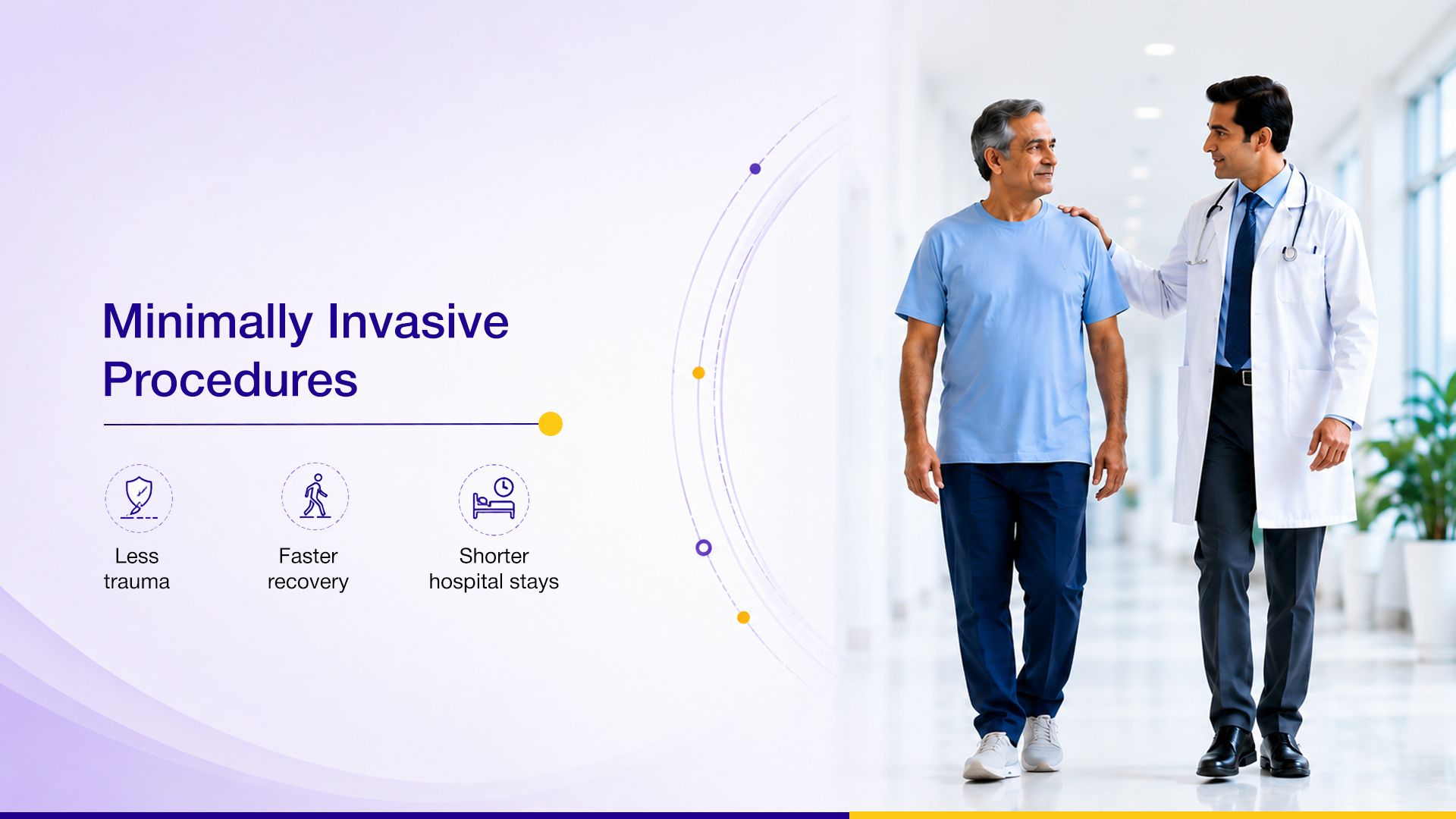
Minimally Invasive Procedures: A Successful Alternative to Traditional Major Surgery
Introduction
Over the last decade, modern medicine has been undergoing a profound shift from large-incision, high-impact operations towards techniques designed to minimise trauma while prioritising outcomes.
Minimally invasive surgery is no longer a niche innovation. It is rapidly becoming a preferred alternative to traditional open surgery for many conditions, with adoption rates for certain procedures increasing substantially in recent years as evidence continues to support its clinical advantages. This approach offers patients safer, faster and more cost-effective pathways to recovery.[1,2]
Understanding the Difference: Traditional vs. Minimally Invasive Surgery
Traditional open surgery typically requires large incisions to access organs or tissues. While effective, it often involves significant tissue disruption, longer hospital stays and extended recovery periods.[3]
Minimally invasive surgery, by contrast, uses small incisions, specialised instruments and advanced imaging technologies such as laparoscopy, endoscopy or robotic-assisted systems. These approaches allow surgeons to perform complex procedures with greater precision and less physical impact on the body, thereby reducing postoperative pain, shortening recovery time, and lowering the risk of complications compared to more invasive surgical options.[1–3]
Key Benefits for Patients
One of the most compelling advantages of minimally invasive procedures is recovery time. Smaller incisions mean less trauma to muscles and tissues, less blood loss and potentially fewer complications, allowing patients to return to normal activities sooner.
Because minimally invasive surgery limits tissue damage, patients generally experience less postoperative pain, less scarring and require fewer pain medications. This also translates into a lower risk of complications such as infections or excessive bleeding. Surveys show that 71.4% of patients undergoing minimally invasive surgery reported reduced recovery time as the most widely recognised benefit, followed by 65.7% reporting less postoperative pain.[4]
Shorter hospital stays and fewer complications can naturally reduce healthcare costs, with minimally invasive surgery emerging as a cost-effective option across several disciplines. For patients, this can mean not only lower medical bills but also reduced indirect costs such as lost workdays and prolonged rehabilitation.[5]
Expanding Applications Across Specialties
Minimally invasive techniques are now widely used across multiple medical fields, including gastrointestinal and abdominal surgery, orthopaedic procedures, cardiothoracic surgery and gynaecological, urological and oncological interventions.[6]
In many of these areas, minimally invasive surgery has transitioned from an “alternative” to the standard of care. In some cases, adoption rates for minimally invasive approaches in general surgery have increased significantly, especially with the integration of robotic-assisted systems that improve overall outcomes.[1]
The global minimally invasive surgery market is rapidly expanding; previously valued at over $81 billion in 2025 and is projected to reach $199 billion by 2030, driven by patient demand and technological advancements. This growth reflects a fundamental change in how healthcare systems approach surgery: prioritising efficiency, patient comfort and long-term outcomes. [7]
Making Informed Decisions
Despite its many advantages, minimally invasive surgery is not suitable for every patient or condition.
Complex cases, emergency situations or certain anatomical challenges may still require traditional open surgery. Additionally, minimally invasive surgery often requires specialised training and equipment, which may not be available in all healthcare settings. However, as technology becomes more widespread, these barriers are gradually diminishing.[8,9]
Choosing between traditional and minimally invasive surgery should always involve a detailed, transparent discussion between the patient and provider, considering the specific condition and its severity, available surgical options, the risks and benefits of each approach, informed consent, recovery expectations, and lifestyle factors.[10]
Future Directions
Minimally invasive surgery represents a transition in modern healthcare that prioritises patient comfort, faster recovery and improved outcomes without compromising effectiveness. As technology continues to evolve and minimally invasive surgery adoption increases, these procedures can redefine what patients can expect from surgical care.
For individuals facing surgery, understanding these options is essential. The ability to choose a less invasive path, when appropriate, can significantly impact not only recovery but also overall quality of life.
As the field advances, organisations committed to surgical innovation continue to support the shift towards patient-centred care. For healthcare systems and individuals alike, the ability to make informed choices, guided by clinical evidence and open dialogue, remains the foundation of better surgical outcomes.