


















World Stroke Day 2026: Why Every Minute Matters During a Stroke
Introduction
A stroke can happen suddenly. A person may develop weakness on one side of the body, difficulty speaking, sudden changes in vision, or trouble maintaining balance. These symptoms can occur even in someone who appeared healthy moments earlier.
It may be tempting to wait and see whether the symptoms improve. However, a suspected stroke is a medical emergency. Seek medical assistance immediately, even if the symptoms are mild or disappear after a short time.
The brain depends on a continuous supply of blood and oxygen. When blood flow is interrupted or a blood vessel ruptures, brain cells can become damaged. Recognising the warning signs and seeking appropriate medical care quickly can help doctors assess the condition and determine whether time-sensitive treatment is appropriate.[1,2]
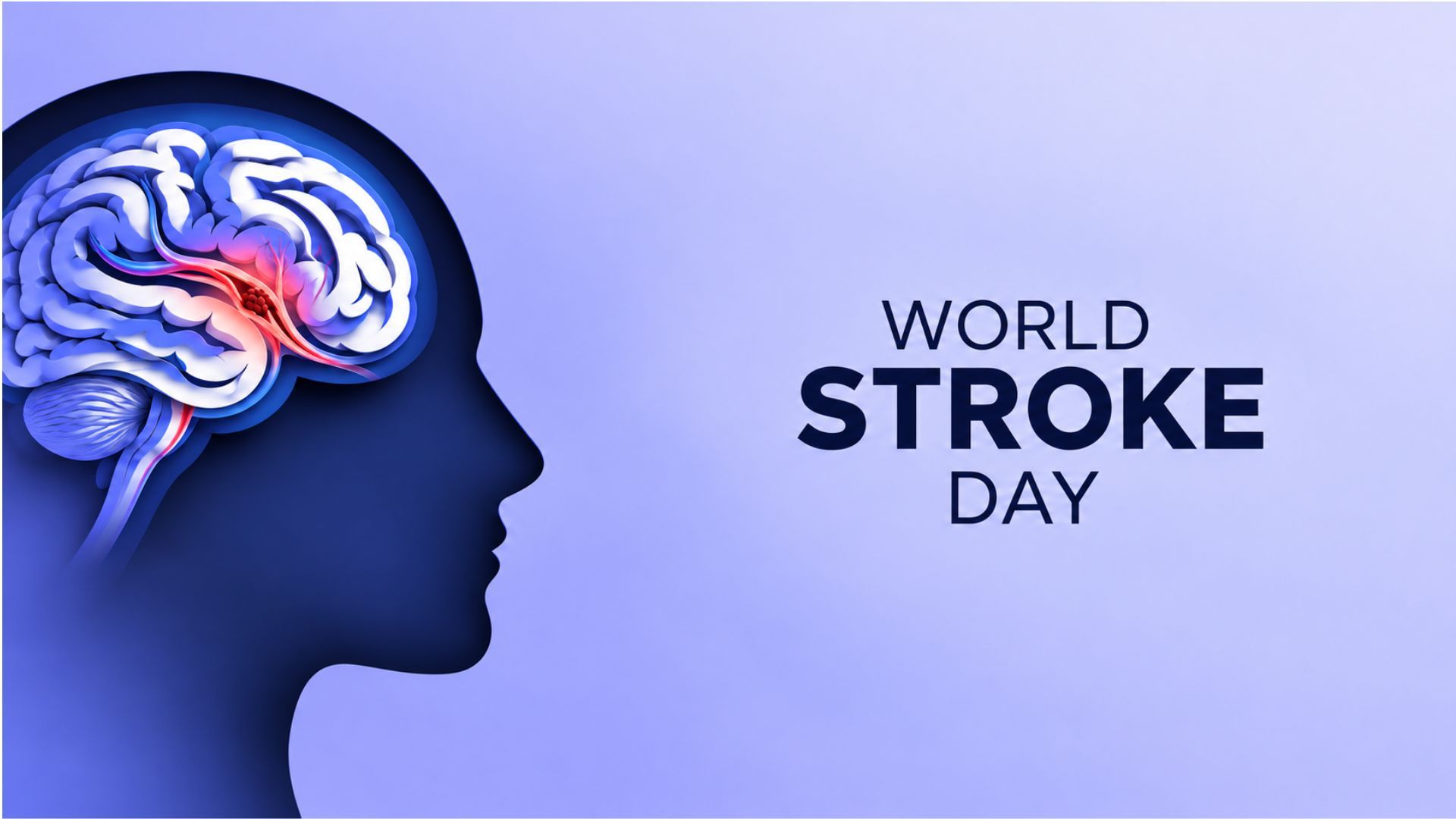
World Stroke Day is observed every year on 29th October to raise awareness about stroke prevention, warning signs, treatment and recovery. The World Stroke Organization's 2026 campaign highlights the message “Every M1nute Counts” and encourages people to recognise symptoms and #ActFAST.[1]
What Is World Stroke Day and Why Is It Observed?
World Stroke Day aims to improve public understanding of stroke and encourage timely action when warning signs appear. Stroke can affect movement, speech, swallowing, memory and the ability to perform everyday activities. Its impact can extend beyond the initial medical emergency, making prevention, rehabilitation and ongoing support important aspects of stroke care.[2]
According to the Global Burden of Disease Study 2019, India had an estimated 1.29 million new stroke cases and 699,000 stroke deaths in 2019. These are estimates for 2019, rather than current-year figures, and highlight the substantial burden of stroke in India.[3]
Family members, colleagues and bystanders may be the first to notice that someone is experiencing a stroke. Knowing the warning signs can help them seek emergency assistance without delay.
What Are the Main Types of Stroke?
A suspected stroke should always be treated as a medical emergency. The two main types are ischaemic stroke and haemorrhagic stroke.[2]
Ischaemic Stroke
An ischaemic stroke occurs when a blood clot or another blockage prevents blood from reaching part of the brain. Without an adequate blood supply, brain tissue can become damaged.
The blockage may develop in an artery supplying the brain or result from a clot that travels from another part of the body.
Depending on the patient's condition, the location of the blockage, brain imaging and the time since symptoms began, doctors may consider treatments intended to restore blood flow.[4]
A transient ischaemic attack (TIA) can cause stroke-like symptoms that resolve after a short time. However, symptoms that disappear should not be ignored. A TIA may indicate an increased risk of a subsequent stroke and requires urgent medical assessment.[2]
Haemorrhagic Stroke
A haemorrhagic stroke occurs when a blood vessel ruptures and bleeding develops in or around the brain. The bleeding can damage brain tissue and increase pressure within the skull.[2]
One possible cause of bleeding around the brain is a ruptured cerebral aneurysm. A cerebral aneurysm is a weakened area of an artery wall that bulges outward. If it ruptures, blood can leak into the space surrounding the brain, causing a subarachnoid haemorrhage, a type of haemorrhagic stroke. A ruptured aneurysm is a serious medical emergency. However, not all haemorrhagic strokes are caused by aneurysms.[5]
Treatment differs from that used for an ischaemic stroke. Depending on the cause and severity, care may involve controlling blood pressure, managing bleeding and pressure within the brain, and considering specialist or neurosurgical intervention when indicated. For a ruptured aneurysm, specialists may consider procedures to secure the aneurysm and reduce the risk of further bleeding.[5,6]
The appropriate treatment depends on the type and cause of the stroke and the patient's clinical condition. Medical assessment and brain imaging are essential before treatment decisions are made.[4,6]
Why Does Every Minute Matter During a Stroke?
When a blood vessel supplying the brain becomes blocked or ruptures, brain tissue can be damaged. Prompt assessment and appropriate treatment can help limit the consequences of a stroke.[2,4]
For eligible patients with acute ischaemic stroke, intravenous thrombolysis may be considered, generally within 4.5 hours of symptom onset or the last known well time. Selected patients may qualify outside this window based on advanced brain imaging and other clinical criteria.[4]
Mechanical thrombectomy is another treatment option for selected patients with certain blocked brain arteries. It is a catheter-based procedure in which a specialist uses appropriate devices to remove a clot and restore blood flow.
Depending on the patient's clinical condition and imaging findings, mechanical thrombectomy may be considered within an extended treatment window, including up to 24 hours in selected cases. It is not appropriate for every patient with a stroke or blocked artery.[4]
These treatments are not suitable for every patient. Eligibility is determined by the treating team based on clinical assessment, imaging findings and applicable treatment guidelines.
The important message is to seek emergency medical assistance immediately rather than waiting for symptoms to improve.
How to Recognise the Warning Signs of Stroke
Stroke symptoms often develop suddenly. Remembering FAST can help identify some of the most common warning signs.[12]
F: Face
Ask the person to smile. Does one side of the face droop, or does the smile appear uneven?
A: Arms
Ask the person to raise both arms. Does one arm feel weak or drift downward?
S: Speech
Ask the person to repeat a simple sentence. Is their speech slurred or difficult to understand? Are they struggling to find words?
T: Time to Act
If any of these signs appear suddenly, call emergency services immediately. Do not wait to see whether the symptoms improve.
Other possible warning signs include:
- Sudden loss of balance or coordination.
- Sudden blurred vision, double vision or loss of vision.
- Sudden difficulty walking or unexplained dizziness.
- Sudden confusion or difficulty understanding others.
- A sudden, severe headache, particularly one that reaches maximum intensity rapidly.
Not everyone experiences all these symptoms. A stroke can occur without the classic FAST signs, so sudden neurological changes should always be taken seriously.[2]
If stroke is suspected, call emergency services immediately. In India, 112 is the pan-India emergency number.[7]
Note the time when symptoms began, or the last time the person was known to be well. This information can help the treating team assess potential treatment options. Even if symptoms disappear, urgent medical evaluation is necessary.[2,4]
Do not give the person food, water, aspirin or other medication unless directed by a medical professional. The appropriate treatment depends on the cause of the symptoms, and some medications may be unsuitable for certain types of stroke. If possible, arrange emergency medical transport rather than having the person drive themselves to the hospital.[2,4]
What Happens After Reaching the Hospital?
The initial priority is to assess the patient, identify the cause of the symptoms and determine whether a stroke has occurred.
Doctors evaluate the person's neurological symptoms, medical history, blood pressure, blood glucose and other vital signs. Urgent brain imaging, usually a CT scan or MRI, depending on the clinical situation and availability, helps identify bleeding and other changes in the brain.[4,6]
For an eligible patient with an ischaemic stroke, doctors may consider intravenous thrombolysis. If an appropriately large artery is blocked, mechanical thrombectomy may also be considered.[4]
A haemorrhagic stroke requires a different treatment approach. Depending on the circumstances, treatment may involve controlling bleeding, managing blood pressure and pressure within the brain, and considering specialist or neurosurgical interventions. When a ruptured cerebral aneurysm is responsible, specialist treatment may be required to prevent further bleeding.[5,6]
Once the immediate emergency has been addressed, care may include measures to prevent another stroke, rehabilitation, and support for difficulties with movement, communication, swallowing, or daily activities. The treatment plan is individualised according to the patient's condition and clinical assessment.
How Can Stroke Awareness Improve Outcomes?
Stroke awareness begins before a patient reaches the hospital. Recognising symptoms and acting quickly can help reduce delays in medical assessment and treatment.[1,2] Individuals can also take steps to reduce their risk of stroke. Important risk factors include high blood pressure, diabetes, high cholesterol, smoking, physical inactivity and certain heart conditions, including atrial fibrillation.[2]
Regular health check-ups, appropriate management of existing conditions, a balanced diet, physical activity and avoiding tobacco can contribute to stroke prevention. People with a history of stroke or TIA should follow their treating clinician's advice regarding medication, risk-factor management and follow-up.
Although stroke risk generally increases with age, younger adults can also experience a stroke. Awareness of warning signs is important for everyone.
Stroke prevention, early recognition, timely medical assessment and rehabilitation all have important roles in stroke care.
Conclusion: Recognise Stroke. Act FAST.
A suspected stroke should never be treated as a wait-and-watch situation. Sudden facial drooping, weakness, speech difficulties, vision changes or loss of balance require urgent medical assessment.
The type of stroke determines the appropriate treatment, while the time since symptoms began can influence which treatments may be available.
Call emergency services immediately, note when symptoms started and seek appropriate emergency care without delay, even if the symptoms improve or disappear.
World Stroke Day helps raise awareness of stroke warning signs and the importance of acting quickly. Recognising the signs and seeking emergency care can help a person receive a timely medical assessment.
Medical Information Notice
This article is intended for general awareness and educational purposes only. It does not replace professional medical advice, diagnosis or treatment. Treatment decisions depend on individual clinical assessment and applicable medical guidelines. If a stroke is suspected, seek emergency medical assistance immediately.
FAQs


References
[1] World Stroke Organization. World Stroke Day 2026: Every M1nute Counts. Official campaign information and symptom-awareness resources.
https://www.world-stroke.org/world-stroke-day-campaign/world-stroke-day-2026
[2] World Health Organization. Stroke. General information on stroke, its effects, risk factors and prevention.
https://www.who.int/news-room/fact-sheets/detail/stroke
[3] Indian Council of Medical Research and collaborators. The burden of neurological disorders across the states of India: the Global Burden of Disease Study 1990–2019. The Lancet Global Health. 2021.
https://pmc.ncbi.nlm.nih.gov/articles/PMC8295043/
[4] American Heart Association/American Stroke Association. 2026 Guideline for the Early Management of Patients With Acute Ischemic Stroke. Stroke. 2026.
https://www.ahajournals.org/doi/10.1161/STR.0000000000000513
[5] National Institute of Neurological Disorders and Stroke (NINDS). Cerebral Aneurysms. Information on cerebral aneurysms, rupture and associated complications.
https://www.ninds.nih.gov/health-information/disorders/cerebral-aneurysms
[6] National Institute of Neurological Disorders and Stroke (NINDS). Brain Aneurysm. Information on brain aneurysms, diagnosis and treatment.
https://www.ninds.nih.gov/health-information/disorders/brain-aneurysm
[7] Government of India. Emergency Response Support System — 112. Official information on India's pan-India emergency number.
https://112.gov.in/


