






















Bladder Stones vs. Kidney Stones: Key Differences
Introduction
Have you ever felt a sudden, sharp pain in your back or lower abdomen and wondered what was happening? Or has your doctor mentioned "urinary stones"? The risk of developing stones is influenced by factors such as the country's climate, dietary habits, dehydration and certain medical conditions.
Urinary stones affect nearly 12% of the Indian population.[2] Yet when most people hear the word "stones", they assume it always means the kidneys. Bladder stones exist too, and they come with their own distinct causes, symptoms and risks. The two are related, but they are not the same and understanding the difference matters. Here's why.
What Are Bladder Stones and Kidney Stones?
Bladder stones and kidney stones are both hard, solid deposits that form when minerals in the urine crystallise and stick together. This usually occurs when the urine becomes highly concentrated, allowing minerals such as calcium, oxalate or uric acid to form crystals that gradually grow into stones.
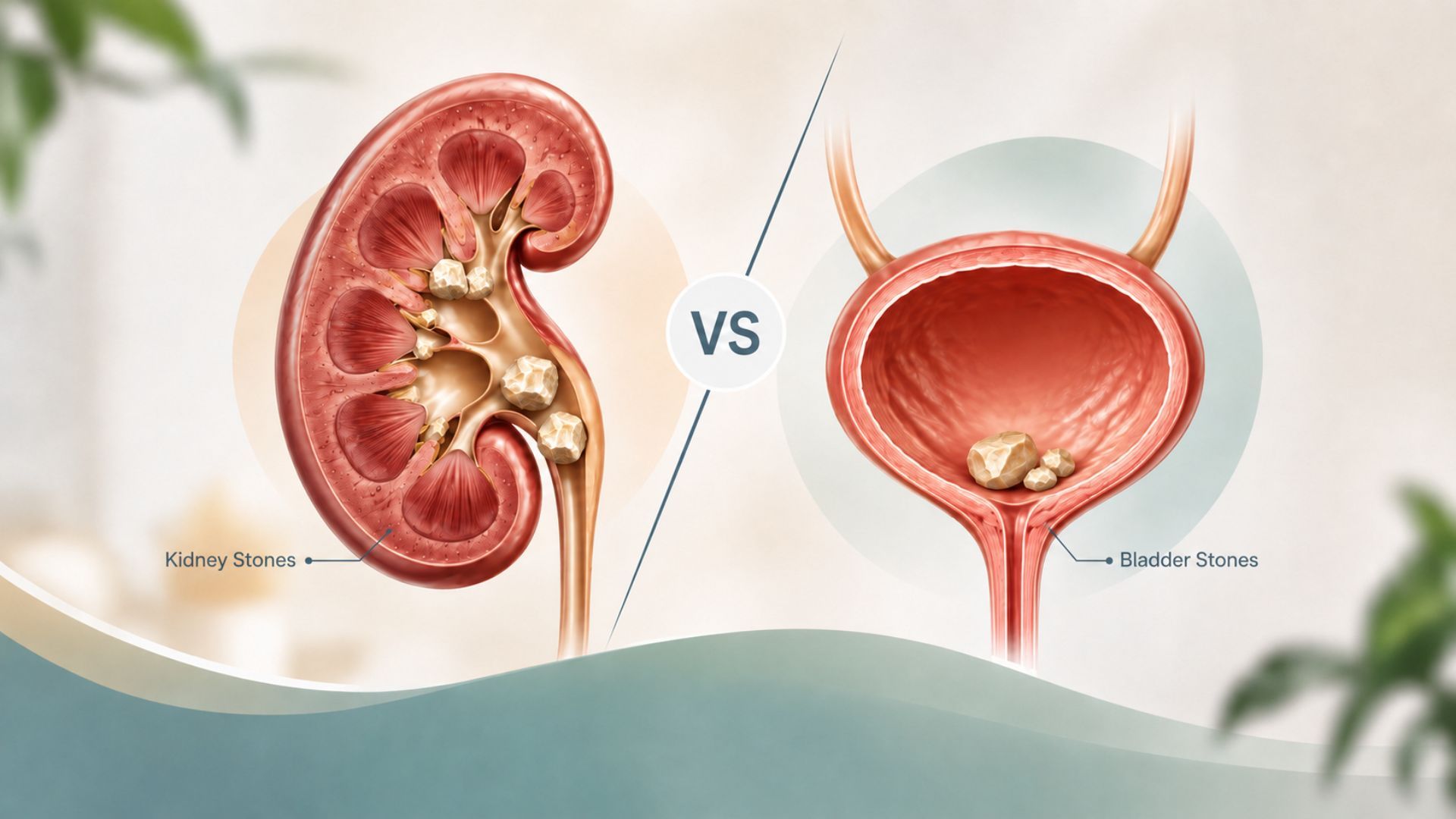
Kidney stones develop in one or both kidneys, the organs responsible for filtering waste products and excess water from the blood to produce urine. These stones may remain in the kidneys or travel through the urinary tract, causing severe pain if they obstruct the flow of urine.
Bladder stones form in the bladder, the organ that stores urine before it is expelled from the body. They most commonly develop when the bladder does not empty completely, allowing residual urine to become concentrated and minerals to crystallise.
Kidney stones are significantly more common than bladder stones. While both conditions involve stone formation within the urinary tract, they differ in their causes, symptoms, risk factors and treatment approaches.
Where They Form in the Urinary System
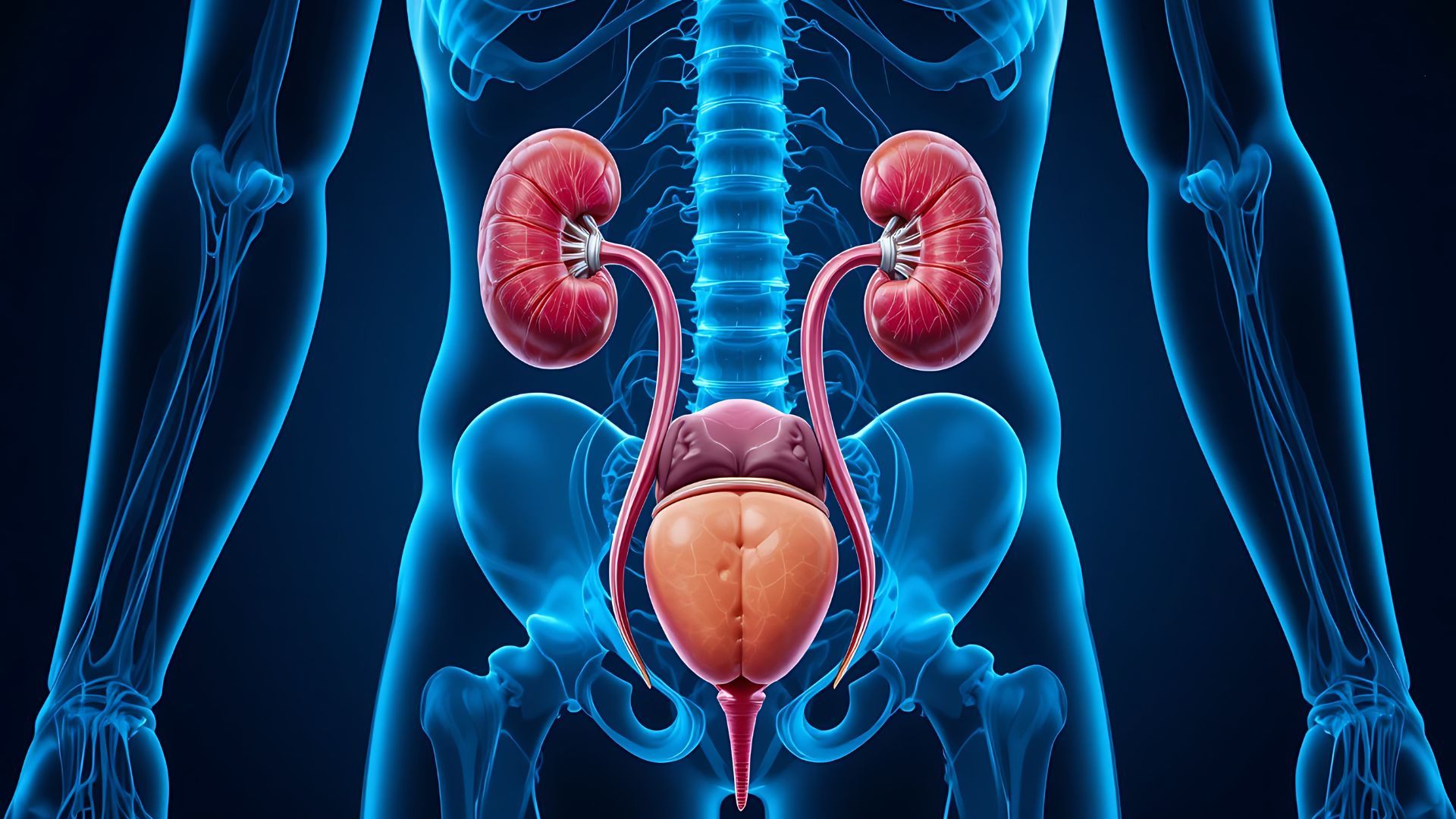
The urinary system has four parts: kidneys, ureters, bladder and urethra. Stones form or get trapped at different points along this path.
Kidneys: Stones typically form in one or both kidneys when minerals in the urine crystallise and accumulate.
Ureters: These are narrow tubes that carry urine from the kidneys to the bladder. Kidney stones may become lodged in the ureters while passing, causing severe pain and obstructing the flow of urine.
Bladder: Bladder stones form within the bladder, most commonly when urine remains in the bladder after urination and becomes concentrated.
Urethra: The urethra carries urine from the bladder out of the body. Small stones may pass through the urethra naturally, while larger stones can become lodged, causing pain, difficulty urinating or urinary obstruction.
How Each Type of Stone Develops
Kidney Stones
Kidney stones develop when the urine becomes highly concentrated, allowing minerals and salts—such as calcium oxalate, uric acid or cystine—to crystallise and stick together. Over time, these crystals grow into stones. Kidney stones can vary greatly in size, ranging from tiny, sand-like particles to larger stones that can block the urinary tract and cause severe pain.
Bladder Stones
Bladder stones usually develop when the bladder does not empty completely during urination. The residual urine becomes concentrated, allowing minerals to crystallise and gradually form stones. Common causes of incomplete bladder emptying include benign prostatic hyperplasia (BPH or enlarged prostate), neurogenic bladder (nerve-related bladder dysfunction), urinary tract obstruction, recurrent urinary tract infections (UTIs), bladder diverticula or previous bladder surgery. In some cases, a small kidney stone may pass into the bladder and, if it is not expelled from the body, can act as a nidus (core) for further mineral deposition, eventually enlarging into a bladder stone.
What are the Differences between Bladder Stones and Kidney Stones?
Although both kidney stones and bladder stones are formed from crystallised minerals in the urine, they differ in where they develop, why they occur, how they present and how they are treated:
Feature | Kidney Stones | Bladder Stones |
Location | Kidneys, especially the renal pelvis | Urinary bladder |
Primary cause | Concentrated urine, diet, genetics, dehydration | Incomplete bladder emptying, UTIs, enlarged prostate |
Who is affected | Men more than women; can occur at any age | Mostly older men; rare in children |
Common pain area | Flank, back, lower abdomen | Lower abdomen, pelvic region |
Urinary symptoms | Blood in urine, nausea, vomiting | Frequent urination, pain while urinating |
Tendency to travel | Can travel to the ureter or bladder | Usually stays in the bladder unless very small |
Treatment | Medications, lithotripsy, and surgery | Cystolitholapaxy, surgery |
Symptoms: How Each One Feels
Each type of stone can cause overlapping symptoms, but the location and nature of pain differ:
Kidney Stone Symptoms
Pain in the back, flank or lower abdomen.
Blood in urine.
Nausea and vomiting.
Burning sensation during urination.
Fever and chills if an infection develops.
Bladder Stone Symptoms
Dull, persistent pain or pressure in the lower abdomen or pelvic area.
Difficulty starting urination or a weak urine stream.
Frequent urination, especially at night.
Blood in the urine.
Feeling that the bladder has not emptied fully.
Causes and Risk Factors for Kidney and Bladder Stones
Although kidney stones and bladder stones share certain risk factors, the underlying causes of each condition are different. Understanding these causes can help reduce risk and support early intervention.
Kidney Stones
Dehydration, the single biggest trigger, especially in India's hot climate.
High-salt or animal-protein-rich diet.
Family history, obesity, and certain medical conditions, such as gout.
Bladder Stones
Enlarged prostate (BPH) is the most common cause in older men.
Neurogenic bladder from Parkinson's, spinal injury or diabetes.
Recurrent UTIs, bladder diverticula or previous bladder surgery.
How Doctors Diagnose Kidney and Bladder Stones
The doctor will use specific tests to identify the stone's location, size and composition before recommending treatment.
Ultrasound: First-choice, non-invasive, no radiation. Detects stones in the kidneys and bladder.
CT Scan (KUB CT): The most accurate tool for locating kidney stones of all sizes.
Cystoscopy: Camera inserted through the urethra to directly examine the bladder for stones.
Urine and blood tests: Identify infection, blood in urine and metabolic markers that signal stone type.
Treatment Types for Bladder Stones and Kidney Stones
If you have just been diagnosed with a urinary stone, the first question on your mind is probably, " Do I need surgery? The answer depends on several factors. Many stones can be managed without any procedure at all, while others require minimally invasive intervention. Here is what to expect.
Kidney Stones
Small stones (<5 mm): With increased fluid intake and pain relief, they usually pass on their own.
ESWL (shock wave lithotripsy): It uses sound waves to break up the stone so fragments pass through urine.
Ureteroscopy (URS): A scope removes or breaks up stones in the ureter or kidney.
PCNL: For large stones, a small incision in the back allows direct removal.
Bladder Stones
Cystolitholapaxy: Most common procedure, a scope breaks up the stone with laser or ultrasound and removes the fragments.
Treating the underlying cause: Addressing BPH or neurogenic bladder is essential to prevent recurrence.
Prevention: What Works for Both
Most urinary stones can be prevented or their recurrence reduced through consistent lifestyle habits. Here are some ways[4]:
Drink 2.5–3 litres of water daily.
Reduce salt and animal protein.
Eat calcium-rich food.
Maintain a healthy weight.
Manage underlying conditions.
A PMC study on urinary stones in Eastern India confirmed that a low-animal-protein diet combined with adequate hydration reduces urinary stone recurrence.[3]
Conclusion
Bladder stones and kidney stones are two distinct conditions that form at different points in the urinary tract, though they share common risk factors and can sometimes be connected. The pain they cause is severe and wave-like, while bladder stone discomfort tends to be duller and concentrated pain in the pelvic region.
What is worth remembering is that both conditions are well understood by modern medicine and are treatable. More importantly, something as simple as drinking enough water every day goes a long way in keeping them from forming in the first place.