





















Hand Hygiene in Healthcare: Compliance, Guidelines & Techniques
Introduction
The world became obsessed with hand hygiene during the COVID pandemic. Sanitiser stations appeared in every doorway, and posters reminded us to scrub for 20 seconds. But here's the thing: hospitals have had these standards in place, yet the biggest unsolved compliance problem is inpatient safety.
The day-to-day doctors move from room to room. Nurses adjust IV lines, check vitals, and tend to wounds. Every one of these moments is an opportunity for germs to travel, from one person to another, or from a surface to a patient. And the one thing that can break this chain? Clean hands.
Importance of Hand Hygiene in Healthcare
When it comes to patient safety, hand hygiene sits right at the top. Hospital-acquired infections (HAIs), acquired by patients during treatment, are a significant global concern. Out of every hundred patients, there are seven people from high -income countries and fifteen from low-income countries who acquire at least one HAI during their stay.[1] Hospital-acquired infection leads to longer admissions, serious complications, and in some cases, death.
The good news is that most of these infections are preventable, and proper hand hygiene is an effective way to prevent them. It also protects healthcare workers themselves, their families, and the wider community.
Hand Hygiene Compliance
Hand hygiene compliance refers to how healthcare workers clean their hands at the right time, in the right way, every time it is needed. Even though the concept sounds simple, the real world tells us another story. Global data show average ICU occupancy rates at under 60%.[1] Four out of ten times, hand hygiene is skipped when it should happen.
Global Hand Hygiene Guidelines in Healthcare
Global health guidelines on hand hygiene are established and widely adopted. One point that has been consistent is the use of gloves; they are not a replacement for hand hygiene. Hands must be cleaned before putting on gloves and immediately after removing them. Beyond individual behaviour, guidelines also call for systemic changes, making products available at the point of care and embedding hand hygiene into facility culture.
Hand Hygiene Techniques Used in Healthcare
The two methods that are used in healthcare settings are:
Alcohol-Based Hand Rub (ABHR): Takes 20–30 seconds, does not need a sink, and helps against a broad range of microorganisms. It is ideal for when hands are not visibly dirty.
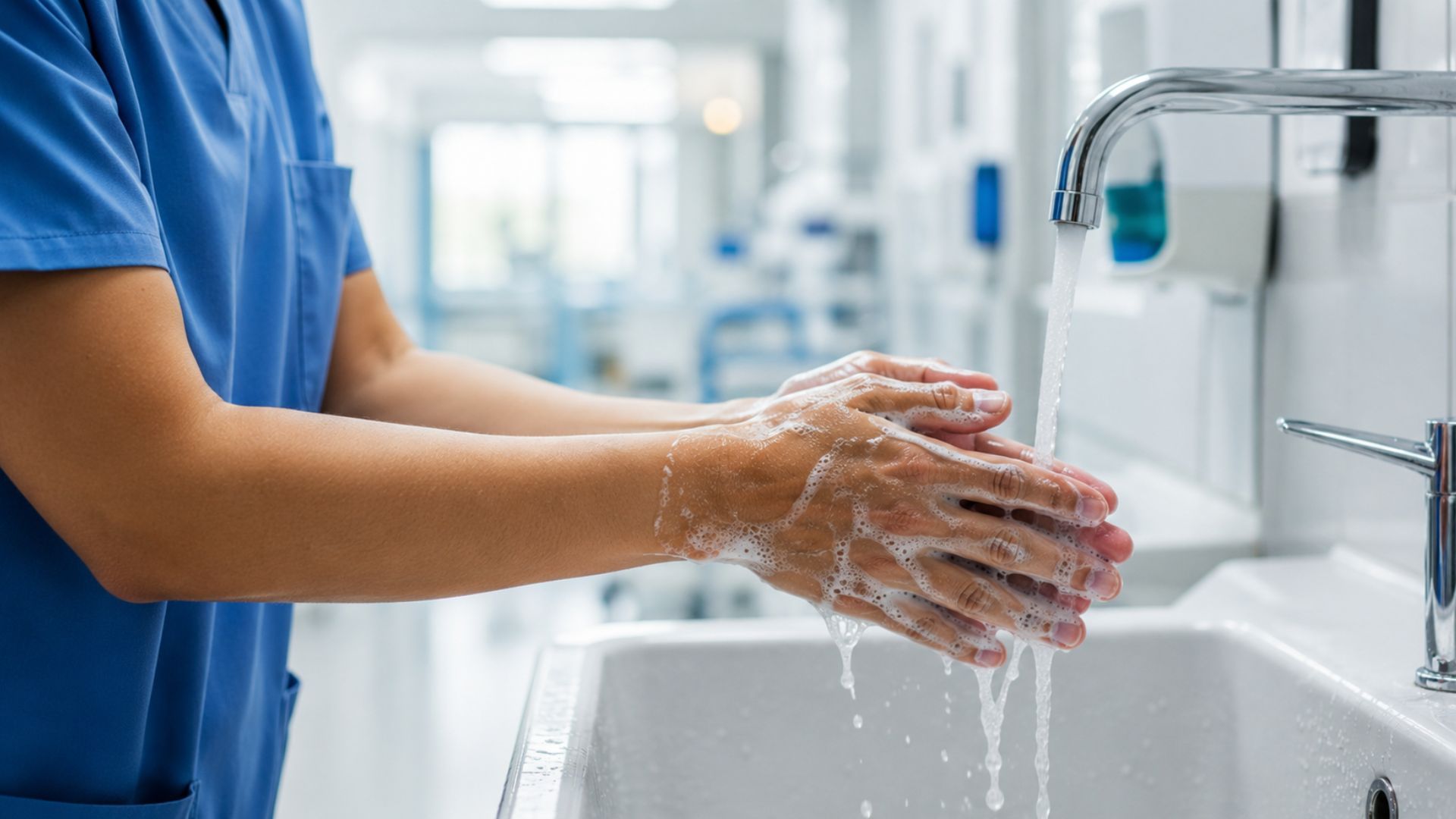
Hand washing with Soap and Water: Used when hands are visibly dirty or after contact with certain resistant pathogens. Takes a minimum of 40–60 seconds when done properly.
The key is knowing which method fits the situation, not assuming one is always superior to the other.
WHO Five Moments for Hand Hygiene
A globally recognised framework identifies five critical points in patient care at which hand hygiene must be performed. They are[2]:
Moment | When It Happens |
Before touching a patient | Before any physical contact, even just adjusting a pillow |
Before a clean/aseptic procedure | Before dressing wounds, inserting IV lines, or giving injections |
After body fluid exposure risk | After contact with blood, urine, wound secretions, or mucous membranes |
After touching a patient | After any physical contact with the patient ends |
After touching the patient's surroundings | After handling bed rails, tables, chairs, or any nearby object |
Step-by-Step Technique for Proper Hand washing
Technique matters as much as frequency. Here's how the method should be performed[3]:
With Soap and Water:
Wet hands with clean running water
Apply enough soap to cover all surfaces
Rub palms together, interlace fingers to clean between them
Clean the back of each hand with the opposite palm
Rotate thumbs in a clasped palm
Rub fingertips against the opposite palm to clean under nails
Rinse thoroughly, then dry with a single-use paper towel
Use the same towel to turn off the tap
With Alcohol-Based Hand Rub (20–30 seconds):
Apply a palmful of the product in a cupped hand, covering all surfaces.
Rub hands palm to palm.
Right palm over the back of the left hand with interlaced fingers and vice versa.
Backs of fingers to opposing palms with fingers interlocked.
Rotational rubbing of the left thumb clasped in the right palm and vice versa.
Rotational rubbing, backwards and forwards, with clasped fingers of the right hand in the left palm and vice versa.
Once dry, your hands are safe.
Note: Both methods are less effective if rings, bracelets, or long nails are present, as they harbour germs and prevent full coverage.
Best Practices to Improve Hand Hygiene Compliance
Sustained improvement requires more than reminders. The most effective programmes take a multi-layered approach built on five core elements:
System change: Hand hygiene products must be available and accessible at every point of care.
Monitoring and feedback: Observing practices and sharing results helps staff understand where they stand and where to improve.
Workplace reminders: Posters, prompt cards, training and visual cues reinforce the right behaviour in the moment.
Safety culture: When senior clinicians lead by example, and teams feel empowered to speak up, compliance follows.
Facilities that take this approach consistently see measurable improvements in both compliance rates and patient outcomes.
Challenges in Maintaining Hand Hygiene Compliance
Healthcare environments are fast-paced, and maintaining consistent hand hygiene practices can sometimes be challenging. Common factors influencing compliance include:
Workload and time constraints in busy clinical settings.
Skin irritation concerns are associated with frequent handwashing.
Accessibility of hand hygiene products at the point of care. Awareness and training regarding appropriate hand hygiene moments.
Conclusion
Clean hands do three things: protect patients from picking up new infections, keep healthcare workers safe, and stop dangerous germs from spreading. The WHO five moments for hand hygiene, combined with the right technique, and culture where clean hands are the norm, create a foundation of safe healthcare.
At Meril, patient safety begins with the basics, and nothing is more basic or more powerful than clean hands.