Minimally Invasive Urological Procedures: Benefits & Recovery
Introduction
Being told that one needs to be operated on for a kidney stone, prostate problem, or bladder condition can be unsettling. But here is the reassuring truth: most urological conditions today can be treated with minimally invasive procedures that are gentler on the body, require shorter hospital stays, enabling patients to resume normal activities and daily routines with minimal disruption.[2]
What Are Minimally Invasive Urological Procedures?
Minimally invasive surgery is carried out through tiny incisions, often no larger than a coin or in certain cases through natural body openings without any external cuts.
Using advanced cameras and fine surgical instruments, surgeons can view the treatment area at high magnification and perform procedures with precision. Since there is minimal disruption to surrounding healthy tissue, patients generally benefit from reduced pain, quicker healing and faster recovery.
Common Urological Conditions Treated This Way
Minimally invasive techniques are now the preferred approach for a wide range of conditions, including[1]:
Enlarged prostate (BPH)
Prostate, kidney and bladder cancer
Kidney cysts and tumours
Urinary blockages
Pelvic organs prolapse
Types of Minimally Invasive Urological Procedures
Each procedure differs in the way access is achieved, the instruments used and the level of precision required. The following are some of the most commonly performed minimally invasive procedures in urology:
Laparoscopic Surgery
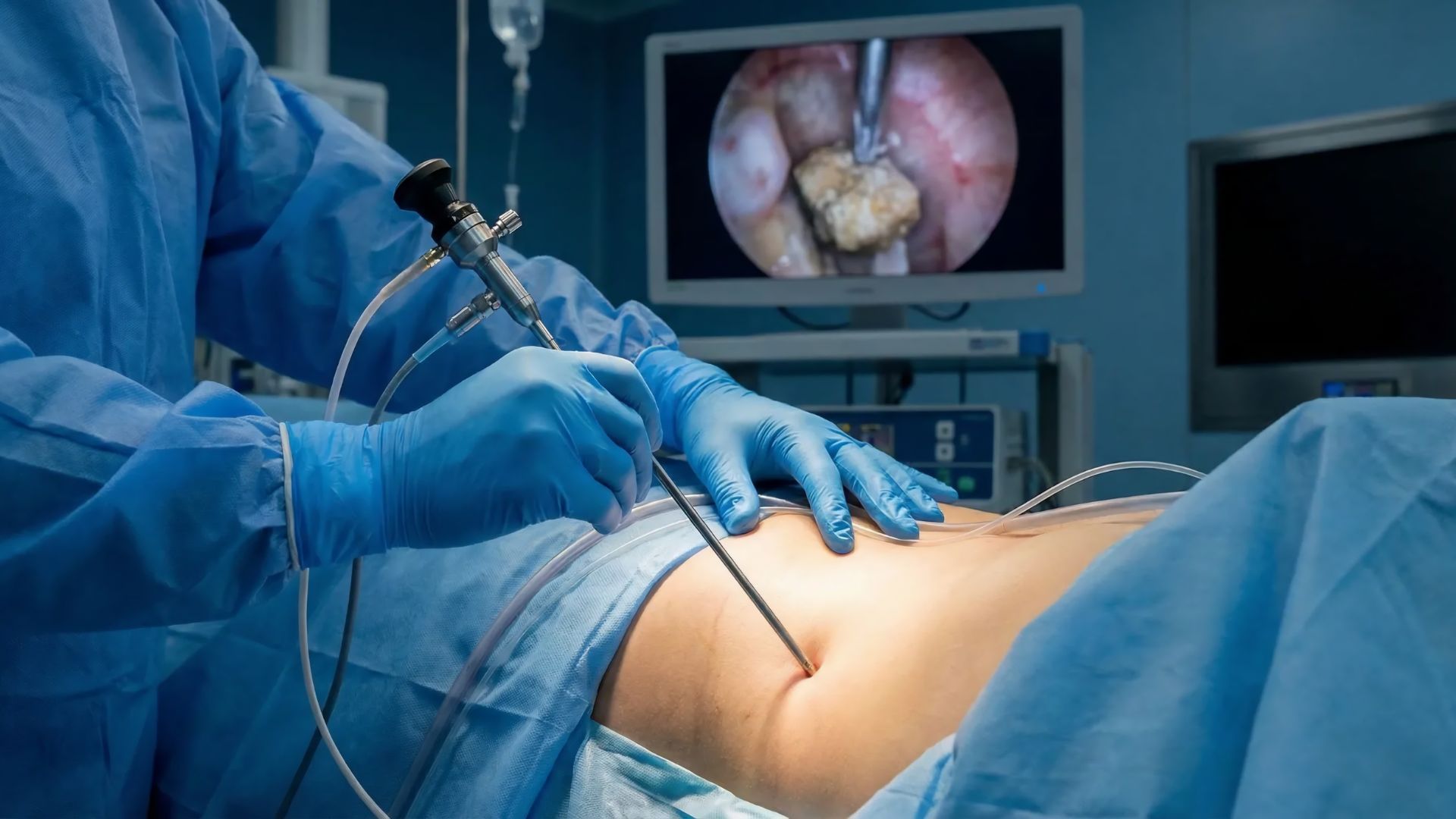
The surgeon makes small keyhole incisions through which a thin camera and specialized miniature instruments are inserted. The procedure is performed while viewing a magnified real-time image on a monitor. This approach is commonly used for kidney and prostate surgeries.
Robotic-Assisted Surgery
Robotic-assisted surgery is performed using robotic arms controlled by the surgeon through a dedicated console. The system provides a high-definition, three-dimensional magnified view and allows extremely precise movements, making it particularly useful for complex urological procedures.
Endoscopic Surgery
Endoscopic procedures are performed using a thin flexible or rigid scope fitted with a camera, which is passed through the natural urinary passage (urethra), eliminating the need for external incisions. These procedures are commonly used to examine the urinary tract and treat conditions such as kidney stones, bladder tumors and prostate enlargement.
Shock Wave Lithotripsy
It uses externally generated high-energy sound waves to break kidney stones into smaller fragments, which can then pass naturally through the urinary tract. The procedure does not require any surgical incision.
Laser Treatment
Lasers precisely break down kidney stones or treat an enlarged prostate with minimal impact on surrounding tissue.
Key Benefits of Minimally Invasive Urological Procedures
You can keep the structure and add one-line explanations:
Incision Size:
Procedures are performed through very small incisions, often coin-sized or smaller and in some cases through natural body openings without any external cuts. This helps minimize disruption to surrounding healthy tissues.
Hospital Stay:
Most patients require a shorter hospital stay, typically 1–2 days, depending on the type and complexity of the procedure and the individual’s recovery.
Blood Loss:
Blood loss is significantly lower due to enhanced surgical precision and smaller access points.
Scarring:
Minimal, as smaller incisions heal faster and leave less visible markings.
Return to Daily Life:
Many patients are able to resume routine daily activities within 1–3 weeks, although complete recovery and return to strenuous physical activity may vary depending on the procedure and overall health condition.
Additionally, minimally invasive procedures are often associated with reduced post-operative pain, lower risk of infection, decreased need for pain medication and a quicker overall recovery, allowing patients to spend less time away from work, family and everyday life.
How These Procedures Improve Surgical Precision
A common misconception is that smaller incisions result in reduced surgical precision. In reality, minimally invasive procedures use advanced camera systems that provide a highly magnified view of the surgical area, often allowing surgeons to visualize structures more clearly than in conventional open surgery. Robotic-assisted systems further enhance precision by enabling instruments to achieve a greater range of motion than the human hand, allowing them to operate in confined spaces and perform complex procedures while preserving surrounding healthy tissue.
What to Expect Before the Procedure
Before the procedure, the surgeon will review the patient’s medical history, perform an examination, and may recommend tests such as blood tests, urine analysis, ultrasound, or scans to evaluate the condition. Patients will receive instructions regarding fasting and any medications that may need to be temporarily stopped or adjusted before surgery.
Most minimally invasive urological procedures are performed under general or regional anaesthesia for patient comfort.
Recovery after Minimally Invasive Urological Procedures
Recovery is generally well-tolerated following minimally invasive urological procedures. In the initial few days, patients may experience mild pain, soreness, fatigue, or transient discomfort, which typically improves over time with conservative management.
Contact the doctor right away if one notices :
Fever or chills
Heavy or increased bleeding at the wound site
Redness, swelling or discharge around the incision
Pain not relieved by prescribed medication
Factors That Influence Recovery Time
Recovery timelines can change depending on the type of procedure, age, general health and how closely one follows post-operative instructions. The surgeon provides a personalized recovery timeline based on the patient’s condition, the type of procedure performed and individual healing response.
When to See a Urologist
It is always better to seek advice early. Book a consultation if one notices:
Blood in urine
Pain or burning sensation while urinating
Frequent urge to urinate, especially at night
Difficulty starting or stopping urination
Recurring kidney stones or urinary infections
Unexplained pain in the lower back or side
Early diagnosis almost always means simpler treatment and a faster recovery.
Conclusion
Minimally invasive urological procedures have genuinely changed the experience of surgical care. What once meant weeks in hospital can now often be managed with a short stay and recovery within a few weeks. At Meril Life Sciences, we are dedicated to equipping healthcare professionals with the tools and technology that enable this level of care. If one is dealing with a urological condition, the best first step is to consult a urologist.