What Is Transcatheter Edge-to-Edge Repair (TEER)? A Simple Guide
Introduction
When we think about Heart issues, blocked arteries and Heart attacks usually come to mind. But many people also suffer from heart valve problems, especially the mitral valve. A newer, less invasive solution for some of these problems is called Transcatheter Edge-to-Edge Repair (TEER).
In this article, let's understand what TEER is, how it works, and who it's meant for.
Understanding the Mitral Valve and What Can Go Wrong
The mitral valve is like a small door in the Heart that helps blood move in the right direction, from the upper chamber (left atrium) to the lower chamber (left ventricle). It opens and closes with each heartbeat.[1]
Sometimes, this valve doesn't close tightly, causing blood to leak backwards. This condition is called mitral valve regurgitation. It makes the Heart work harder, leading to tiredness, breathlessness, swelling in the legs, and even Heart failure if left untreated. Causes of this leakage can range from age-related wear and tear, infections, Heart attacks, or other Heart muscle diseases like cardiomyopathy.
What Exactly Is TEER?
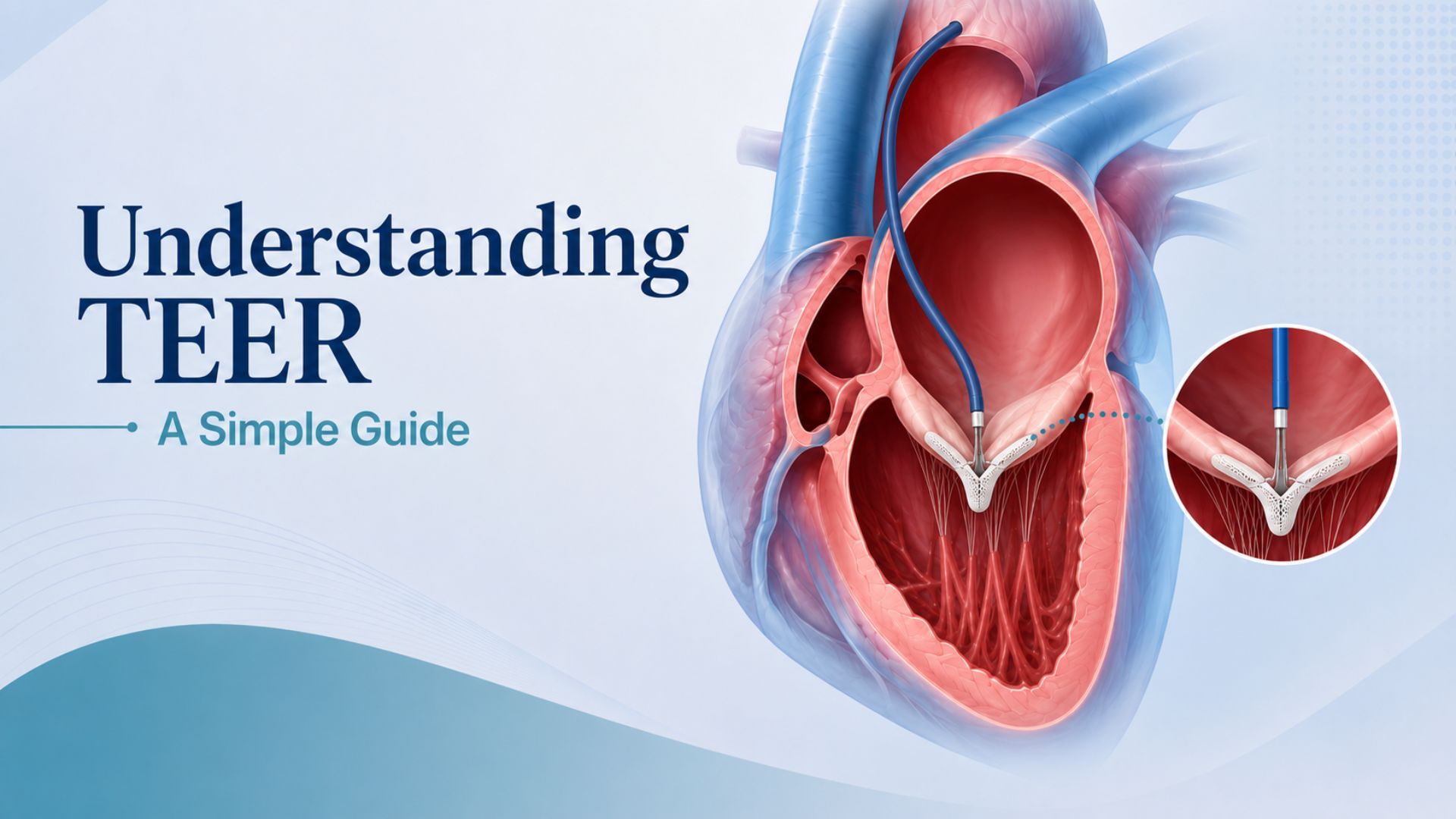
Transcatheter edge-to-edge repair (TEER) is a medical procedure that repairs a leaking mitral valve without the need for open-heart surgery. Instead of opening the chest, doctors use a small tube (a catheter) to deliver a special clip that helps the valve close more effectively.
Think of the mitral valve as a swinging door with two flaps that aren't shutting properly. TEER gently clips these flaps together at the centre, so they stop leaking but still allow blood to pass through normally. [2]
How Is TEER Performed? (A Simple Step-by-Step)
Here's how TEER is typically done:
Getting Ready: You'll be given anaesthesia so you can sleep through the procedure.
Inserting the Catheter: A small cut is made in the groin to insert a thin, flexible tube.
Reaching the Heart: The catheter is guided through your vein to the Heart.
Placing the Clip: With specialised imaging, a clip is attached to the valve's edges.
Checking: The doctor checks whether the leak has reduced, then removes the catheter.
Closing Up: The cut is closed, and you're moved to recovery.
Most people stay in the hospital for just a day or two after the procedure.
Who Is TEER Recommended For?
Doctors recommend TEER for:
People with moderate to severe mitral valve regurgitation
Patients experiencing symptoms like breathlessness, fatigue, or leg swelling
Those who cannot undergo open-heart surgery due to age, frailty, or other health problems
Doctors use scans and Heart tests to decide if someone is a good candidate for TEER. It's often a great option for elderly patients or those with other medical conditions like diabetes or orthopaedic limitations that make major surgery risky.
What Are the Benefits of TEER?
Transcatheter edge-to-edge repair (TEER) offers many advantages over traditional surgery. One of the biggest benefits is that it's minimally invasive, so doctors don't have to open your chest. Recovery is quicker, usually just a few days. Most people feel better soon after the procedure, with less shortness of breath and more energy.
It's also safer for those who have other health conditions that make open surgery dangerous. For many, TEER means fewer hospital visits, a lower chance of complications, and a much-improved quality of life. Plus, since the Heart doesn't need to be stopped during the procedure, it's less stressful on the body.
What to Expect After the Procedure?
After TEER, most people recover quickly. You may spend a day or two in the hospital under observation. Doctors will monitor your Heart using scans and may prescribe medications to prevent blood clots and manage your Heart condition.
You'll likely feel better within a few days, breathing easier, feeling less tired, and doing your daily activities more comfortably. Follow-up appointments are important to ensure the clip is functioning properly and that your heart is functioning properly.
Are There Any Risks?
While TEER is generally safe, every medical procedure has some risks. These include mild bleeding or bruising at the site where the catheter was inserted, a small chance of infection, and rare issues like improper placement of the clip or changes in Heart rhythm.
However, these risks are much lower than those of traditional open-heart surgery. Before recommending TEER, doctors perform detailed evaluations to ensure the procedure is safe and suitable for the patient.
TEER vs. Open-Heart Surgery: What's the Difference?
Aspect | TEER | Open-Heart Surgery |
Invasiveness | Minimally invasive, done via a small tube | Requires opening the chest |
Recovery Time | Short recovery, usually a few days | Longer recovery, often weeks to months |
Hospital Stay | 1–3 days | 5–10 days or more |
Best for | Older or high-risk patients | Younger, healthy patients |
Pain & Scarring | Small groin cut, minimal pain | Chest scar, more post-op discomfort |
Return to Normal Life | Quick return to daily activities | Needs more rest and recovery time |
Conclusion
Heart valve problems like mitral valve regurgitation can seriously affect quality of life, but modern treatments like Transcatheter edge-to-edge repair (TEER) have made things much easier. For many people, especially those who can't undergo open-heart surgery, TEER offers hope, faster healing, and better health.
If you or someone you love has been struggling with symptoms such as tiredness, breathlessness, or swelling, it might be time to speak with a heart specialist to determine whether TEER is the right step forward.